



From Stockholm Restaurant to Global Operator: The Journey Behind Pontus Lindwall’s Betsson

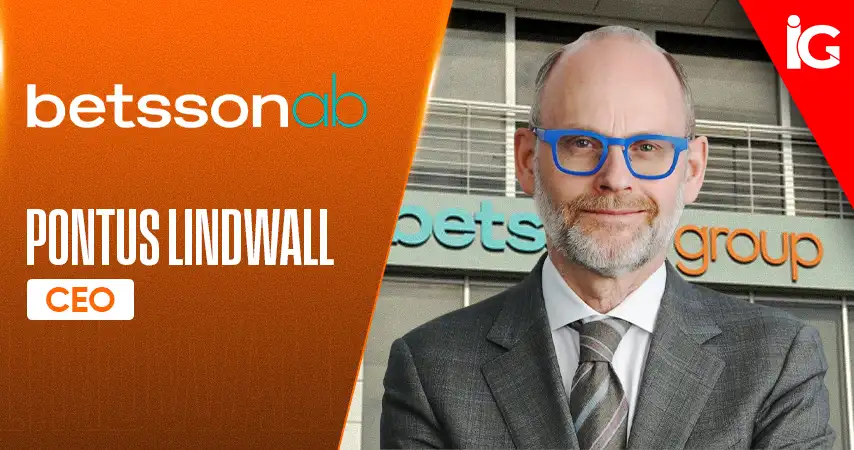
There is a strategic document that every iGaming operator entering Brazil, Paraguay, Peru, or Colombia right now should read before their next licensing decision. It is not behind a paywall. It is not a consultancy report. It is a timeline published on a corporate website, and it covers 62 years of the same decision being made consistently by a single company.
Betsson has never entered a market without a local licence. Not once in six decades of recorded history.
That is not a compliance statement. It is the most commercially significant data point available to anyone building in Latin America today. For context on where Betsson stands in the industry right now, the group was recently shortlisted across four categories at the SiGMA Europe Awards 2026, a recognition that sits alongside, not separately from, the operational record this article examines.

What the 1978 Moment Actually Established
Betsson did not begin as an iGaming company. It began in 1963 as AB Restaurang Rouletter, a licensed restaurant gaming operation founded in Stockholm by Bill Lindwall and Rolf Lundström. The business operated across southern and central Sweden, expanded nationally through a 1968 partnership with AB Roulett Konsult and Spelautomater, registered the Cherry brand in 1972, and grew steadily into whatever regulatory environment Sweden permitted at the time.
In 1978, that environment was removed. The Swedish parliament banned slot machines. According to the company’s own published history, the foundation of Cherry’s operations disappeared in the course of a month.
Most businesses in that position either exit or are acquired. Cherry reorganised.
That response is the most important entry in the entire timeline. Not because it was dramatic, but because of what it embedded permanently into the company’s operating logic. When regulation moves, you adapt inside it. You do not route around it. You do not build volume while the window stays open and exit before enforcement arrives. You reorganise, you rebuild, and you stay.
Every market entry Betsson made across the next 47 years was made by a company that already knew what it cost to be on the wrong side of a government decision.
The Pattern That Never Changed
The 1984 acquisitions of Swedish commercial gaming companies created the corporate foundation for expansion. The 1996 stock listing and the 1998 acquisition of a 35% stake in Net Entertainment marked the beginning of the digital pivot. Pontus Lindwall was appointed CEO in 1998. By 2000, Cherry had acquired the remaining Net Entertainment shares and listed on the OM Stockholm Stock Exchange.
In 2002, Pontus Lindwall assumed the Cherry CEO role. In 2003, Cherry acquired a stake in British sports betting company Betsson.com. By 2005, the strategic split was announced: Cherry Casino and Net Entertainment would be distributed to shareholders, and the online business would continue separately. On 12 September 2006, the land-based Cherry operation was formally distributed under the name Cherryföretagen AB. Net Entertainment followed in 2007. The online business, now Betsson, reached SEK 1 billion in revenue in 2008.
What followed across the next 15 years was a licensing and acquisition sequence that reads, in retrospect, less like opportunistic dealmaking and more like a deliberate map being filled in one regulated jurisdiction at a time.
2011: Italian licence secured, StarCasino launched, Betsafe acquired. 2012: Nordic Gaming Group acquired with Nordicbet and Triobet, Danish and Estonian licences added. 2014: Dutch brands Oranje Casino and Kroon Casino. 2015: Nasdaq Stockholm Large Cap listing, UK gaming licence, Europe-bet in Georgia acquired under local licence. 2016: Gaming licences in Ireland and Latvia, TonyBet in Lithuania, RaceBets with its Irish, German, and UK licences. 2017: NetPlay plc in Britain bringing Supercasino, Jackpot247, and Vernons, Premier Casino in Spain rebranded to StarCasino, Triobet and TonyCasino rebranded to Betsafe across Estonia, Latvia, and Lithuania.
Also in 2017: Pontus Lindwall appointed President and CEO of Betsson AB.
2018: Swedish re-regulation licence secured, operational from January 2019. The company did not wait for the market to open and then apply. It had the licence before the regulated market existed. 2019: ISO 27001:2013 certification. 2020: Colbet in Colombia acquired, Gaming Innovation Group’s B2C vertical purchased including Guts, GutsXpress, Kaboo, Rizk, and Thrills. 2021: INKAbet in Peru, minority stake in US B2B platform provider Strive Gaming. 2022: Majority stakes in KickerTech in Malta and Lithuania and Betbonanza in Nigeria. 2023: betFIRST in Belgium. 2024: Sporting Solutions from French operator FDJ Group, adding trading, pricing, and sports betting risk management capabilities.
Not one entry without a local licence or a locally licensed operator. Across 13 years and four continents.
What the 2025 Entries Are Really Saying
The two most recent entries on Betsson’s history page are easy to read as routine operational updates. New offices opened in Buenos Aires to support regional growth in Latin America. Product offerings launched under local licences in Brazil and Paraguay.
Read them against the 62 years that precede them and they say something different.
Brazil is one of the largest regulated gaming markets to open anywhere in the world in recent years. Paraguay is developing its framework. Both are markets where operators without local licences are currently generating volume and telling investors they will formalise compliance later. Betsson entered both with the licence already in place and a regional office already open.
That is not a cautious approach. It is the same approach the company took in Sweden in 2018, in Colombia in 2020, in Peru in 2021. Prepare for the regulated market before the regulated market is the only option. By the time enforcement catches up with the operators who skipped that step, the groups that did it properly will have two to three years of compliant infrastructure already compounding.
That compounding is already showing up in the financials. Betsson AB’s Q1 2026 revenue reached EUR 285.3 million under Lindwall’s leadership, with Latin America among the fastest growing regions in the group’s portfolio. The numbers are not incidental. They are what six decades of licensed market accumulation looks like when it starts to accelerate.
The Question Every Latin America Operator Should Be Sitting With
The operators currently entering Latin America without local licences are not making a mistake Betsson never considered. They are making the mistake Betsson learned to stop making before online gaming existed.
The difference between those operators and Betsson in 2030 will not come down to product quality or marketing spend. It will come down to whether they treated the licence as the asset from the beginning, or whether they treated it as an obstacle to deal with after the volume was established.
Betsson’s answer to that question has not changed since 1963. The Latin America chapter is the latest proof.

What Comes Next
Latin America’s regulatory frameworks are tightening faster than most operators currently building there are prepared for. Brazil’s licensing conditions are becoming more demanding. Paraguay is formalising. Peru and Colombia, where Betsson has been operating under local licences since 2021 and 2020 respectively, are maturing into competitive regulated environments where infrastructure depth is beginning to separate the operators with staying power from those who arrived for the window.
The industry has seen this play out before. In Sweden. In Italy. In Belgium. In every market where the regulated era eventually arrived and sorted the field into those who were ready and those who were not.
Betsson has been on the right side of that sorting process every time. Not by accident. Not by scale alone. By making the same decision, repeatedly, since a restaurant gaming company in Stockholm decided in 1978 that reorganising inside a difficult regulatory reality was better than walking away from it.
That instinct is worth more in Latin America right now than any first-mover advantage being claimed by operators who have not yet secured a local licence. The region’s next five years will prove it.
Source: Betsson AB