



Churchill Downs Sues Maine Over Tribal iGaming Monopoly
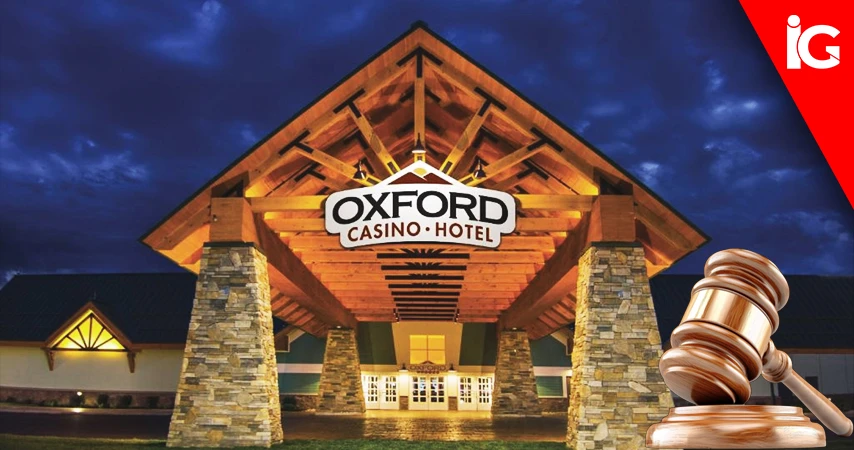
Churchill Downs Incorporated has filed a federal lawsuit contesting Maine’s newly enacted online casino gaming law, arguing that the legislation unlawfully grants exclusive iGaming rights to the state’s four federally recognised tribes. The legal challenge marks a significant escalation in the debate over how online gambling markets should be structured in newly regulated U.S. jurisdictions.
The complaint was submitted on 23 January to the U.S. District Court for the District of Maine by Oxford Casino, which is operated by BB Development and owned by Churchill Downs. The filing seeks a declaration that the law is unconstitutional and requests an injunction to block its enforcement.
Maine’s iGaming Framework Under Scrutiny
Maine’s iGaming law came into effect on 11 January after Governor Janet Mills declined to veto the legislation. Under the statute, the exclusive right to operate online casino gaming is limited to the Houlton Band of Maliseet Indians, the Mi’kmaq Nation, the Passamaquoddy Tribe, and the Penobscot Nation. Non-tribal operators are prohibited from applying for licences or partnering with tribal entities unless the operating business is wholly owned by a tribe.
As a result, land-based casino operators such as Oxford Casino are excluded from participation, despite operating legally within the state and contributing to its tax base.
Constitutional and Commerce Clause Arguments
In its lawsuit, Oxford Casino argues that the law violates the Equal Protection Clauses of both the U.S. Constitution and the Maine Constitution, as well as the U.S. Constitution’s Commerce Clause. The plaintiffs contend that restricting iGaming licences based on tribal status unfairly discriminates against in-state and out-of-state commercial operators.
The complaint states that Oxford Casino has invested heavily in Maine’s economy, employing more than 360 people and contributing over $40 million in state taxes during 2025 alone. The operator argues that the law effectively excludes established employers from a newly created market without offering a competitive licensing pathway.
Economic Impact Claims
The lawsuit also highlights potential economic consequences tied to the iGaming rollout. According to industry research cited in the filing, the introduction of online casinos could result in the loss of approximately 378 jobs statewide, alongside $22 million in reduced labour income and $60 million in lost economic value.
The plaintiffs further argue that land-based casino revenues typically decline by an average of 16% following the introduction of iGaming, raising concerns about the sustainability of physical casino operations in Maine.
Broader Industry Opposition
The challenge comes amid wider resistance to iGaming expansion in the state. The National Association Against iGaming has announced plans to pursue a petition campaign seeking a public referendum to overturn the law. The group argues that online casinos could negatively affect employment, local economies, and responsible gambling efforts.
Maine became the eighth U.S. state to legalise iGaming, making it the first new online casino market since Rhode Island launched iGaming in 2023.
Implications for Future iGaming Regulation
The lawsuit underscores growing tensions between tribal exclusivity models and commercial competition in the U.S. online gambling sector. As lawmakers and regulators explore digital expansion, the outcome of the Maine case could influence how future iGaming frameworks are structured nationwide.
If successful, the legal challenge may prompt revisions to Maine’s law or shape judicial interpretation of how tribal gaming rights intersect with constitutional protections and interstate commerce in online gambling markets.
Follow For More: LinkedIn