



Crypto Licensing Wars: Isle of Man vs Curaçao vs Malta

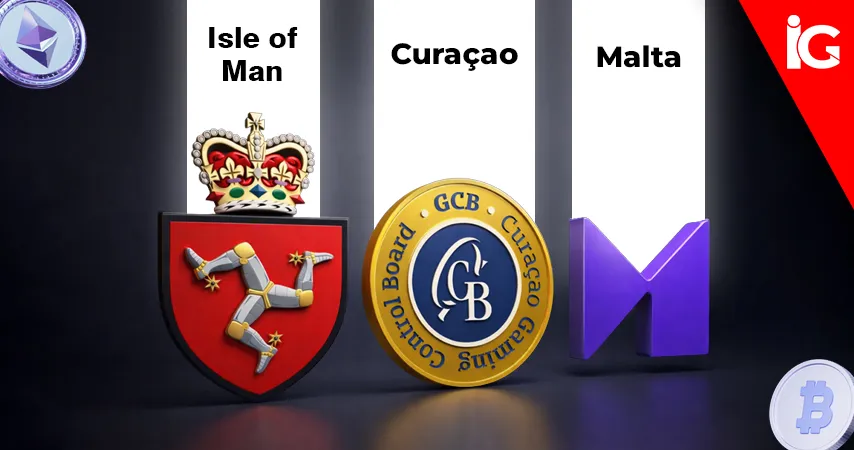
As blockchain-based gambling matures, licensing strategy is becoming a defining factor in operator success. What was once an unregulated frontier is now evolving into a structured, compliance-driven environment shaped by a handful of key jurisdictions.
Among them, the Isle of Man, Curaçao and Malta represent three distinct approaches to integrating crypto into regulated gambling.
Each reflects a different balance between speed, credibility and long-term regulatory risk.

Isle of Man: Structured Innovation with Long-Term Credibility
The Isle of Man positioned itself early as a digital asset as “money’s worth” jurisdiction by aligning government policy with gambling regulation. Rather than building separate or experimental frameworks, it focused on integrating crypto-related activity within existing compliance structures.
For operators, this creates a clear value proposition:
Strong regulatory credibility with banks and partners
Defined AML, KYC and player protection expectations
A stable, long-term licensing environment

The trade-off is a higher barrier to entry, both in cost and operational scrutiny. However, for operators targeting institutional credibility, payment stability and long-term scalability, this structure offers a strategic advantage.
Curaçao: Speed, Accessibility and Regulatory Transition
Curaçao has historically been the most accessible offshore licensing jurisdiction, particularly for crypto operators seeking rapid market entry.
Its appeal has been driven by:
Fast licensing timelines
Lower setup and operational costs
A flexible approach to crypto integration
However, the jurisdiction is undergoing regulatory reform. The transition toward a more centralised licensing framework and increased compliance expectations reflects growing international scrutiny.
This evolution creates a mixed outlook: Curaçao remains attractive for early-stage operators, but its long-term positioning is becoming more structured and potentially more demanding.
Malta: High Standards with Measured Crypto Integration
Malta has long been positioned as a Tier-1 regulatory jurisdiction, particularly within Europe. Its approach to crypto gambling, however, has been more cautious.
While the Malta Gaming Authority has explored distributed ledger technology through sandbox frameworks, integration into mainstream licensing has been gradual.
For operators, this means:
Strong regulatory credibility, particularly in EU-facing markets
Higher compliance and reporting requirements
More limited flexibility for fully crypto-native models
Malta remains a strong choice for operators prioritising regulatory reputation and European market perception, but may be less suited for fast-moving Web3-native strategies.
The Strategic Trade-Off: Speed vs Credibility vs Future Risk
The differences between these jurisdictions ultimately come down to three core variables:
Curaçao optimises for speed and accessibility
Isle of Man balances innovation with structured compliance
Malta prioritises regulatory strength and market perception
For operators, this is no longer just an operational decision. Licensing directly impacts:
Banking access and payment processing
Partnership opportunities and affiliate relationships
Brand trust and user acquisition
Long-term regulatory exposure

Where the Market Is Heading
As global scrutiny of crypto intensifies, loosely regulated models are likely to face increasing pressure. Jurisdictions that can integrate blockchain within established compliance frameworks are better positioned for long-term relevance.
This shift suggests a gradual move away from purely speed-driven licensing toward models that combine innovation with regulatory credibility.
Conclusion
The crypto licensing race is no longer about who moves fastest, but who builds sustainable frameworks.
Curaçao continues to offer speed and accessibility. Malta delivers regulatory prestige within traditional markets.
But the Isle of Man occupies a strategically important middle ground, combining early blockchain alignment with structured oversight.
For operators planning beyond short-term entry, that balance may prove decisive.
Source : Isle of Man Gambling Supervision Commission; Isle of Man Government; CGA; Malta Gaming Authority; CSB Group