



Malta Gaming Authority Names Erika Spiteri Bailey Co-Chair of GREF’s InfoStat Working Group

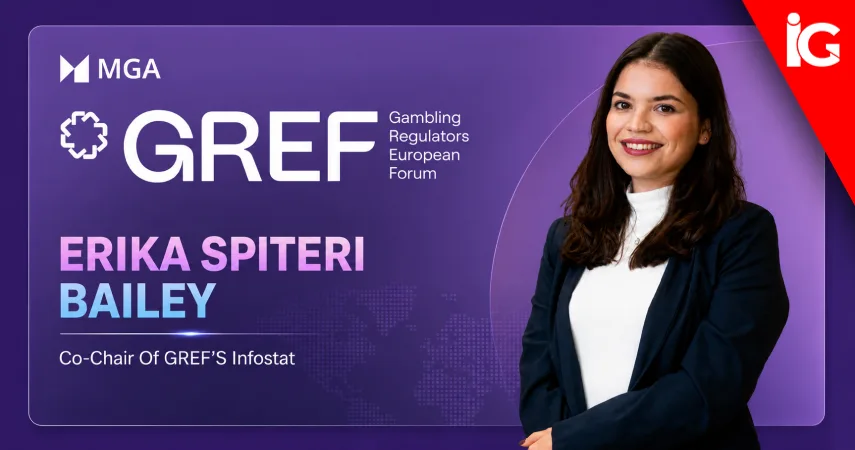
The Malta Gaming Authority (MGA) has announced the appointment of Erika Spiteri Bailey, Senior Executive for BI & Data Analytics, as Co-Chair of the InfoStat Working Group at the Gambling Regulators European Forum (GREF).
Spiteri Bailey will serve alongside Anssi Airas of Finland’s National Police Board, strengthening Malta’s representation within one of Europe’s most significant gambling regulatory coordination bodies.
The appointment reflects the growing strategic importance of data analytics within gambling regulation, as European authorities increasingly rely on intelligence-led supervision, behavioural monitoring and cross-border data cooperation to oversee rapidly evolving online gambling markets.
GREF functions as a collaborative platform for gambling regulators across Europe, supporting information exchange and regulatory coordination between member jurisdictions. Within that structure, the InfoStat Working Group focuses specifically on the use of regulatory data, analytics frameworks and statistical monitoring tools to support supervisory activity and policy development.
The move positions the MGA more prominently within ongoing European discussions around the future use of regulatory technology, market intelligence and data-led enforcement practices.

European regulators intensifying focus on data-driven supervision
The appointment comes amid broader efforts across Europe to modernise gambling oversight through enhanced data collection, risk modelling and real-time monitoring capabilities.

Regulators are increasingly adopting analytics-driven approaches to strengthen anti-money laundering (AML) enforcement, player protection supervision and compliance monitoring. Growing regulatory concern around online gambling-related harm, affordability controls and financial crime risks has accelerated investment in behavioural analytics and intelligence-sharing frameworks between jurisdictions.
In recent years, European regulators have placed greater emphasis on identifying risk patterns through player behaviour data, transaction monitoring and operator reporting systems. Authorities are also moving toward more coordinated cross-border oversight as online gambling operators continue to scale across multiple regulated markets.
Against that backdrop, groups such as GREF and its InfoStat Working Group have become increasingly important in helping regulators standardise reporting practices, improve analytical capabilities and share regulatory intelligence more effectively.
The rising importance of data governance within gambling supervision is also reshaping how regulators approach enforcement activity, with many authorities now prioritising proactive risk detection over traditional reactive compliance reviews.
Operators face growing reporting and compliance expectations
For operators, the continued expansion of regulatory data initiatives signals increasing pressure to strengthen internal compliance infrastructure and reporting capabilities.
Authorities across Europe are demanding more sophisticated access to operational and behavioural data as part of broader efforts to improve market oversight. This includes closer scrutiny of player monitoring systems, affordability assessments, AML controls and responsible gambling interventions.
The industry is also seeing growing expectations around real-time or near real-time reporting, enhanced data transparency and improved interoperability between operator systems and regulatory frameworks.
As a result, compliance functions are becoming more technology-driven, with operators investing more heavily in analytics platforms, automated monitoring tools and RegTech infrastructure to meet evolving supervisory requirements.
The shift is particularly significant for multi-market operators, many of which now face differing data reporting obligations across European jurisdictions. Increased cooperation between regulators through bodies such as GREF could eventually contribute to more harmonised supervisory standards, although it may also raise the overall baseline for compliance expectations across the sector.
For suppliers and compliance technology providers, the trend also presents expanding commercial opportunities tied to regulatory reporting, fraud detection, safer gambling analytics and behavioural risk management systems.

InfoStat working group expected to shape future regulatory cooperation
The InfoStat Working Group plays a central role within GREF’s wider objective of strengthening cooperation between European gambling regulators.
Its work includes supporting the development of statistical methodologies, data-sharing practices and analytical frameworks that can improve regulatory decision-making and enforcement coordination between member jurisdictions.
The MGA said Spiteri Bailey will help shape the working group’s programme while supporting collaboration between regulators on data-focused initiatives and supervisory projects.
The appointment also underlines Malta’s continued influence within European gambling regulation, particularly as the industry enters a period of increasing technological oversight and more advanced compliance supervision.
As online gambling markets continue to evolve, regulatory reliance on analytics, intelligence sharing and behavioural data is expected to expand further, making data governance and regulatory technology central themes in the next phase of European gambling oversight.
Source: Malta Gaming Authority