



Steve McMahon Appointed CEO of Australian Turf Club – A Defining Leadership Shift for Australian Racing

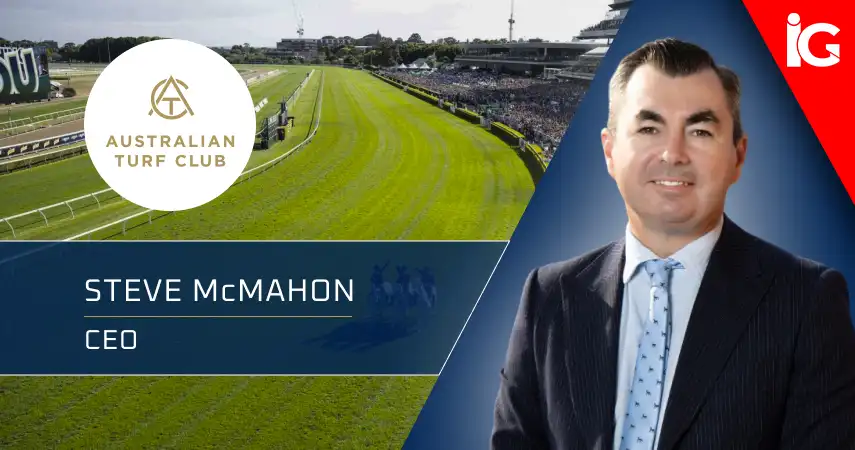
The Australian Turf Club has confirmed Steve McMahon as its Chief Executive Officer after seven months in the interim role, bringing a degree of stability to the leadership position at a time when the broader racing environment remains under pressure.
There is no real sense here of a strategic pivot. If anything, the appointment reinforces the direction already in motion. The board appears comfortable with the progress made during the interim period, and the decision now formalises that trajectory. McMahon steps into the role with a clearer mandate – less about redefining strategy, more about tightening execution across a few key areas.
At the centre of that is financial control, the competitiveness of the raceday product, and the ongoing challenge of keeping multiple stakeholders aligned without slowing decision-making.

Financial Discipline Moves to the Fore
Cost control and capital discipline
The language around “strengthening financial foundations” may sound familiar, but it reflects a very real shift in how race clubs are being run.
Costs are under closer scrutiny than they were a few years ago, yet expectations around investment – whether in infrastructure or customer experience – haven’t gone away. That tension is now part of the operating reality.
For ATC, this likely means being more selective. Not every race meeting delivers the same return, and the focus will naturally move toward those that do. At the same time, spending that sits outside core revenue drivers is likely to face more questions internally.
The mention of maintaining “appropriate reserves” is also telling. It suggests a more cautious stance on capital, which makes sense given how unpredictable attendance and wagering trends can be. In that kind of environment, flexibility matters as much as growth.
Raceday Experience as a Revenue Lever
Per-capita revenue focus
There is a clear push to improve the raceday experience, although that in itself is nothing new. The difference now is how directly it is tied to revenue expectations.
It’s not simply about getting more people through the gates. The bigger question is what each visitor is worth once they are there.
That brings a balancing act. Premium offerings – hospitality packages, events, upgraded memberships – can lift spend, but they don’t automatically expand the audience. On the other hand, chasing volume without improving yield doesn’t solve the underlying challenge either.
So the likely path is incremental. Small upgrades, targeted improvements, and a steady attempt to raise per-capita spend rather than relying on crowd growth alone. It’s a slower approach, but arguably a more realistic one in the current market.
Industry Alignment Signals Stakeholder Sensitivity
Multi-stakeholder coordination
The emphasis on alignment speaks to the complexity of the racing ecosystem more than anything else.
Decisions rarely sit with one party. Owners, trainers, regulators, government bodies, and wagering operators all have a stake, and not always the same priorities. That makes even relatively straightforward changes harder to execute.
In that context, alignment becomes less about communication and more about outcomes. Prize money levels, race programming, and commercial partnerships all require negotiation, and often compromise.
McMahon’s background suggests he is comfortable operating in that kind of environment. Still, expectations here will be practical. Stakeholders will want to see progress in agreements and structures, not just intent.

Continuity Over Disruption
Execution over strategy reset
Chairman Tim Hale’s framing of the appointment makes the broader approach fairly clear: this is about continuity.
There is no indication of a major reset or structural overhaul. Instead, the focus remains on building within the current model and improving performance over time.
That, however, brings its own pressure. Without a new strategy to point to, results become the main measure. Financial outcomes, customer engagement, and operational efficiency will carry more weight.
In that sense, McMahon’s position is now more exposed – but also more defined. The direction is set. The expectation now is delivery.
Source: Australian Turf Club