



Singapore Gambling Regulatory Authority Appoints Daniel Tan as CEO to Lead Future Regulation

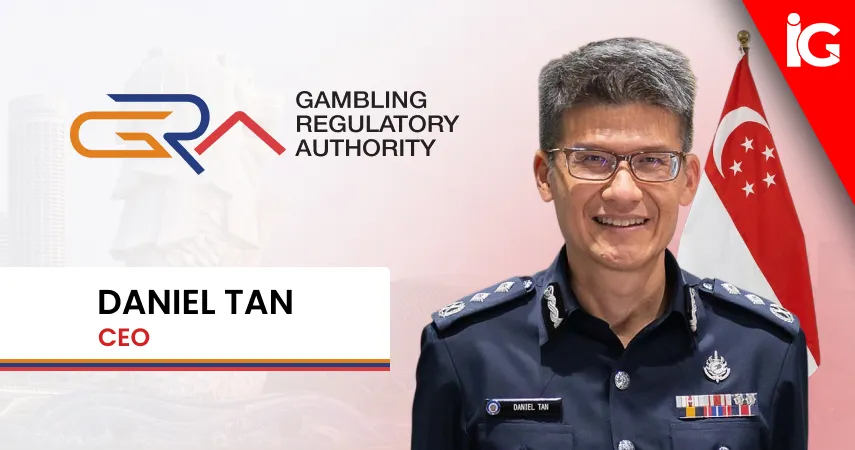
From June this year, Singapore’s Gambling Regulatory Authority (GRA) will have a new chief executive – Tan Sin Heng Daniel, who is taking over from Teo Chun Ching.
Teo will leave office on 2 June 2026, ending a berth characterised by the growth of the regulator’s mandate and institutionalisation of data-driven supervision.

Completion of Regulatory Expansion and Legislative Consolidation
Transformation of regulatory architecture
Teo’s tenure has been defined by the transformation of Singapore’s gambling regulatory architecture. Most notably, he led the 2022 transition from the Casino Regulatory Authority to the GRA, significantly broadening oversight from casino operations to encompass all regulated gambling activities, including remote and emerging digital formats.
Gambling Control Act implementation
This institutional shift was supported by the implementation of the Gambling Control Act, which consolidated various legacy laws into a single, cohesive framework. The Act was designed to provide regulatory flexibility while maintaining strict controls, enabling authorities to respond more effectively to technological developments and evolving market dynamics.
Amendments to Casino Control Act
In parallel, amendments to the Casino Control Act in 2024 further strengthened regulatory safeguards, particularly in areas related to compliance, enforcement, and social responsibility obligations for licensed operators.
Operationally, the GRA under Teo increased its reliance on data analytics and risk-based supervision. This included enhanced monitoring systems aimed at identifying suspicious activity, strengthening anti-money laundering (AML) controls, and improving mechanisms to mitigate gambling-related harm.

Incoming CEO Brings Enforcement and Technology Expertise
Tan Sin Heng Daniel joins the GRA from the Singapore Police Force, where he has held a series of senior leadership roles across policy development, operational command, and strategic planning.
Technology-driven enforcement experience
His recent tenure as head of the Traffic Police focused on the deployment of technology-driven enforcement tools, including AI-enabled detection systems and upgraded operational infrastructure. Prior experience within the Singapore Prison Service also exposed him to system integration, inter-agency coordination, and rehabilitation policy frameworks.
While Tan does not come from a gambling-specific regulatory background, his professional track record aligns closely with the GRA’s current direction – particularly its emphasis on enforcement capability, operational efficiency, and technology integration. His appointment signals continuity in regulatory philosophy rather than a shift in strategic priorities.
Market Implications: Stability with Continued Regulatory Tightening
The leadership transition is not expected to change Singapore’s conservative regulatory approach, which has become fundamental for licensed operators, suppliers and potential new entrants into the market.
Increasing compliance expectations
Rather, the immediate future suggests that further tightening will be implemented above an already strong backdrop. Anticipate Growing Compliance Expectations, Such as AML and Responsible Gambling Supported by Data Driven Approaches.
In parallel, the GRA is also undertaking to enhance its own use of technology in supervisory functions, increasing oversight on operator activity – particularly through digital channels. The consequence may be more aggressive enforcement and shorter response cycles for regulatory action.

Gradual regulatory development
From a policy standpoint, the current foundation laid out by Gambling Control Act lessens the necessity of structural reform. In turn, you would expect any future regulatory developments to be through more gradual changes that are responsive to new risks and technologies.
Overall, the transition reinforces Singapore’s position as a tightly controlled, high-compliance gambling market where regulatory sophistication and enforcement capability – rather than liberalisation – define the operating environment.