



What is iGaming? History, Regulation, Technology and Growth of the Online Gambling Industry

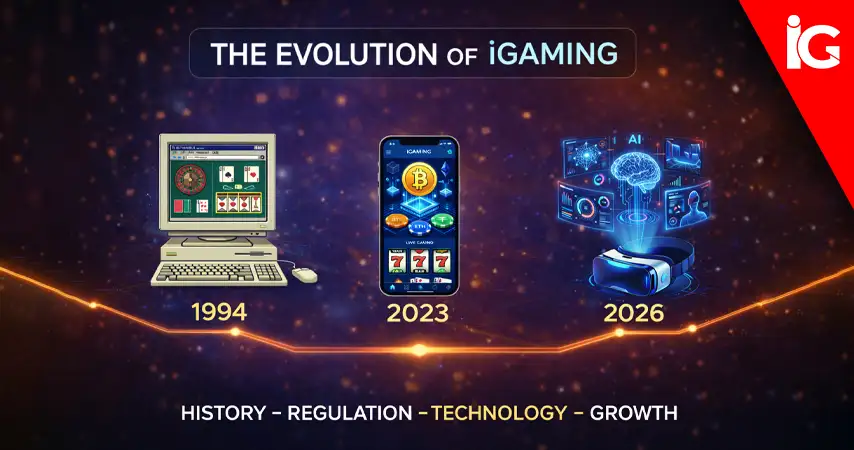
The iGaming industry has evolved significantly since the mid-1990s, transforming from basic online casino platforms into a global digital ecosystem that includes sports betting, live casino gaming, esports wagering and mobile gambling platforms. Today, the sector operates across multiple regulated jurisdictions and is supported by advanced technologies such as artificial intelligence, cloud infrastructure and real-time data analytics.
Regulatory frameworks introduced by governments and gambling authorities have played a critical role in shaping the industry’s development by ensuring consumer protection, licensing oversight and market integrity.

What is iGaming?
The term iGaming, short for “internet gaming,” refers to all forms of gambling conducted online through digital platforms. This includes casino games, sports betting, poker, bingo and other wagering activities that are accessible via computers, smartphones or other internet-connected devices.
Unlike traditional land-based gambling venues, iGaming platforms allow players to participate remotely through licensed online operators regulated by national gambling authorities. These platforms use digital payment systems, random number generator technologies and secure server infrastructure to provide gambling services online.
Common forms of iGaming include
- Online casino games such as slots, blackjack and roulette
- Online sports betting on professional and amateur sporting events
- Online poker platforms
- Bingo and lottery-style games
- Esports wagering
The growth of iGaming has been driven by technological advancements, increasing internet access worldwide and the introduction of regulatory frameworks that allow governments to oversee licensed gambling operators.
1990s: The Birth of Online Gambling and Early Regulation
The origins of the modern iGaming industry can be traced to the mid-1990s when the growth of the internet enabled the launch of the first online casino platforms.

Key regulatory developments during this period
- 1994: Antigua and Barbuda introduced one of the earliest legal frameworks allowing companies to obtain licenses for online gambling operations through legislation governing international gaming businesses.
- 1996: The Kahnawake Gaming Commission was established in Canada to regulate online gambling operators and provide licensing oversight.
Early industry pioneers
- 1994 – Microgaming developed one of the first online casino software platforms.
- 1996 – InterCasino launched as one of the earliest real-money online casinos.
- 1997 – CryptoLogic introduced secure payment technologies supporting online gambling transactions.
These developments helped establish the technological and regulatory foundation for the emerging online gambling sector.
Early 2000s: Market Expansion and Regulatory Frameworks
The early 2000s saw the expansion of online gambling platforms as broadband internet access increased and digital payment technologies improved.
Major regulatory developments during this period
- 2001: The Alderney Gambling Control Commission began licensing online gambling operators.
- 2004: Malta introduced a structured licensing framework for remote gaming, later overseen by the Malta Gaming Authority (MGA).
- 2005: The United Kingdom passed the Gambling Act 2005, establishing the UK Gambling Commission as the national regulator for gambling activities.
Major companies emerging during this period
- 2001 – Playtech founded as a gambling technology provider.
- 2004 – Betfair expanded its online betting exchange model.
- 2005 – bet365 expanded its digital sportsbook platform internationally.
Industry scale
- By the mid-2000s the global online gambling market was estimated to generate around $15–16 billion annually.
2010–2015: Mobile Technology and the Expansion of Regulated Markets
The rapid growth of smartphones and mobile internet transformed the iGaming industry during the early 2010s.
Mobile betting applications allowed players to access casino games and sportsbook platforms directly from their mobile devices.
Key regulated markets during this period included
- Italy
- France
- Spain
These countries introduced national licensing systems requiring operators to comply with responsible gambling policies and regulatory oversight.
Key companies influencing industry development
- 2011 – Evolution Gaming expanded live dealer casino technology.
- 2013 – DraftKings launched daily fantasy sports platforms.
- FanDuel grew rapidly in the fantasy sports market.
Industry growth indicators
- Global iGaming revenues exceeded approximately $30 billion annually by 2015.
- Mobile devices became a dominant access channel for online gambling.
2015–2020: Live Casino Innovation and Data-Driven Sportsbooks
Technological innovation significantly enhanced the online gambling experience during this period.
Live dealer casino platforms allowed players to interact with real dealers via high-definition video streaming.
Key technological developments
- Live dealer casino gaming
- Real-time sportsbook trading systems
- Integrity monitoring tools
- Expansion of esports betting markets
Major industry data providers
- Sportradar expanded global sports data services for sportsbooks.
- Genius Sports strengthened betting data and integrity monitoring services.
Estimated market size
- The global online gambling market reached approximately $53–55 billion by 2019.
2018–Present: U.S. Sports Betting Expansion and Global Regulation
A significant regulatory development occurred in 2018, when the United States Supreme Court removed the federal ban on sports betting, allowing individual states to regulate the activity.
Following this change, multiple U.S. states introduced licensed sportsbook markets.
Key regulatory trends
- Expansion of regulated sports betting markets across U.S. states
- Development of regulatory frameworks in Latin America
- Strengthening of consumer protection and advertising rules in European markets
Major global operators
- Flutter Entertainment
- Entain
- Kindred Group
These companies operate multiple international online betting and gaming brands.
2020–2021: Pandemic Accelerates Online Gambling Adoption
The COVID-19 pandemic accelerated the shift toward digital gambling platforms as many land-based casinos temporarily closed.
Key industry impacts
- Increased player registrations on online casino platforms
- Growth in mobile gambling activity
- Rising demand for live dealer casino games
The pandemic reinforced the long-term transition toward online gambling platforms.
Transition from Land-Based Casinos to Digital Platforms
The growth of the iGaming sector has been closely connected to the transition from traditional land-based casinos to online platforms.
Digital gambling allows players to access betting markets and casino games remotely, significantly expanding global accessibility.
Key Segments of the iGaming Industry
The modern iGaming sector includes several major verticals.
Core segments
- Online casino gaming
- Online sports betting
- Online poker platforms
- Bingo and lottery games
- Esports wagering
Each segment contributes to the diversification of the digital gambling ecosystem.
Digital Payments and Financial Infrastructure
Secure payment technologies are essential to the operation of online gambling platforms.
Common payment technologies
- E-wallet services
- Instant bank transfers
- Secure payment gateways
- Know Your Customer (KYC) verification systems
These systems help ensure regulatory compliance and secure financial transactions.
Software Providers and Technology Infrastructure
Technology providers are responsible for building and maintaining online gambling platforms.
Key technology contributors
- Game development studios
- Online casino platform providers
- Sportsbook data suppliers
- Random Number Generator (RNG) technology providers
These companies supply the infrastructure used by operators worldwide.
Security, Fraud Prevention and Betting Integrity
Integrity monitoring systems are critical for maintaining trust within the industry.
Core monitoring functions
- Detection of suspicious betting patterns
- Identification of irregular wagering activity
- Monitoring potential match manipulation
These systems often involve cooperation between operators, regulators and sports organizations.
Responsible Gambling and Player Protection
Responsible gambling measures form a key component of modern regulatory frameworks.
Common player protection tools
- Self-exclusion programs
- Deposit limits
- Reality checks
- Behavioral monitoring systems
These tools help regulators and operators promote safer gambling environments.
Economic Contribution of the iGaming Industry
Regulated online gambling markets contribute significantly to national economies.
Economic benefits
- Government tax revenue
- Employment across technology, compliance and customer service sectors
- Investment in digital infrastructure
Industry estimates suggest hundreds of millions of players worldwide participate in online gambling activities.
2022–Present: AI Technology and Industry Maturity
Artificial intelligence and data analytics are now widely used across the iGaming sector.
AI applications include
- Betting market optimization
- Detection of suspicious betting activity
- Personalized gaming experiences
- Responsible gambling monitoring
These technologies allow operators to manage large volumes of betting activity efficiently.

Future Outlook: Technology and Market Growth
The iGaming industry is expected to continue expanding as new regulated markets emerge and digital infrastructure improves.
Technologies shaping the future
- Artificial intelligence
- Blockchain-based payment systems
- Advanced data analytics
Market growth projections
- The global online gambling market could exceed $95–100 billion annually by the late 2020s.
- Long-term forecasts suggest the market may surpass $120 billion by the early 2030s.
With continued regulatory development and technological innovation, the iGaming industry is expected to remain one of the fastest-growing sectors within the global digital entertainment economy.
Source : Alderney Gambling Control Commission, Kahnawake Gaming Commission, Malta Gaming Authority, UK Gambling Commission , Financial Services Regulatory Commission