



Beyond Deposits and Withdrawals: Why Payment Technology Is Becoming iGaming’s Growth Engine

For most of the last decade, payments were the part of an iGaming operation nobody really talked about. You picked a processor, plugged it in, and moved on to the things that felt like they mattered more. Game content. Acquisition. Brand. Payments just sat there in the background, quietly doing their job.
That arrangement is breaking down. As operators push into new regulated and emerging markets, the demands on payment technology have grown sharp and specific. Faster transactions. Local payment methods players actually recognize. Clean payouts. Banking infrastructure that holds up under scrutiny. None of that is back-office anymore.
And the pressure is only building. Operators are being squeezed from two sides at once, by tighter regulation and by competitors who are getting better at the basics. So the providers handling payments have quietly changed roles. They are no longer just moving money from A to B. They are becoming the partners operators lean on to enter markets, lift conversion, and keep players from drifting away.

Nuvei Expands Its Reach Across Global Gaming Markets
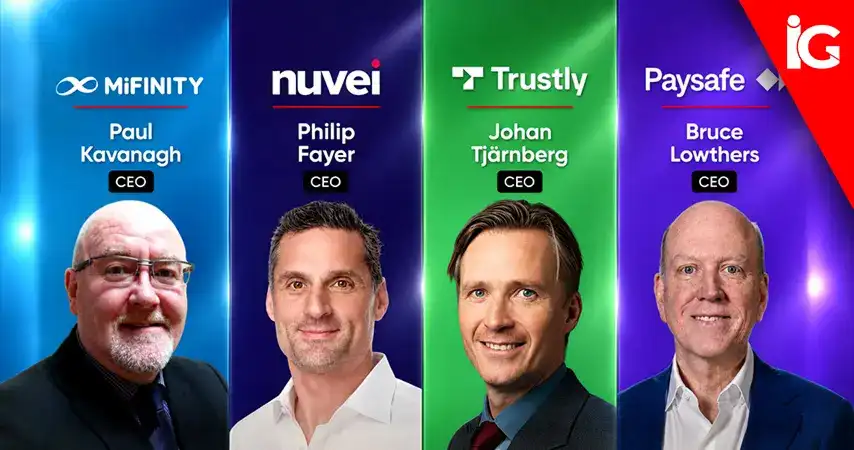
Under Chair and CEO Philip Fayer, Nuvei has grown into one of the bigger names supporting operators across regulated gaming markets. The numbers tell most of the story. More than 200 markets connected. Over 700 payment methods supported. Transactions running in more than 150 currencies.
But reach on its own is not the whole pitch. Nuvei’s services stretch across payment acceptance, payouts, banking solutions, risk management, and fraud prevention, which is the part operators care about when they are weighing a partner. Expanding into a new jurisdiction means dealing with payment preferences and regulatory quirks that change from one border to the next. A broad network helps a business adapt to all of it without rebuilding from scratch each time. That flexibility is the real selling point.
Paysafe Continues to Build on Its Gaming Heritage
Paysafe has been around this sector long enough to know it well. Led by CEO Bruce Lowthers, the company reported an annualized transaction volume of roughly $167 billion in 2025 and runs a global workforce of close to 2,900 people.

Its hold on iGaming, though, goes deeper than processing. Through wallet brands like Skrill, Paysafe owns something hard to manufacture: familiarity. A player who already has a wallet set up and trusts it tends to use it. That matters. In payments, the method someone already has installed quietly wins more often than the cheaper or faster newcomer. Convenience, speed, and the simple comfort of a name a player recognizes still shape how people choose to deposit and withdraw, and Paysafe has leaned into exactly that.
Trustly Advances the Open Banking Movement
Trustly has built its name around a different idea entirely. Under CEO Johan Tjärnberg, it has become one of the most visible providers of open banking payment solutions, serving more than 9,000 merchants across 30-plus markets and reaching over 650 million consumers through 12,000 banks.
The growth has been steady and real. Trustly processed $87 billion in total payment value in 2024, up 54 percent year on year, and then crossed the $100 billion mark for the first time in 2025. That milestone says something about where the wider market is heading. By moving money directly from account to account, Trustly cuts the card networks out of the middle, and with them a chunk of cost and friction. For an operator trying to bring payment expenses down while keeping transactions fast, that is a pitch worth listening to.
MiFinity Focuses on Alternative Payments and Localization
MiFinity plays a narrower, sharper game. Under CEO Paul Kavanagh, and with more than two decades in online payments behind it, the company has carved out space in iGaming through digital wallet services and alternative payment options, all running on a regulated platform that serves merchants and consumers across international markets.
The flagship MiFinity eWallet supports over 75 integrated payment methods and shows up across more than 800 live brands. The thread tying it together is localization. Players in markets the bigger providers sometimes overlook get a way to pay in their own currency, on their own terms. That fit can matter more than scale, especially in fragmented or emerging regions where the obvious global options simply do not work as well.
Payment Innovation Becomes a Competitive Differentiator
So what changed? The honest answer is that the player noticed. What used to be an operational box to tick is now tied directly to acquisition, retention, compliance, and how far a business can expand.
Think about it from the player’s side. A slow withdrawal is not a minor irritation. It is a reason to leave. Faster payouts, deposits that just work, local payment choices, and fraud protection that does not get in the way have all become part of the experience people judge an operator on. And when payment performance shapes satisfaction, it starts shaping revenue too.
That is why this matters competitively. Payment capability is becoming one of the clearer ways operators set themselves apart in markets where almost everything else looks the same.
The Bigger Picture: Payments Become a Core Growth Engine
Step back and a pattern shows up. The rising influence of providers like Nuvei, Paysafe, Trustly, and MiFinity points to a broader change running through iGaming. Each one comes at the market from a different angle, yet all of them are chipping away at the same set of problems: localization, transaction speed, security, and keeping operations efficient.
Nuvei leans on global scale and the sheer range of payment methods it supports. Paysafe holds its ground through a trusted wallet ecosystem and serious transaction volume. Trustly is pushing open banking further into everyday use. MiFinity is answering the demand for alternative and localized payment methods that the bigger names can miss. Four strategies. One direction of travel.
As operators keep moving into tighter, more crowded jurisdictions, the ability to deliver payments that are fast, secure, and genuinely local will only grow in importance. Payment technology has stopped being a support function quietly humming along in the background. It is turning into a real driver of market access, player engagement, and the kind of growth that lasts.

Strategic Outlook: The Infrastructure Defining Tomorrow’s Industry Leaders
Here is the part worth sitting with. The next phase of iGaming expansion will not be decided only by better content or a slicker platform. It will be shaped, in large part, by the strength of the payment systems sitting underneath the operators. As player expectations keep climbing and regulators get more sophisticated, operators will increasingly need partners who can deliver speed, flexibility, compliance, and real regional know-how all at once.
In a business where the experience a user has can move retention and revenue directly, payments have quietly become a strategic asset rather than a service running in the background. The companies that make transactions simpler, widen access, and move money smoothly across borders are the ones likely to define what iGaming looks like next. Not the loudest marketers. The ones who got the plumbing right.
Source: Company Reports & Public Disclosures