



Florida Gaming Control Commission Reports Four Years of Enforcement Against Illegal Gambling

Florida now has a four-year track record from a regulator built to police illegal gambling rather than simply license it. In mid-July 2026, the Florida Gaming Control Commission marked its fourth anniversary and released the numbers behind it. They are heavy on enforcement. Nearly 11,000 illegal slot machines seized. More than $23m in illegal gambling proceeds recovered. Since its launch in July 2022, the agency has treated illegal gambling as a criminal problem to be shut down, not a compliance matter to be managed. For anyone watching how one of America’s largest gaming states handles the grey market, the four-year record is worth reading closely.
Inside the Florida Gaming Control Commission’s Seizure Record
The headline numbers are built for impact. In the past year alone, the agency shut down 184 illegal gambling arcades and made 177 arrests. Across four years, the illegal slot machine haul sits near 11,000 units, alongside that $23m in recovered proceeds. These are not the metrics of a compliance office ticking boxes. They are the output of an operation designed to disrupt.

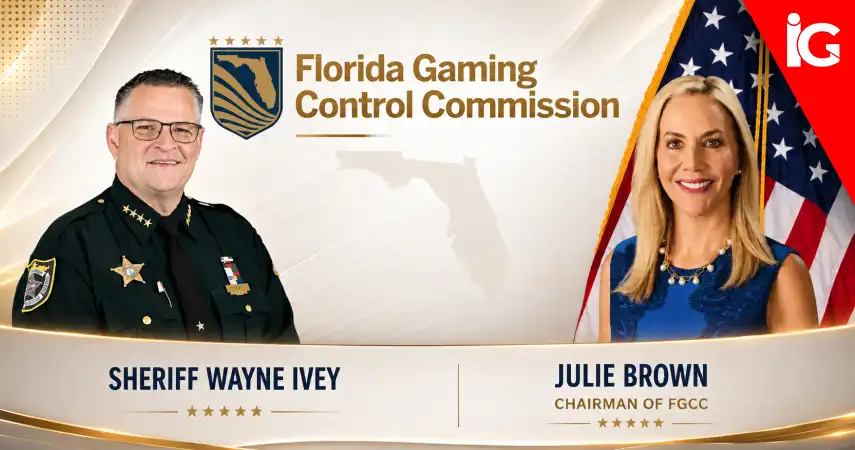
Chair Julie Brown, who founded the agency, put the mission in plain terms. She called the commission the first statewide law enforcement agency created since 1967, a fact she tied directly to the growing threat posed by illegal gambling. Read past the anniversary framing and the message is sharper. The state decided the problem was large enough to warrant a new police force.
When Illegal Gambling Investigations Lead to Guns and Narcotics
Here is where the story stops being about slot machines. The commission’s investigations have reached into narcotics, illegal firearms and dog betting rings tied to criminal gambling operations. That link changes the category entirely. Illegal gambling is being treated not as a standalone offence but as an entry point into organised crime.
That reframing has real weight. It gives the agency a broader mandate and a stronger political case for its budget. It also explains the pace of its partnership building. To date, the commission has signed 44 memoranda of understanding with local, state and federal law enforcement. One of those partners is the Brevard County Sheriff’s Office. As Sheriff Wayne Ivey put it: “If you’re operating illegal gambling businesses in our community, we’re coming for you!”
The $3bn Pari-Mutuel Wagering Engine Behind the Enforcement
The enforcement story runs alongside a revenue one. The commission also houses the Division of Pari-Mutuel Wagering, which oversees compliance for legal gaming. Over four years, that division has collected more than $3bn in revenue from licensed pari-mutuel wagering, cardrooms, slot machine facilities and revenue sharing under the Compact between the Seminole Tribe of Florida and the State of Florida. Those funds feed the state’s education and environmental initiatives.

The division has also processed nearly 57,000 occupational licence applications, work that supports thousands of jobs across the regulated sector. So the same body seizing illegal machines is protecting a multi-billion-dollar legal market. Enforcement and revenue, under one roof.
What the Commission’s Dual Mandate Means for Legal Operators
For legal operators and suppliers, the practical read is straightforward. A regulator this aggressive on illegal play is, in effect, clearing the field. Every illegal arcade shut down is grey-market demand pushed back toward licensed venues in Miami-Dade, Broward and Seminole Tribe facilities. That is a tailwind for compliant businesses, not a threat.
But it also raises the compliance bar. A commission that polices illegal gambling as organised crime is not one to test at the edges. Anyone weighing a Florida presence should factor in a regulator with both a budget and enforcement power, and plan their compliance posture accordingly.
Where Florida’s Enforcement Model Goes From Here
The next 12 months will show whether this model scales. Expect the arrest and seizure figures to keep climbing as more of those 44 partnerships mature into active operations. Expect the narcotics and firearms angle to feature more heavily, because it strengthens the case for further funding. And expect other states to study Florida closely. The question they will be asking is simple. Does treating illegal gambling as a law enforcement problem, rather than a licensing one, actually work? Four years in, Florida is building the answer.