



£15.5m Total Revenue, 12% Content Licensing Growth: Gaming Realms H1 2026 Under CEO Mark Segal

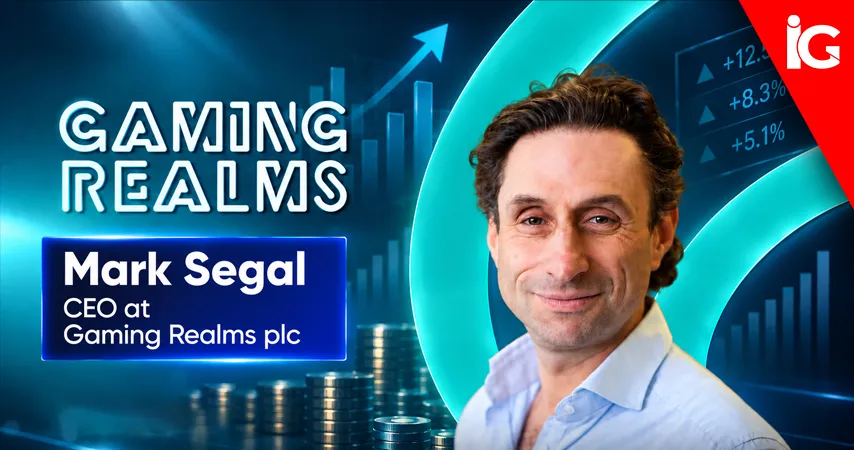
Gaming Realms plc, the AIM-listed developer and licensor of mobile gaming content, reported its interim results for the six months to 30 June 2026 on 8 September 2026.
Total revenue was £15.5m, down 3% from £16.0m in the same half of 2025. The movement reflects a lower brand licensing contribution, following a significant multi-year brand deal recognised in full in the prior period. Excluding brand licensing, group revenue grew 9%, and the core content licensing business grew over the same period. This article sets the 2026 figures against the 2025 results to show where the change sits.

Content licensing revenue: £13.0m in 2026, £11.7m in 2025
Content licensing is the core of the group. Revenue was £13.0m in H1 2026, up from £11.7m in H1 2025, a rise of 12%, or 13% at constant currency.
That is a step up on the year before, when the same business grew 4%. Two figures sit alongside it: unique players rose 88% year on year, and North America content licensing grew 16%.
Brand licensing: how 2025 and 2026 compare
The change in total revenue comes from brand licensing. That revenue was £0.7m in H1 2026, against £2.4m in H1 2025.
In 2025, the group recognised a significant multi-year brand licensing renewal in full at inception, and that lifted the 2025 brand figure to £2.4m. That consideration was recognised in the prior period only, so it did not recur in 2026, and brand revenue was £0.7m for the half. Excluding that renewal, underlying brand licensing revenue more than doubled, from £0.3m to £0.7m.

Profit figures across the two years
On a headline basis, total Adjusted EBITDA was £6.6m in H1 2026 against £7.5m in H1 2025, and profit before tax was £3.4m against £4.2m. Both reflect the same lower brand licensing contribution described above.
On a comparable basis excluding brand licensing, core Adjusted EBITDA rose to £5.9m in H1 2026 from £5.1m in H1 2025, up 16%, and the core margin was 40% against 37%. Profit before tax excluding brand licensing rose 47%, to £2.7m from £1.8m.
What the UK gaming duty rise means for Slingo
UK Remote Gaming Duty rose from 21% to 40% on 1 April 2026. That followed the staking-limit changes introduced in 2025, which had reduced UK content licensing revenue by 21% in the second quarter last year, improving to a 9% decline by August 2025.
In H1 2026, UK revenue grew 3%, and UK gross gaming revenue is now above the levels seen before the 2025 staking limits. The company attributes this to the resilience of the Slingo brand and product innovations developed in response to the regulatory changes.
The read for operators is that content holding player engagement through a higher-tax, tighter-stake environment supports operator revenue as well, which is one reason such content tends to stay in the line-up.
Revenue by region across 2025 and 2026
The regional mix shifted year on year. The United States remained the group’s largest single market at £8.95m in H1 2026, against £10.60m in H1 2025, partly reflecting currency and the timing of licensing revenue. Malta rose to £3.49m from £2.19m, and Gibraltar to £1.63m from £1.34m.
Much of the content reaching UK players is booked through these regulated hubs rather than the domestic UK line, which is why the group reports UK trading through its performance figures rather than the small booking figure.
Slingo and Lucky Lunar widen the games portfolio
Gaming Realms released 11 new titles in H1 2026, up from six in H1 2025. Eight were Slingo games and three came from Lucky Lunar, a slot studio the group launched in early 2026 to extend its range beyond the Slingo mechanic into traditional slots.
The group signed 22 new operator partners in the half, up from 19 a year earlier, including FanDuel in West Virginia, Resorts in Pennsylvania, William Hill in Spain and Entain in Portugal. Capitalised development spend rose to £4.4m from £3.4m, and the number of third-party games distributed reached 28, up from 23 at December 2025.
How the social publishing arm performed
The group also runs a smaller social publishing business, offering free-to-play games to US players. Revenue there was £1.7m in H1 2026, against £1.9m in H1 2025. It is a modest and steady part of the group and did not materially move the overall result.
Points to keep in view across both years
Brand licensing is now a small line and can move sharply between periods, so year-on-year comparisons on the total figure will vary. The post-period figure of 23% core content licensing growth covers two months only. A full year at 40% UK duty will continue to affect the wider UK market.
Net cash was £13.5m at 30 June 2026, against £19.0m at 30 June 2025. The reduction reflects £6.0m returned to shareholders through the buyback programme during the period. The group remains debt free.
Where the growth goes next: new regulated markets
The group went live in Nigeria, Ghana, Kenya and Peru during the half, taking it to 32 regulated markets at period-end. After the period end it launched in Alberta, on the opening day of that province’s regulated market, and in Buenos Aires Province, Argentina, taking the total to 34. That compares with 22 markets a year earlier.
A year ago the same strategy meant Brazil, British Columbia and Delaware, which CEO Mark Segal described then as proof of “the global demand for our content and the strength of our operator partnerships.” On this half, he said: “Our UK business demonstrated real resilience, growing revenues despite the near-doubling of Remote Gaming Duty.”
The board says trading was in line with expectations and remains confident of delivering full-year results in line with market expectations.
Source: Gaming Realms