



From Prohibited Bettors to Match-Fixing Alerts – IC360 & Brazil’s Ministry of Sports Strengthen Sports Integrity

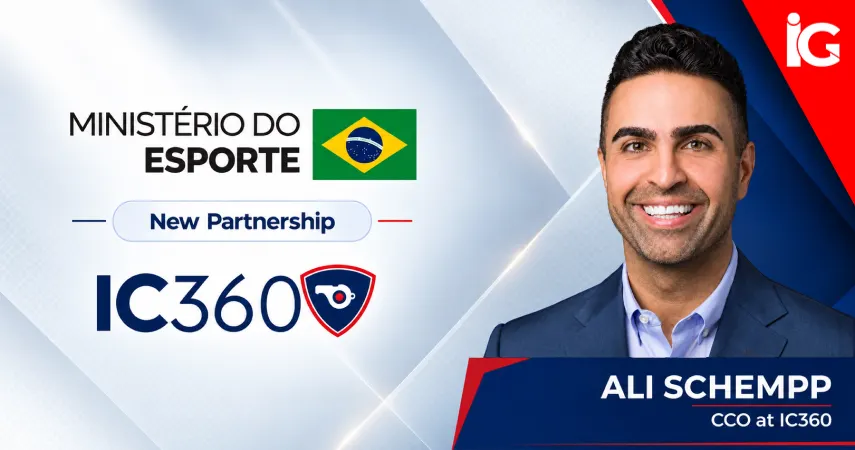
IC360 has signed a 24-month Technical Cooperation Agreement with Brazil’s Ministry of Sports (MESP) to deploy its ProhiBet technology and Integrity Monitoring platform across Brazilian athletic competitions. The agreement sets up a formal framework to prevent, monitor and combat match-fixing, and it lands in one of the most closely watched newly regulated betting markets in the world.
Why Sports Integrity in Brazil’s Regulated Gaming Market Matters Now
Brazil’s regulated betting market has drawn heavy operator interest, and with that scale comes exposure to match-fixing risk. A national sports ministry formalising its integrity framework, rather than leaving it to individual bodies, is a signal of where governance in the market is heading. The 24-month term gives the arrangement enough runway to become part of how Brazilian sports oversight actually functions.

What the IC360 and MESP Agreement Actually Involves
Under the agreement, MESP acts as a primary list provider for ProhiBet in Brazil. IC360 securely aggregates and manages encrypted lists of restricted individuals, including athletes, coaches, referees and sports governance officials, to prevent prohibited sports betting. The system uses tokenised identifiers and secure API integrations to cross-reference this data against operator databases without exposing sensitive personal information.
Complementing ProhiBet, IC360’s Integrity Monitoring platform delivers automated tracking across odds, lines and sports markets, giving MESP early-warning visibility into irregular betting activity. IC360 will also conduct technical training for MESP personnel and deliver quarterly reports analysing global match-fixing trends.
IC360’s Dual Foothold Across Brazil’s Betting Oversight
The operator read is straightforward. A centralised, ministry-held prohibited-bettor list checked against operator databases means integrity obligations in Brazil are becoming more structured and harder to sidestep. As Ali Schempp, Chief Commercial Officer of IC360, put it: “By centralizing a comprehensive prohibited bettor list as a single list provider, the MESP is setting a benchmark for the rest of the world.” What makes this notable is IC360’s wider position in the market. The company already holds a technical agreement with the Secretariat of Prizes and Bets of the Ministry of Finance (SPA-MF), so it now sits alongside both the financial regulatory authority and the central sports administration in Brazil.
Where This Integrity Deal Still Has to Prove Itself
This is a company announcement, and its practical value will depend on execution: how completely lists are populated, how consistently operators integrate, and how the monitoring outputs are acted upon. A framework and a set of tools are the starting point, not proof of outcomes, and the release does not detail enforcement mechanisms or operator obligations. Those details will determine how much the arrangement changes on the ground.

What Comes Next for Brazil’s Regulated Gaming Market?
Expect the near-term focus to sit on training MESP personnel and standing up the quarterly reporting cadence, with the real test being how deeply operators plug into the centralised list. If a ministry-held prohibited-bettor list paired with market monitoring proves workable, it offers a template other regulated markets could study. For operators active in Brazil, the direction is clear enough: integrity oversight is consolidating, and the expectation to align with it will only grow.
Source: IC360