


¥487.5B Revenue. Stronger Profits. Sharper Strategy – SEGA SAMMY Holdings Is Repositioning for Long-Term Growth Under Haruki Satomi

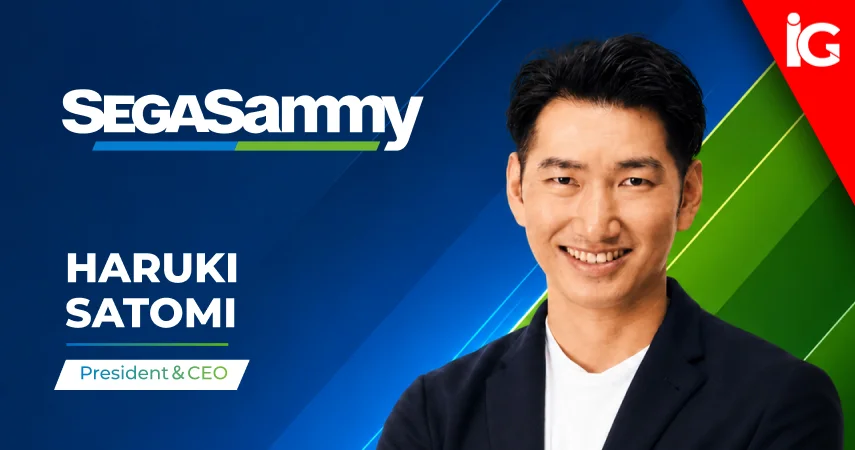
SEGA SAMMY reported higher annual revenue in FY2026 but fell to a net loss after major impairment charges tied to Rovio and Stakelogic exposed growing pressure across the group’s international gaming and live-service expansion strategy.
The company posted FY2026 revenue of ¥487.5bn, up from ¥428.9bn the previous year, while operating income declined slightly to ¥47.1bn. Net losses attributable to shareholders reached ¥5.7bn after ¥58.8bn in extraordinary losses linked primarily to goodwill impairments and restructuring measures.
The results highlighted an increasingly uneven business mix inside the group. While pachislot operations continued generating strong earnings and cash flow, SEGA SAMMY’s gaming acquisitions and global GaaS ambitions remained heavily investment-driven with limited near-term profitability.

SEGA Scales Back Parts of Its F2P Strategy
Management acknowledged underperformance across several live-service initiatives and confirmed it is lowering the priority of parts of its Game-as-a-Service strategy following weak results from new F2P titles and delays affecting multiple launches.
The company said “Sonic Rumble Party” underperformed expectations and disclosed that some F2P projects originally scheduled for FY2025 had been delayed. SEGA SAMMY also confirmed it had cancelled its “Super Game” initiative, although management stated no additional impairment charges were associated with the cancellation.
More significantly, the company revealed that more than 100 F2P development staff have already been reassigned to premium full-game development centered on established franchises.

The shift signals a strategic reprioritization toward lower-risk premium console releases tied to core intellectual property. SEGA SAMMY now expects four major full-game launches in FY2027, supported by franchises including Persona, Virtua Fighter, Jet Set Radio, Crazy Taxi and Total War.
At the same time, management emphasized efforts to improve global publishing and digital sales performance through data-driven marketing and unified KPI systems designed to strengthen long-term monetization efficiency.
Rovio Impairment Raises Questions Around Acquisition Strategy
SEGA SAMMY also recorded a major impairment tied to Rovio after the Angry Birds developer failed to deliver the level of growth initially anticipated at the time of acquisition.
According to company projections, Rovio revenue is expected to decline from €309m in FY2023 to approximately €158m by FY2027.
Management stated that collaboration between the businesses had not yet generated the expected “economic value” and indicated Rovio would now focus more heavily on operational rebuilding before accelerating broader global GaaS expansion plans.
Despite the impairment, SEGA SAMMY continues positioning Angry Birds as a key transmedia asset. The group plans to expand monetization through theatrical releases, licensing partnerships and consumer products tied to both the Angry Birds and Sonic franchises.
Licensing operations were among the stronger-performing areas inside the entertainment segment during FY2026, supported by Sonic-related merchandise and film revenue. The company expects additional contributions from “The Angry Birds Movie 3” and “Sonic the Hedgehog 4” over the coming fiscal periods.
Pachislot Operations Continue to Drive Earnings
The pachislot and pachinko division remained SEGA SAMMY’s strongest earnings contributor during FY2026.
Segment operating income increased to ¥32.1bn from ¥20bn a year earlier, supported by strong performance from major pachislot titles including Tokyo Revengers, Hokuto No Ken and Kabaneri of the Iron Fortress.
Management said pachislot utilization trends remained stable even as the wider pachinko market softened. The company also highlighted growing adoption of reel-exchangeable cabinets, which allow operators to replace only select machine components rather than entire cabinets, lowering costs and improving manufacturing efficiency.
Reel-unit sales are expected to account for roughly 20% of pachislot unit volumes in FY2027.
Although SEGA SAMMY forecasts lower segment profit next year due to rising parts costs and weaker pachinko demand, pachislot remains the group’s primary cash-generation engine and continues to offset losses elsewhere in the business.
Gaming Division Losses Deepen Following GAN and Stakelogic Deals
SEGA SAMMY’s gaming division generated ¥25.3bn in FY2026 revenue following the consolidation of GAN and Stakelogic, but operating losses widened to ¥7.2bn.
The company expects gaming losses to deepen further to ¥10bn in FY2027 as it continues investing in U.S. B2B gaming infrastructure and absorbs higher operating costs linked to the acquisitions.
Stakelogic was fully impaired after tightening regulation in the Netherlands triggered restructuring and downsizing measures.
Meanwhile, GAN remains in a transition phase as SEGA SAMMY rebuilds the platform around a next-generation technology stack intended to support omnichannel B2B gaming services in the U.S. market.
Management has already tightened capital allocation policy following weaker-than-expected cash generation and rising working capital requirements associated with the gaming acquisitions. The company said it would suspend large-scale M&A activity while prioritizing share buybacks and selective strategic investment.
SEGA SAMMY ended FY2026 with net cash of ¥11.7bn, down sharply from ¥49.3bn a year earlier following acquisition spending and treasury stock purchases.
While the company continues forecasting revenue growth in FY2027, the latest results suggest SEGA SAMMY is entering a more disciplined operational phase focused on integration, publishing execution and capital efficiency rather than aggressive expansion.
Source: SEGA SAMMY