



Brightstar Lottery Is Showing Why Lottery Remains One of Gaming’s Most Stable Models

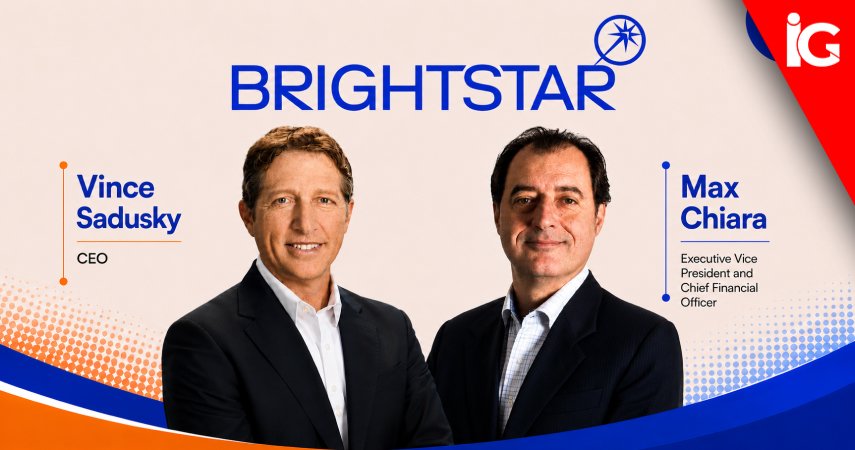
Brightstar Lottery began 2026 with improved profitability and reaffirmed full-year guidance, highlighting the continued resilience of large-scale regulated lottery operators despite elevated infrastructure and licensing costs.
First-quarter revenue reached $587 million, representing a 1% year-on-year increase, while adjusted EBITDA rose 15% to $287 million. Income from continuing operations climbed sharply to $63 million from $8 million in the prior-year period.
The quarter’s margin expansion was driven primarily by operational efficiencies, improved U.S. product mix, lower LMA shortfalls, and continued savings generated through the company’s OPtiMa cost-reduction program rather than accelerated consumer demand.
The results reinforce a broader trend across the regulated lottery sector, where scale operators continue to prioritize operational discipline and long-term cash-flow stability over aggressive short-term expansion.

Italy Continues to Anchor Long-Term Earnings Stability
Italy once again served as the company’s primary growth and stability engine, delivering 3.1% same-store sales growth during the quarter.
The Italian market remains strategically significant because of its scale, regulatory consistency, and long-duration licensing structure, all of which support predictable recurring revenue. Those characteristics continue to distinguish lottery operators from more volatile digital gaming segments that are often more exposed to shifts in consumer spending and marketing costs.

Brightstar also completed the final €1.43 billion payment associated with its Italy Lotto license in April, underlining the substantial capital commitments required to compete in tier-one regulated lottery jurisdictions.
The scale of those licensing obligations continues to create high barriers to entry for smaller operators and suppliers, further consolidating the competitive advantage of established incumbents with stronger balance sheets and government relationships.
For the wider gaming industry, the Italy concession remains one of the clearest examples of how long-term lottery contracts continue to function as infrastructure-style assets capable of generating stable earnings over extended cycles.
Refinancing Strengthens Liquidity Position
Alongside operational growth, Brightstar also moved to strengthen its financial flexibility through the refinancing of its revolving credit facility through March 2031 on improved terms.
The refinancing is notable given the current borrowing environment and reflects continued lender confidence in the predictability of regulated lottery cash flows.
Net debt stood at $2.75 billion at quarter-end, while leverage remained at 2.4x following the Italy license payment obligations. Total liquidity reached $2.8 billion, including approximately $1.2 billion in unrestricted cash.
The balance-sheet position remains relatively stable considering the scale of the Italy investment, ongoing shareholder distributions, and continued infrastructure commitments across multiple regulated markets.
The refinancing also provides additional strategic flexibility as major lottery operators increasingly compete for long-duration government contracts that require significant upfront capital investment.
Shareholder Returns Continue Alongside Infrastructure Spending
Brightstar returned more than $70 million to shareholders during the quarter through dividends and share repurchases while maintaining investment commitments across regulated jurisdictions.
The board also declared a quarterly dividend of $0.23 per share.
The combination of infrastructure investment, manageable leverage, and ongoing shareholder returns continues to reinforce the positioning of regulated lottery operators as cash-flow-driven gaming assets rather than pure growth vehicles.
That distinction has become increasingly important as investors across the gaming sector continue to prioritize earnings durability, recurring revenue visibility, and regulatory stability during periods of broader market uncertainty.

Full-Year Guidance Reaffirmed
Management reaffirmed full-year 2026 guidance of revenue between $2.50 billion and $2.55 billion alongside adjusted EBITDA guidance of between $1.16 billion and $1.19 billion.
The outlook suggests the company expects continued margin support from operational efficiencies and disciplined cost management rather than meaningful acceleration in underlying consumer demand.
For the broader gaming industry, Brightstar’s first-quarter performance further highlights how regulated lottery businesses continue to benefit from long-term government partnerships, defensive earnings profiles, and comparatively stable recurring revenue streams despite ongoing macroeconomic pressures.
Source: Brightstar Lottery