



The $140B Bet: How PASPA Turned the U.S. Into iGaming’s Biggest – and Most Complex – Market

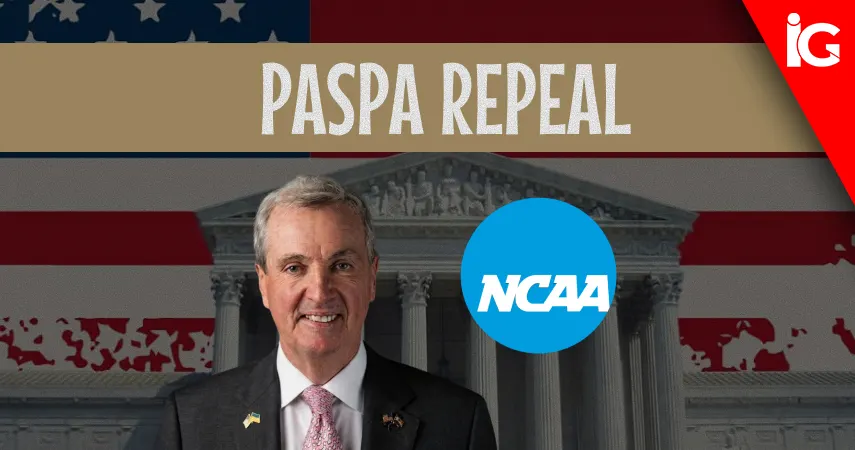
In May 2018, the U.S. Supreme Court ruling in Murphy v. NCAA overturned the Professional and Amateur Sports Protection Act, effectively removing the federal restriction on state-authorized sports betting across most of the United States.
That moment marked a clear structural shift in the global gaming landscape. It didn’t create a new market from scratch – but it did bring an already active, largely informal demand into a regulated environment, including activity that had previously existed through offshore or unregulated channels.
What followed was one of the fastest expansions seen in modern betting history. Within a few years, the United States moved from a tightly restricted setup to becoming one of the largest regulated sports betting ecosystems globally.
By 2026, the market generates over $140B+ in annual betting handle, supported by rapid mobile adoption, more refined product offerings, and growing consumer participation. At the same time, it has evolved into one of the most complex regulatory environments in global iGaming.

From Restriction to Rapid Expansion
State-led legalization
The pace of growth following PASPA’s repeal has been both significant and uneven. States were given full authority to legalize and regulate sports betting independently, which led to a decentralized rollout rather than a unified approach.
Some states moved quickly, launching both retail and online betting within relatively short timelines. Others took a more cautious route, delaying implementation or limiting available betting formats.

Market maturity differences
Today, around 40 U.S. jurisdictions have legalized sports betting in some form, with a majority offering mobile wagering. However, the level of maturity varies widely – some states generate substantial revenues, while others are still in earlier stages of development.
This state-led expansion has driven scale – but not uniformity.
A Market Defined by Fragmentation
Despite its size, the U.S. does not function as a single national betting market. Instead, it operates as a collection of independent regulatory systems, each with its own rules and priorities.
State-level frameworks
Each state defines its own:
- Licensing frameworks
- Taxation models
- Market access requirements
- Online vs. retail betting rules
- Compliance and reporting standards
There is no centralized licensing authority, which means operators must secure approval and maintain compliance in every jurisdiction where they operate.
Federal oversight layer
At the same time, federal oversight still applies in areas such as financial compliance and interstate activity, adding another layer to the regulatory structure.
As a result, operators cannot rely on a single, unified strategy. Success requires executing multiple localized approaches simultaneously.
The Economics of Operating in the U.S.
Operational complexity
The fragmented nature of the U.S. market creates meaningful operational and financial challenges.
Entering a new state isn’t just about launching a product – it involves navigating licensing processes, aligning with regulatory requirements, and adapting technology to meet jurisdiction-specific standards.
Ongoing compliance adds further cost, as operators must continuously track regulatory updates and maintain reporting obligations across multiple states.
Taxation impact
Taxation adds another layer of pressure. While some jurisdictions offer relatively moderate rates, others impose significantly higher burdens.
New York stands out as the most prominent example, with a 51% tax on sportsbook gross gaming revenue (GGR) – one of the highest globally. These rates directly affect profitability and influence how operators allocate budgets for marketing, promotions, and customer acquisition.
Scale as a Competitive Advantage
Large operators
In this environment, scale has become a clear differentiator.
Large, well-capitalized operators such as Flutter Entertainment and Entain are better positioned to navigate complexity. They can absorb regulatory costs, invest in compliance infrastructure, and expand more efficiently as new markets open.
Smaller operators, on the other hand, face higher barriers to entry and greater challenges in achieving long-term sustainability – especially in competitive or high-tax states.
This dynamic is increasingly shaping consolidation trends and competitive positioning across the industry.
The Bigger Picture
Scale without standardization
PASPA’s repeal created a uniquely structured market – one defined by scale, but not standardization.
It opened access to a $140B+ annual wagering ecosystem, while leaving regulatory control fragmented across individual states. The result is a market that continues to evolve, balancing growth, competition, and regulatory independence.

Final Take
Structural impact
The repeal of PASPA did more than expand sports betting – it fundamentally changed how operators approach market entry, compliance, and long-term strategy.
Market reality
The United States today stands as both:
- The largest regulated sports betting opportunity globally, and
- One of the most operationally complex markets to navigate
For operators, success depends not only on capturing growth – but on effectively managing the regulatory and economic realities of a fragmented, state-driven system.
Source: Supreme Court , American Gaming Association