



How Super Is Building Smarter iGaming Products in 2026

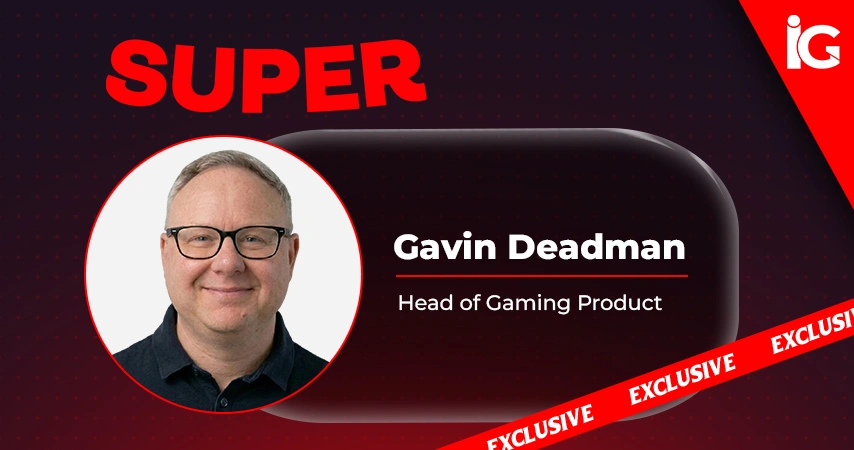
Many iGaming brands focus on traffic, bonuses, and expansion. But sustainable growth usually starts elsewhere: product quality.
In an exclusive interview with iGaming News Today, Gavin Deadman shared how Super approaches innovation, provider strategy, AI personalization, and player engagement in an increasingly competitive market.

Q. How has technology and product development evolved in recent years?
Gavin Deadman:
The biggest change has been the speed of technology solutions and the ability to respond quickly to a changing landscape. Previously, development was more waterfall-based. You would identify an opportunity, plan it, and then go live and learn from it in production, which could be 12 months after the initial idea.
Now the speed of learning is significantly faster. You can validate hypotheses with users, build a quick prototype using AI, run a survey, and gather feedback within a few hours, right through to iterating in production using modern coding languages, which can be done within a few days or a week.
So the pace of learning, adjusting, and adapting has increased considerably. That’s the biggest change over the last year or so.
Q. How do you approach product strategy in iGaming?
Gavin Deadman:
First of all, it’s about understanding the market needs, such as portfolio competitiveness, regulatory and compliance requirements, player expectations, and the commercial setup, including profitability when factoring in tax and provider rates.
You take that into account, then define the goal, the direction of travel, and the overall vision. From there, you identify the specific opportunities, where you can fit within the landscape, and what the underlying value proposition and differentiation should be.
Finally, you define the potential solutions, make the trade-offs based on impact and effort, and execute whilst continuously learning. That could mean going live in a new market, launching an additional brand in an existing market, expanding the content portfolio, or iterating and optimising what already exists.
Q. How has the iGaming industry evolved in terms of complexity?
Gavin Deadman:
Over the last 10 years, the iGaming industry has become significantly more complex. There’s now a much greater focus on regulation and compliance, and it’s not something you can address quickly. Many regions and countries have different regulatory requirements, which you need to adapt to and learn from. That alone adds considerable complexity when operating across multiple markets.
Then there’s the speed of technology and innovation, especially when you include AI. Innovation is no longer just about new game mechanics or new providers. It’s also about improving operational flows, such as how you build prototypes, optimising the content funnel, onboarding new providers faster, and increasing overall efficiency.
The technology available today means solutions can be delivered much faster, which increases the pace of innovation and scaling. When combined with growing competition, the landscape becomes even more complex. Historically, market leaders could hold their position for years with little concern, but now a new entrant with modern technology can scale quickly across multiple markets.
Overall, the industry has become more complex, which has increased the need for strong product leaders and strategic thinkers at every level of the business to find smarter, faster ways to solve problems and drive business impact.
Q. What drives player engagement in today’s iGaming environment?
Gavin Deadman:
There are multiple factors when considering player engagement. First, there’s the content itself. The content needs to be high quality so players stay engaged with the product.
The general consensus is that players wouldn’t spend time in a game unless they genuinely enjoyed it and found it engaging. So delivering high-quality content is the foundation for engagement.
There’s also the front-end experience. It needs to be intuitive and fast to navigate so players can quickly access the content they want. The smoother that journey is, the more likely players are to remain engaged.
Finally, there are richer engagement features, such as social elements and deeper gamification mechanics, which are gaining momentum in the industry. These help create excitement and give operators an additional USP within their value proposition.
Q. How do you approach provider selection and content strategy?
Gavin Deadman:
It depends, as provider selection can be quite complex. If we’re going live in a market for the first time, we can use tools like iGamingTracker to identify the most popular providers in that market. That makes the initial decision more straightforward. You look at which providers perform well locally, and then decide roughly how many you want to launch with on day one to be competitive as quickly as possible.
The next step is when you’re already operating in a mature market and the product is live. The question then becomes whether you should expand the portfolio further. One key consideration is whether a provider offers something unique, either in terms of content or game type.
Q. How is AI influencing personalization and player experience?
Gavin Deadman:
AI is influencing this quite significantly. Most operators are using AI to some degree, and we’re increasingly using it to improve customer experience, optimise flows, and enhance the content funnel through greater automation.
Specifically on the content and personalisation side, AI has technically been used in iGaming for years. Sections in the games lobby such as recently played, because you played, and recommended for you have relied on elements of machine learning for some time.
However, the industry is now moving to the next level, and that’s certainly the direction we’re taking at Super. The focus is on personalising significant portions of the homepage, automating decision-making, and surfacing the most relevant content for each player.
That means showing the right games, the right providers, and the most relevant experiences based on player behaviour, rather than relying on a one-size-fits-all lobby. Ultimately, AI is helping move personalisation from basic recommendations to a more dynamic, fully tailored player experience.
Q. How do regulation and compliance impact product development?
Gavin Deadman:
First of all, it’s about working very closely with regulation and compliance teams.. There are multiple layers of regulation and compliance, which can sometimes make coordination more complex.
You’ve got technical compliance, provider audits, and game certifications, all of which can vary by region. On top of that, there are broader gaming compliance requirements. These layers often differ across markets, which adds further complexity when operating at scale.
A key part of product development is interpreting these requirements, understanding what they mean in practice, and identifying commonalities to help build a scalable product. From there, it’s about building the product around those constraints, ensuring features, content, and flows are compliant from the outset, rather than retrofitting later.
Q. How do you balance product quality with marketing efforts?
Gavin Deadman:
If you’re investing in marketing, you need a strong product experience. Otherwise, you’re driving players to something that isn’t ready, and they’ll churn due to technical issues, lack of a strong value proposition, or missing the content they’re familiar with. That ultimately results in wasted marketing spend.
On the other hand, if you focus only on product without supporting it with marketing, players won’t be aware of it. There’s only so much you can achieve through SEO and organic growth. To scale effectively and compete for market-leading positions, you need strong marketing behind the product.
So it’s about aligning both. Ensuring the product quality is strong enough to retain players, while marketing drives acquisition. When those two work together, you achieve better ROI and more sustainable growth.
Q. What has helped you most in your professional growth?
Gavin Deadman:
My commercial background has been a big factor in my professional growth. I spent around 15 years in acquisition marketing before moving into product, which helped me better connect product decisions to business impact, improve pattern recognition, and understand the why behind what we build.
That commercial lens has helped when thinking about value projections, understanding the commercial model, and linking product decisions to business outcomes. It’s naturally helped me to focus on impact and prioritisation.
Alongside that, self-education has also played an important role. I read a lot of non-fiction, particularly around leadership, product, and business, and try to stay curious about how successful people operate. Observing behaviours, decision-making, and how leaders approach problems has helped shape my thinking.
Together, that commercial background and continuous learning support a focus on building products that work for customers and the business. They’ve also helped when coaching and developing others, sharing that commercial mindset and encouraging strategic thinking.

About Super
Super is a digital gaming operator focused on delivering competitive player experiences through strong product development, modern technology, and scalable market execution.
The company continues to invest in faster innovation cycles, smarter personalization, optimized content portfolios, and user-friendly gaming journeys designed to improve acquisition and retention.
The company is also pursuing strategic expansion, recently agreeing to acquire Maxbet Romania to strengthen its position across Central and Eastern Europe.
With increasing focus on AI, product quality, and regulated market growth, Super is positioning itself as a modern operator built for the next phase of iGaming competition.