



$3B+ Combined CEB. 500+ Brands. Brazil’s Betting Market Is Turning Into a High-Stakes Competitive War

Brazil’s online betting industry is no longer just a fast-growing emerging market. It is now becoming one of the most competitive battlegrounds in global iGaming.
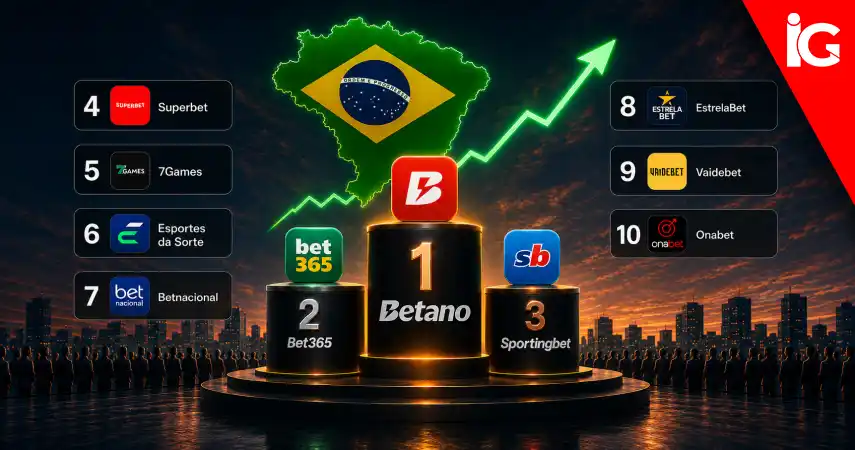
Fresh data from Blask shows Betano leading the market with more than $1.09 billion in Combined Estimated Bets (CEB), ahead of major operators like Bet365 and Sportingbet. But the real story is not only about who sits at the top, it’s about how quickly the competition underneath them is intensifying.
What looked like an easy expansion opportunity two years ago is now turning into a fight for long-term market share, customer retention, and brand survival.

Betano Keeps the Lead as Competition Tightens
Betano continues to hold a strong position in Brazil thanks to aggressive expansion, football sponsorships, and growing visibility across both sportsbook and casino.
The operator has spent the last few years building one of the strongest football-linked betting brands in Latin America.
That strategy became even more visible through Betano’s recent partnership with the Argentina National Football Team ahead of the 2026 FIFA World Cup, strengthening the company’s football-focused expansion strategy across the region.

Bet365 and Sportingbet also remain among the biggest operators in the market, backed by years of global experience, strong customer acquisition power, and established sportsbook infrastructure.
Still, the biggest movement is increasingly coming from challenger brands.
Superbet recorded more than 91% year-on-year growth, making it one of the fastest-scaling operators in Brazil right now. The numbers show how quickly momentum can change when brands execute well with local marketing, sponsorships, and player engagement.
The market now features more than 500 active betting brands, including Betano, Bet365, Sportingbet, Superbet, 7Games, Esportes da Sorte, Betnacional, EstrelaBet, VaideBet, and Onabet.
That level of competition is changing the market completely.
Launching in Brazil is no longer the difficult part. Standing out is.
The Market Is Becoming More Expensive
Brazil’s regulated betting sector continues attracting operators, suppliers, and gaming platforms from across the world because of its enormous long-term potential.
Football culture, mobile-first behavior, and strong online payment adoption continue driving rapid market growth.
Much of that growth has been accelerated by Brazil’s regulatory development and the rise of PIX instant payments, which transformed how players deposit and withdraw money across betting platforms.
But growth is becoming far more expensive.
Operators are now spending aggressively on sponsorships, influencers, affiliate marketing, television campaigns, bonuses, and promotional offers just to compete for attention.
At the same time, retention is becoming as important as customer acquisition.
Many brands are now focusing heavily on localized casino content, loyalty systems, mobile optimization, and broader entertainment ecosystems designed to keep players active for longer periods.
That pressure is also influencing suppliers.
Gaming providers are moving quickly to secure partnerships with major operators before the market becomes even more saturated. Distribution and visibility are now becoming strategic advantages.

Execution Will Decide the Long-Term Winners
The next phase of Brazil’s betting market will likely reward execution more than expansion.
Big marketing budgets alone may not guarantee long-term success once the market matures further.
Operators will need stronger retention systems, better localization, faster product rollouts, and more efficient customer acquisition models to protect market share.
Several mid-tier brands are already growing faster than expected, while larger operators are being forced to defend their positions more aggressively.
For suppliers, localized content and premium operator partnerships will become increasingly important as platforms search for ways to differentiate themselves in a crowded ecosystem.
Brazil still represents one of the biggest opportunities in global iGaming.
But the industry conversation is starting to shift.
The question is no longer:
“Who can enter Brazil?”It is becoming:
“Who can still grow once the market becomes fully competitive?”
Source: Blask