



From Two Resorts to Record Numbers: How John Farahi Is Quietly Reshaping Monarch Casino

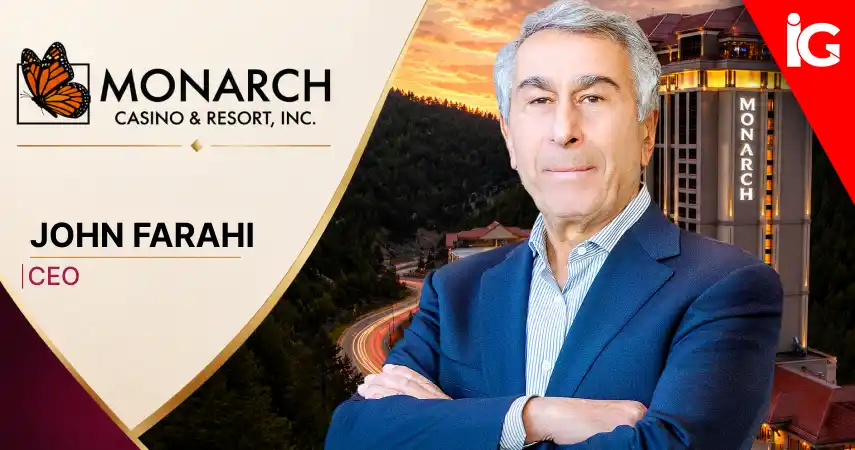
The big casino stories don’t always come out of Las Vegas. More and more, the interesting stuff is happening in regional markets, where operators are figuring out that a gaming floor alone doesn’t cut it anymore. Monarch Casino & Resort is a decent example of that shift. And John Farahi, the company’s Co-Chairman and CEO, is pretty much the reason it’s gone the direction it has.
While plenty of competitors were out chasing acquisitions and spreading themselves across a dozen states, Farahi went the other way. Fewer properties. Heavier investment. A bet on quality over quantity that, honestly, a lot of people in the industry weren’t making at the time.
The numbers are starting to make the case for him.
First quarter 2026: net revenue of roughly $136.6 million, up nearly 9% year-on-year. Adjusted EBITDA came in at around $49 million, a 19% jump. Net income was up close to 39%, landing at approximately $27.6 million. And that’s coming off a 2025 that was already a record year, with annual revenue of around $545 million and adjusted EBITDA north of $199 million. Rising. Rising consistently.

A Strategy Built Around Destination Resorts
Everything traces back to how Monarch has built its two flagship sites. Atlantis Casino Resort Spa in Reno and Monarch Casino Resort Spa in Black Hawk, Colorado. Neither is a traditional slot barn. Both were developed as destination resorts, the kind of place people might actually plan a trip around rather than stop at on the way somewhere else.
Atlantis has 817 guest rooms, around 61,000 square feet of casino space, a sportsbook, a poker room, multiple restaurants, convention facilities, and a 30,000-square-foot spa. U.S. News & World Report ranks it the top hotel in Reno. The spa has held Forbes Four Star recognition for eleven years running. That’s not accidental. It takes sustained capital and a fairly clear idea of what you’re trying to be.

Transforming Black Hawk Into a Premium Regional Destination
Monarch bought the Riviera Black Hawk in 2012 when it was in bankruptcy and, to be fair, not obviously worth much. Most operators might have run it as a modest regional box and moved on. Instead, Monarch rebuilt it from the ground up: 516 guest rooms, roughly 60,000 square feet of gaming space, around 1,100 slots, table games, a sportsbook, restaurants, a rooftop spa and pool. What had been a dead-end acquisition became a full resort. That takes patience. And capital held back from other things.
Operational Discipline Remains Central
Building resorts is one part of it. Running them efficiently is another. Both Atlantis and Monarch Black Hawk gained market share in the first quarter of 2026. The adjusted EBITDA margin moved from 32.8% to 35.8%, which reflects performance improving across gaming, hotel and food-and-beverage at the same time (and that’s not always how it goes, plenty of operators see one segment drag on the others).
Monarch ended the quarter with about $120 million in cash and nothing drawn on its credit facility. The company kept up share buybacks and regular dividend payments. Quietly disciplined. The kind of balance sheet that doesn’t generate headlines but probably should.
There’s also a notable absence on the strategy side. Monarch isn’t chasing online gaming or sports betting expansion the way many competitors are. The company actually disclosed lobbying spend opposing iGaming expansion during the quarter. Whether that’s the right long-term call is a fair question. But it’s a clear one, and it fits the logic of everything else Farahi has built.
Building a Long-Term Presence in Local Markets
Small detail but worth mentioning: in April 2026, Monarch announced its Slot Machine Change Programme had passed $1 million in charitable donations across both properties. Guests can redirect leftover ticket change to local nonprofits through kiosks on the casino floor. In the context of a $545 million revenue business, it’s not a large number. But it says something about how the company thinks about its presence in those markets. Long-term, not transactional.

What Farahi’s Strategy Says About the Future of Regional Gaming
There’s a broader point here. As digital gambling keeps expanding, physical casinos have to justify the visit. Hotels, spas, restaurants, service that actually feels premium, these things matter in a way they didn’t when the nearest competition was two hours away. Farahi seems to have understood that earlier than most.
The Monarch model isn’t for everyone. It requires patience, capital, and a willingness to say no to the kind of growth that looks good on a slide deck but spreads an operator too thin. But the results suggest it works. And for regional operators trying to figure out where the industry goes from here, it’s probably worth a closer look.
Source: Monarch Casino & Resort, Inc.