



BGC Chief Executive Grainne Hurst Warns Illegal Gambling Stakes Could Hit £33bn Within Three Years

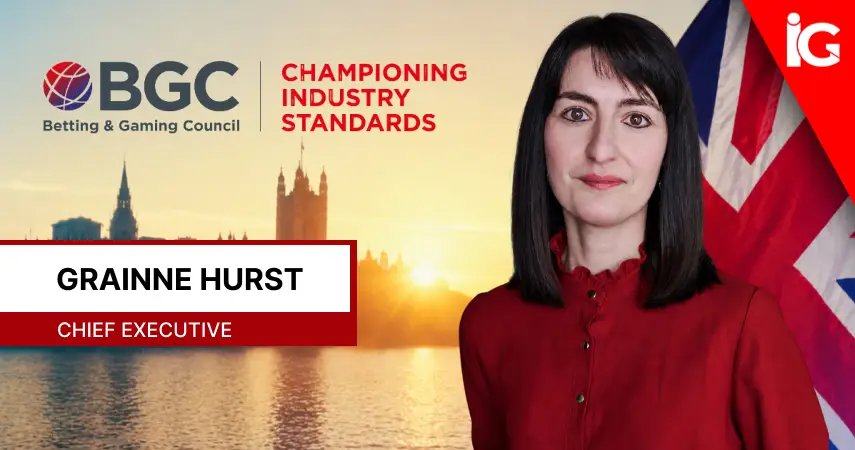
The BGC’s chief executive has launched a five-point enforcement plan backed by data that puts illegal stakes on course for £33bn by 2028. For the UK’s licensed operators, this is both a warning and a policy argument they cannot afford to waste.
For the past several years, the dominant conversation in UK gambling regulation has focused almost entirely on licensed operators. Stricter affordability checks. Tighter advertising rules. Enhanced due diligence across the board. The regulated sector absorbed those demands, largely complied, and watched its compliance costs rise. Leadership at the BGC has also been in transition, with Kane Purdy recently appointed as BGC Chair during a period the organisation itself describes as one of significant industry transformation.
The black market, through all of that, more than tripled.
That is the asymmetry Grainne Hurst, Chief Executive of the Betting and Gaming Council, is now putting on record. Not quietly. Not through a policy submission buried in a government consultation. In the most direct public terms the BGC has used to date. Her five-point plan does not ask for vague goodwill from government or gentle encouragement for tech platforms. It identifies the specific mechanisms keeping Britain’s illegal gambling market in business and calls for each one to be disrupted.
The numbers behind the plan are stark. H2 Gambling Capital estimates that illegal gambling stakes in the UK have reached £16.6bn, more than tripling since 2019 and doubling in just the last two years. The forecast trajectory takes that past £33bn by 2028. On current trends, nearly one in every five pounds bet online in Britain could be going to operators that carry no regulatory obligations, conduct no age verification, run no safer gambling interventions, and offer consumers no recourse when something goes wrong.
Hurst did not reach for cautious language. “The black market is growing fast, becoming more visible and attracting billions of pounds in stakes from British consumers,” she said. “These forecasts are a wake-up call for everyone involved in protecting consumers.”


Five Points, Five Pressure Points
The plan is structured around the supply chain that keeps illegal operators viable, not just the operators themselves.
The first target is advertising. WARC analysis cited by the BGC found that illegal operators now account for nearly half of all UK gambling advertising spend and are projected to overtake licensed operators entirely by 2028. That is not a footnote. It means the black market is currently winning the customer acquisition battle, on mainstream platforms, in front of mainstream audiences, including children. Hurst wants social media companies made directly accountable for removing illegal gambling content. The contrast she draws is pointed: Alvarez and Marsal analysis shows ASA rulings covered fewer than 0.02% of adverts from licensed operators. Meanwhile, illegal operators run campaigns through influencers, AI-generated content, and affiliate networks with no accountability whatsoever.
The second point targets enforcement speed. Illegal operators clone legitimate brands and spin up new sites faster than the current regulatory framework can respond. The BGC is calling for the Gambling Commission to have proper, faster powers to block unlicensed websites and remove apps before they reach scale.
The third goes after the money. Black market operator profits doubled between 2023 and 2025. The payment infrastructure enabling that, processors moving funds in and out of illegal platforms, is the third target. Without payment access, the business model collapses. That is the logic, and it is difficult to argue with.
The fourth introduces accountability for the wider enabler network. Hosting companies, affiliate networks, advertising intermediaries, and payment processors that knowingly service illegal operations would face meaningful penalties. Not warnings. Consequences.
The fifth is the bluntest point of all: tougher criminal sanctions for those who run, support, or profit from illegal gambling operations targeting British consumers.
Why the Framing Matters as Much as the Plan
Hurst was precise about how she wants this understood: “This is not simply an issue for the regulated industry. It is a consumer protection issue, a public health issue and a criminal justice issue.”
That is a deliberate positioning choice, and a smart one. An industry body arguing for its own commercial interests is easy for a busy minister to file away. An industry body presenting verified data on consumer harm, organised criminal activity operating through mainstream tech infrastructure, and a forecast that puts one in five online betting pounds outside the regulatory system entirely is considerably harder to dismiss.
The consumer harm case is concrete. Every person who migrates to an illegal platform loses the full architecture of protections that exist in the regulated market: age verification, safer gambling tools, affordability checks, dispute resolution, identity verification. None of it applies once they cross to the other side. Hurst was direct: “Every customer who is driven into the black market loses those protections.”
This sits within a broader regulatory moment worth understanding. Gambling Commission Chief Executive Tim Miller has already signalled that UK gambling fees are set to rise alongside a more aggressive market crackdown, a signal that the regulator is tightening its grip on the licensed sector at the same time the BGC is demanding equivalent force be directed outward. Both pressures landing simultaneously will test the policy coherence of the government’s overall gambling strategy.
The BGC acknowledged the Government’s Black Market Taskforce as a first step. Hurst was clear it has not yet translated into sufficient action. The plan calls for that work to be accelerated, with concrete commitments from technology companies, payment providers, and law enforcement acting together rather than waiting on each other.
What Licensed Operators Should Take From This
For platform heads, CMOs, and operators in the licensed market, Hurst’s intervention carries a strategic implication that extends well beyond the policy debate.
The proportionality argument in UK gambling regulation has never had stronger data behind it than it does right now. Any regulatory measure that increases friction for licensed operators without a corresponding crackdown on the illegal market does not reduce harm. It redistributes it, to a market where no protections exist at all. That argument is now on public record, backed by H2 Gambling Capital forecasts, WARC advertising data, and the named voice of the BGC’s chief executive. Operators and their legal and government affairs teams should be using it in every relevant conversation.

What Comes Next
Whether the five-point plan produces legislative movement quickly is uncertain. The asks cut across multiple government departments, private sector actors, and regulatory bodies with different mandates and timelines. Progress rarely moves in straight lines.
But Hurst has done something important here. She has established a public baseline with specific numbers attached to it. If illegal stakes continue rising at their current rate, the figure by late 2026 will be impossible to contextualise as anything other than a policy failure. The question is not whether the black market is a problem. The data settled that. The question is whether the people with the power to act move before the forecasts do.
Britain built one of the most regulated gambling markets in the world. The uncomfortable reality, the one Hurst is now saying out loud, is that it may have spent so long regulating the inside of the system that it lost sight of what was growing outside it. That imbalance does not correct itself. It has to be corrected deliberately, with the kind of coordinated, cross-sector response the BGC is now demanding.
The next move belongs to the government.
Source: Betting and Gaming Council.