


GRAI Signs First US Memorandum of Understanding With Nevada Gaming Control Board

The world’s oldest gaming regulator has just agreed to share its playbook with the world’s newest one, and the timing tells you exactly where online enforcement is heading.
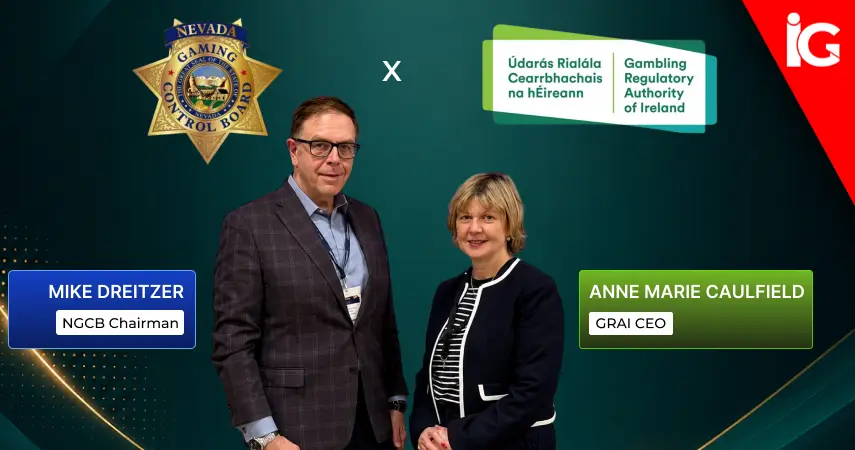
The Gambling Regulatory Authority of Ireland has signed a Memorandum of Understanding with the Nevada Gaming Control Board, its first formal agreement with any United States gambling regulator. It lands only weeks after the GRAI commenced remote betting licensing in Ireland, which puts a regulator with almost no enforcement history in charge of the sector’s most technically demanding category. The deal pairs that authority with one that has been refining licensing practice for the better part of a century.

What was signed
The MOU commits both bodies to cooperation and the structured sharing of regulatory best practice. It represents a first step in collaboration between Irish and American gambling authorities, with no equivalent arrangement previously in place between the GRAI and any US regulatory entity.
Both regulators cited the same driver behind the deal, namely that an increasing volume of gambling activity now takes place on online platforms operating across borders, which creates supervisory problems no single national authority can solve in isolation.
GRAI chief executive Anne Marie Caulfield described the NGCB’s knowledge and expertise as very valuable to the Irish regulator, welcoming the insight and guidance available to a newly established body with consumer protection and public health at the centre of its remit. NGCB chairman Mike Dreitzer confirmed the exchange of best practice runs in both directions, framing the MOU as the start of an advancing collaboration. The signing followed engagement between the two bodies at ICE 2026 in Barcelona earlier this year.
Why the timing matters
Ireland’s gambling framework went decades without meaningful modernisation before the Gambling Regulation Act created the GRAI. That leaves the authority holding broad statutory powers while carrying almost no institutional casework, and the consumer protection element of its remit is not decorative. Its own research has already linked childhood gambling exposure to a higher risk of adult harm, which signals an evidence base being assembled specifically to justify intervention rather than to describe the market.

Nevada sits at the opposite end of that spectrum. It is the longest-standing dedicated gaming regulator in the world, and its licensing standards have been copied by jurisdictions across multiple continents. The asymmetry is the entire logic of the agreement. Ireland is not looking for a peer relationship. It is looking for method.

What this means for operators
The commercial implication runs against the usual assumption. Operators entering newly regulated markets typically price in a soft supervisory runway, a period where a young regulator is still writing guidance, still building casework, and still reluctant to test its powers in court. Compliance investment gets phased accordingly, and grey areas get treated as tolerable for a while.
Borrowed institutional experience compresses that runway. A regulator importing tested supervisory method does not need years of enforcement failures to learn where the pressure points sit, and it does not need to invent its own approach to platform oversight or cross-border information sharing. That maturity arrives early, and it usually arrives before operators have finished treating the market as low risk.
Anyone modelling Irish market entry on the basis of a lenient first two years should stress-test that assumption now. The more useful question is what compliance costs look like if meaningful enforcement begins within six months rather than twenty-four.
Regulatory apprenticeship is becoming the fastest route to enforcement credibility, and the operators who recognise that shift first will be the ones still holding licences when the market settles.
Source: GRAI