


Accel Expands Nevada Footprint With Green Valley Grocery Route Agreement

A single route deal just handed Accel every Anabi-affiliated location in Southern Nevada. The terminal count is not the real story.
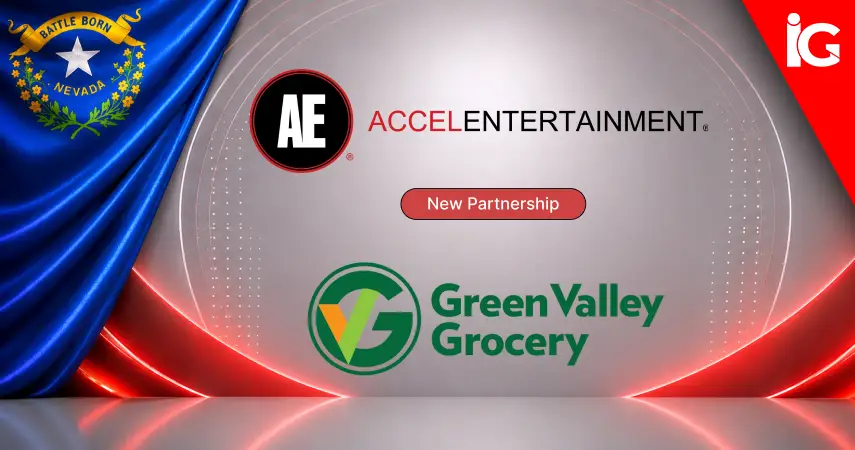
Route gaming is usually won one door at a time. Accel Entertainment just took a whole chain. The Accel Entertainment Nevada expansion continued on 20 July 2026 with a new route agreement between its subsidiary, Century Gaming Technologies Nevada, and Green Valley Grocery convenience stores. The deal adds roughly 600 electronic gaming terminals across Southern Nevada, all at locations owned by Anabi Oil. Financial terms were not disclosed. The move lands while the operator is riding real momentum, having posted a record quarter under CEO Andy Rubenstein earlier this year.

What the Green Valley Grocery route agreement covers
The agreement puts Accel gaming into every active Green Valley Grocery location that Anabi Oil owns and operates. That is around 600 terminals in one move. Accel says the deal brings its game and entertainment offering, data analytics, and promotional systems to those sites, with the stated aim of lifting customer engagement and operational efficiency over time.
The company frames it plainly. As of 1 July, Accel’s Nevada operations reached more than 525 locations and over 4,000 gaming terminals. The Green Valley Grocery sites push those figures higher still.
Why this Accel Entertainment Nevada expansion is really about density
Here is the part the press release states but does not quite explain. This is the second Anabi deal of the year. In January, Accel became the gaming partner for all of Anabi’s Rebel convenience stores across Las Vegas. Add Green Valley Grocery, and Accel now supports every Anabi-affiliated location in Southern Nevada.
That matters more than the headline number. Route gaming in Nevada has always been fragmented, contested store by store. Owning a partner’s entire estate is a different kind of win. It gives an operator data across a dense, connected cluster of sites, promotional leverage that scattered locations cannot match, and switching costs that make the partnership hard for a rival to unwind later. Century has form here, having recently expanded its Northern Winz Casino II partnership as part of the same steady build-out.

Density, in other words, beats reach.
What operators should take from this
For competing route operators, the read is uncomfortable but clear. The convenience-store gaming channel in Nevada is being consolidated by scale players, and Anabi is now effectively off the table. If your growth plan assumed you could pick off strong convenience partners in this market at leisure, that assumption needs revisiting this quarter, not next year.
The practical decision this affects is simple. Anyone chasing anchor partners in Southern Nevada should move faster and think in terms of full-estate deals, not single sites. That is the standard Accel has now set.
The caveat worth naming
Financial terms were not disclosed, so the margin picture behind these 600 terminals is unknown. Convenience-store gaming can carry different economics from bars or gaming cafes, and terminal count alone does not tell you profitability. Density is an advantage, but only if the underlying unit economics hold.

Future outlook
Accel’s own language points forward. CEO Andy Rubenstein described the Anabi footprint as a concentrated, high-quality piece of the Nevada network that the company intends to invest in and grow, and Anabi’s Sam Anabi signalled appetite to expand across both brands. Expect Accel to deepen this cluster rather than simply hold it, using the data density to sharpen promotions and lift per-terminal performance. Watch, too, for rival operators to answer with their own multi-location plays. When one company sets the density standard in a market, the rest tend to follow.
The number to remember is not 600. It is that Accel now owns every Anabi door in Southern Nevada, and that is the position competitors will spend the rest of the year trying to counter.
Source: Accel Entertainment