



€45.9M Revenue, 102% EBITA Growth: Werner Becher Leads Kambi’s AI-Powered Q2

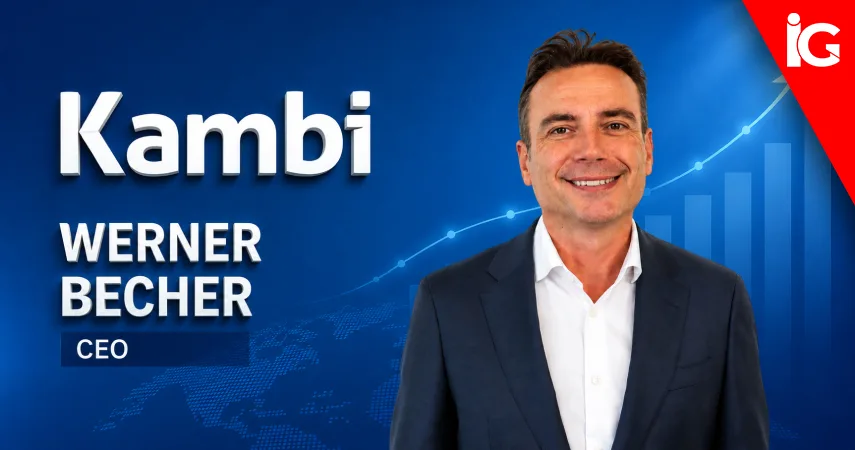
The most interesting number in Kambi’s second quarter is not the revenue line. It is what happened to profitability when the FIFA World Cup met a fully automated trading system.
Kambi Group has published its Q2 2026 results, reporting revenue of €45.9m, up 13.5% on the same quarter last year, and adjusted EBITA (acq) of €7.6m, an increase of 102% at a margin of 16.5%. Operating profit came in at €5.8m against €1.6m a year earlier. On the back of the tournament, the supplier has raised its full year adjusted EBITA (acq) guidance to €23m to €27m, up from €20m to €25m.

Kambi Q2 2026 Results at a Glance
Revenue growth is the headline, but the cost line tells the sharper story. Operating expenses actually fell 0.6% to €31.5m while revenue climbed double digits. That is operating leverage doing exactly what an efficiency programme is supposed to make it do. Profit after tax reached €3.4m, up from €0.2m, and earnings per share rose to €0.128 from €0.009. Cash and cash equivalents stood at €33.0m at the end of June, after €8.1m of share buybacks in the first half and a €9.4m standby letter of credit set aside in Q1 for a new operator contract.
The quarter also produced a record operator trading margin of 14.0%, helped by operator friendly results in the UEFA Champions League and the first half of the World Cup. Worth remembering, though, that April brought credits related to operational issues, and the FDJ UNITED and LeoVegas migrations continued to weigh on the top line. The growth came despite those drags, not in their absence.
FIFA World Cup Betting Performance Sets New Benchmarks
The expanded 48 team tournament delivered more than €1 billion in Turnkey Sportsbook stakes at an 18% operator trading margin across the full event, with over 100 million bets processed. In the final alone, Kambi handled more than one million unique bets. Live Bet Builder contributed 22% of all live bets, compared with just 3% at the 2022 edition. That shift towards higher margin products is the commercial detail operators should sit with.
Geography mattered too. With Canada, Mexico and the USA co-hosting, Kambi’s Americas partners generated 57% of global network turnover, up from 38% in 2022. European kick-off times were awkward. The network absorbed it.

AI Sports Betting Trading Now Runs Three Quarters of All Bets
This marked Kambi’s first FIFA World Cup to be fully traded by its automated AI system, pricing, managing, and settling markets end-to-end without manual intervention. Across the whole quarter, automated trading handled roughly three quarters of all bets placed, covering all soccer plus large portions of Roland Garros and Wimbledon. Testing for basketball and ice hockey is complete ahead of the NBA and NHL seasons. Independent benchmarking from Bettormetrics ranked Kambi’s uptime among the best in the industry during the tournament.
Sportsbook Partnerships Deepen Kambi’s Canada Expansion
Commercially, Canada dominated the quarter. Kambi was selected by Atlantic Lottery Corporation and British Columbia Lottery Corporation to power a sportsbook across seven provinces, signed Pure Casino Entertainment in Alberta, and launched Rush Street Interactive on day one of Alberta’s regulated market opening on 13 July. Add the Canadian Bank Note Company deal across Latin America and the Caribbean, an esports data agreement with Google, a RETABET Odds Feed+ partnership and a PAM extension with 4 Bears Casino & Lodge, and the diversification strategy looks less like a plan and more like a pattern.

Future Outlook for Kambi in 2026 and Beyond
CEO Werner Becher says the business has turned a corner, and the raised guidance backs the claim. The next tests are visible. Q3 carries the World Cup’s July matches, the AI system takes on basketball and ice hockey when the NBA and NHL return, and the multi province Canadian rollout moves towards delivery. Kambi expects an operator trading margin of around 11% for the remainder of the year, so the record 14.0% will not repeat every quarter. Tax pressure is building across Brazil, the Netherlands, Illinois and the UK, which will squeeze operator economics and, by extension, revenue share suppliers.
Source: Kambi