



Evolution 20th Anniversary Marks Two Decades That Reshaped Live Casino

A niche format in 2006. The category standard in 2026. What Evolution’s next chapter signals for operators.
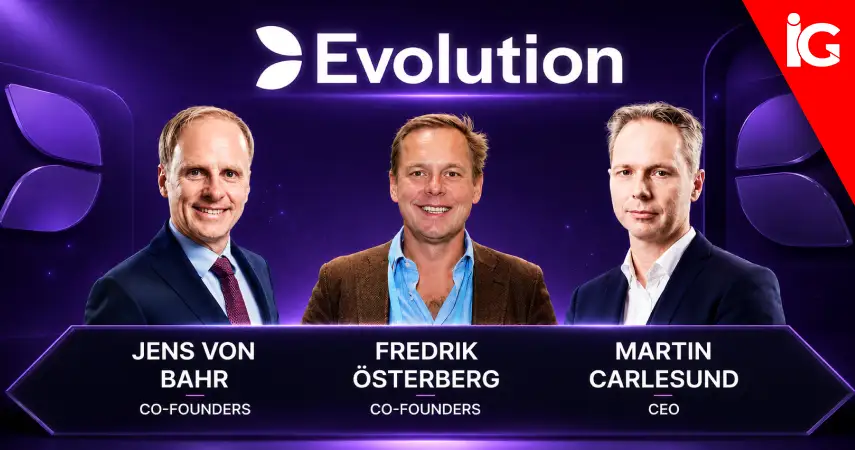
The Evolution 20th anniversary in 2026 closes out a two-decade run in which a single company took live dealer gaming from the margins of online casino to the centre of it. Founded in 2006 by Jens von Bahr and Fredrik Österberg, Evolution has grown from a live casino specialist into one of the industry’s largest interactive entertainment suppliers, spanning live dealer games, slots and game shows under CEO Martin Carlesund. The scale of that transformation shows up plainly in the numbers, with the company’s Q2 2026 results posting revenue of €517.8m and EBITDA of €341m. The milestone is less about the history than about what it reveals.

Why the Evolution 20th anniversary matters now
Anniversaries are usually thin news. This one isn’t, because Evolution occupies a position almost no other supplier holds. It is the reference point. When operators plan a live vertical, when analysts model the sector, when rivals benchmark their studios, Evolution is the yardstick.
That status wasn’t inevitable. In 2006, live casino was a curiosity. Operators poured their attention into slots and digital tables, and live dealer gaming had limited adoption and a reputation as expensive to run. Betting a whole company on it was a genuine risk.
From a single bet to a global supplier
The founders made an unusual call early. Rather than bolting live games onto an existing product, they built dedicated studios and developed the technology in-house. It was capital-heavy and slow. It also turned out to be the foundation everything else rested on.
The product line widened over the years, with formats such as Lightning Roulette, Crazy Time, MONOPOLY Live, Dream Catcher and Mega Ball blending live entertainment with online mechanics. The company then broadened further through acquisition, absorbing NetEnt, Red Tiger, Big Time Gaming, Nolimit City, DigiWheel, Livespins and Arcadia Gaming Solutions. Each deal added slots capability, game mechanics or engagement tools that a purely organic build would have taken years to match.

What the Evolution 20th anniversary means for operators
Here is the part a platform manager should sit with. Evolution didn’t win by shipping the most games. It won by owning the layer underneath them. Studios, technology, integration. Build a serious live vertical today and you are very likely building it on Evolution’s rails.
That has a practical consequence. Supplier concentration is now a real line item in platform strategy, not a theoretical one. The convenience of a single, deep, well-integrated partner is obvious. So is the exposure that comes with it. The margin picture is part of why: first-quarter figures showed €513m in revenue at a 65% margin, the kind of profitability that keeps operators tied in even as they weigh the risk. Any operator reviewing its content roadmap for the next budget cycle has to sit with both sides of that.
The regulated-market shift under Carlesund
Geographic reach has been the other constant. Evolution has kept opening studios across Europe, North America, Latin America and Asia, with recent additions in Argentina, Colombia, Bulgaria, the Czech Republic and the Philippines. In 2026 it opened its first Brazilian studio and rolled out localised versions of Crazy Time and Red Door Roulette for regional players.
The pattern under Carlesund is a shift from raw expansion toward localisation inside regulated jurisdictions. That’s a quieter strategy, but a more defensible one. Localised content is harder for rivals to copy at speed and stickier for the operators who deploy it.

Future outlook
The company frames its ambition as pioneering the future of interactive entertainment, and its corporate line “Ahead of the Game” leans on continuous reinvention over resting on the record. Over the next 6 to 12 months, the areas worth watching are three: how far AI works its way into live production and personalisation, whether new game-show formats can keep matching the pull of Crazy Time, and how aggressively the regulated-market localisation playbook rolls out beyond Brazil.
Twenty years in, the question has flipped. It’s no longer how Evolution became the leader. It’s whether owning the infrastructure is enough to stay one.
Source: Evolution