



Exclusive: What It Takes to Win in iGaming: Mats Lundin of VeliTech

As operators look to reduce integrations and simplify their technology stacks, the demand for broader and more connected iGaming solutions continues to grow. At the same time, suppliers face increasingly complex regulatory requirements and highly different commercial realities across global markets.
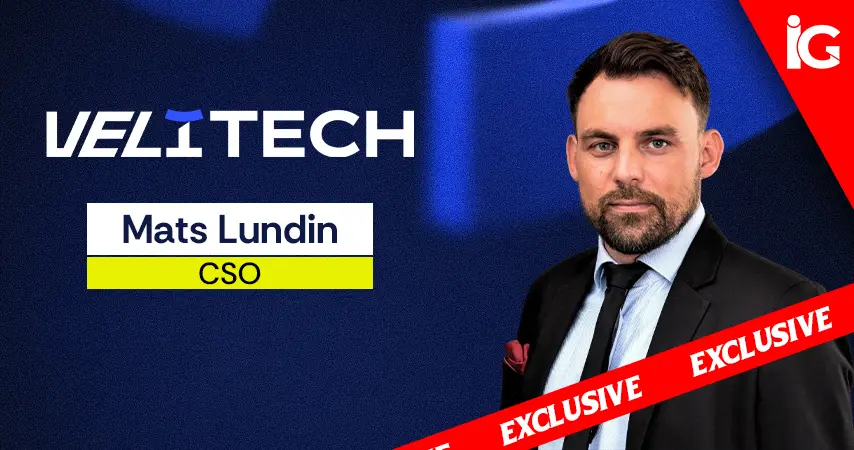
In this exclusive interview with iGaming News Today, Mats Lundin, Chief Sales Officer at VeliTech, discusses his journey across game distribution, aggregation, sportsbook, CRM and platform businesses and explains how those experiences shape his commercial strategy today. He explores an integrated technology ecosystem by VeliTech, expansion across Europe, Africa and Latin America, regulation, AI-driven sales and CRM, and the principles behind his DOAP approach to building high-performing commercial teams.

Q1. Looking back across your career in game distribution, aggregation, sportsbook, CRM and platform businesses, what has been the biggest lesson from working across so many parts of the iGaming ecosystem?
Mats Lundin:
You always need to stay on your toes. You need to keep developing and stay humble. I’ve seen many companies with tremendous products come up short after relaxing a little and allowing smaller companies to catch up.
For me, staying humble, executing well, and building strong relationships and trust are what ultimately win in the end.
Q2. You recently joined VeliTech as Chief Sales Officer. What attracted you to the company, and what were your priorities when you joined?
Mats Lundin:
I’ve been in the iGaming industry for around 11 years, and what specifically attracted me to VeliTech was its broad technology ecosystem. We have games, aggregation, sportsbook, and iGaming core platform, and we’re constantly developing those products to a very high standard.
When I joined, the company already had strong products, teams and a presence across many countries. With my experience, I felt I could add value there.

The initial challenge was bringing those different product verticals together under one clear commercial strategy and doing so quickly. But looking back, I can now see the results of that work, and that’s a great feeling.
Q3. Operators increasingly want integrated solutions rather than managing multiple standalone suppliers. How do you position VeliTech differently in this market?
Mats Lundin:
Operators constantly want fewer integrations, fewer contacts and less operational complexity, while still wanting a large portfolio of products.
With VeliTech, you can essentially start your own casino with one company and one point of contact. We bring together the core technology ecosystem – including the platform, sportsbook, aggregation and our own proprietary games – so operators can access a broad range of products without having to manage multiple standalone suppliers.
At the same time, we give operators the flexibility to build and scale their offering around their specific needs. For me, that’s where VeliTech stands out: we combine breadth of technology with a simpler, more efficient commercial and operational setup.
Q4. You’ve helped open markets across Africa, Latin America and Europe. What are the biggest differences you see between these regions when approaching partnerships and commercial growth?
Mats Lundin:
Europe is the most complex and mature market because of its regulation, licensing and certification requirements. Competition is also extremely strong. It’s a difficult market to enter, but once you meet the regulatory requirements, you can build very valuable and long-term relationships with clients.
Africa is much more fragmented and cannot be treated as one market. South Africa, Nigeria, Kenya and Ghana, for example, all have different regulations, payment environments and player behaviour. Technology requirements can also differ significantly.
Latin America is very relationship-driven and has developed extremely quickly. Five years ago, people were talking about LATAM as the market of the future, and now that future is here. Regulation is also becoming increasingly important, particularly in Brazil.
The biggest lesson is that you cannot copy and paste the same commercial strategy from Africa to Europe or from Europe to LATAM. Every market needs a different approach, which is why having sales teams specialised in their individual markets is so important.
Q5. AI is increasingly influencing sales, CRM and customer engagement. How do you see it changing commercial growth for B2B iGaming companies?
Mats Lundin:
I don’t think AI will replace good salespeople. I think it will make good salespeople more structured, productive and efficient.
I use AI myself every day, whether it’s putting my thoughts into structure or speeding up different processes. But you still need to know what you want to say and have the core message right before using AI.
On the commercial side, we’ve replaced our previous CRM with an in-house AI-driven system that I’ve helped build, based on my experience using CRM systems throughout my career. It’s designed to help us work more effectively internally and make our sales processes more structured and data-driven.
AI can also create opportunities in lead generation and business development. But companies need to be careful. We all receive AI-generated sales emails that are immediately deleted because they feel generic or intrusive. AI creates huge opportunities, but we shouldn’t use it in a way that makes customers want to ignore us.
Q6. You’ve worked across regulated and grey markets. How does regulation change the way suppliers approach product development, compliance and commercial strategy?
Mats Lundin:
Regulation changes almost everything, especially commercially. In regulated markets where taxation is high, you cannot use the same commercial structure as you would in other markets.
You also have to consider the investment of time and money required for certifications, compliance managers, responsible gaming, reporting, RTP requirements and localisation.
Every regulated market is different, and those requirements have a direct impact on how you approach the product, the level of localisation needed and the overall commercial model. We therefore adapt our offering and pricing to reflect the specific regulatory, compliance and operational requirements of each market.
For us, the key is understanding the local environment and making sure the technology, compliance processes and commercial structure are aligned with what the market requires.
Q7. You’ve led international sales teams across several organisations. What qualities define a truly high-performing commercial team in today’s iGaming industry?
Mats Lundin:
I try to build what I call a DOAP sales team: Discipline, Ownership, Accountability and Preparation.
Discipline means following up, managing the CRM and pipeline, forecasting properly and executing consistently.
Ownership means I don’t want to tell people every day what they need to do. They should own their situation, find solutions, be creative and use their role as a platform to grow their own brand and network.
Accountability means making commitments and owning the outcome. If you miss something, understand why you missed it and learn from it.
And finally, Preparation means knowing the customer, knowing the market, knowing your product and knowing what you want from every meeting.
If you have those qualities, along with the motivation to come to work every day and try to be a little better than the day before, I think 80% of the job is already done.
About VeliTech
VeliTech is a battle-tested technology partner for iGaming operators expanding across Africa, Asia and LATAM. Rather than a single-point solution, VeliTech brings the core platform, casino content and game aggregation into one connected product ecosystem – covering everything an operator needs to launch, run and grow an iGaming brand.