


Boyd Gaming 50th Anniversary: From One Las Vegas Casino to a National Gaming Leader

Five decades on from a single downtown property, Boyd Gaming’s history shows how operational discipline, rather than aggressive M&A, built one of America’s largest casino companies.
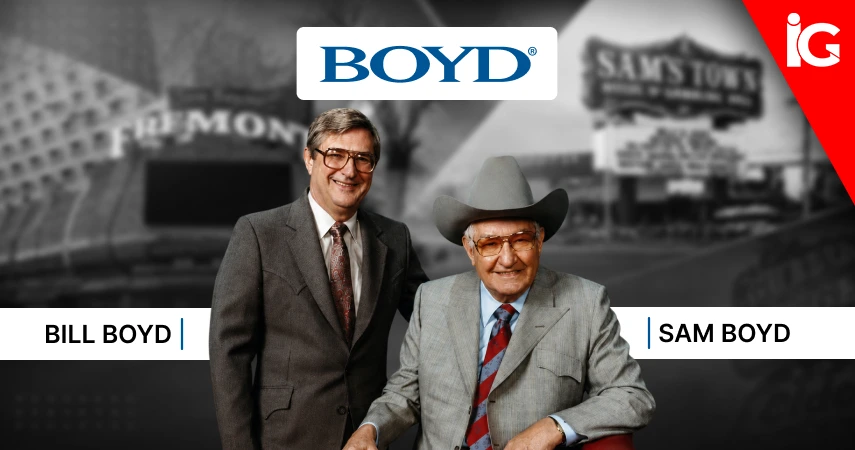
Few casino companies can trace their scale back to one property and a father-and-son partnership. Boyd Gaming can. As it marks its 50th anniversary in 2025, the company has grown from a single downtown Las Vegas casino founded by Sam and Bill Boyd into one of the largest casino entertainment companies in the United States. The story is less about expansion for its own sake and more about how patient operational execution compounds over time. That discipline still shows up in the numbers today, a theme covered in report on Boyd Gaming’s stable Q2 revenue as its online segment grows.

Why the Boyd Gaming 50th anniversary matters now
Anniversaries are easy to dismiss as PR. This one is worth reading because it lands at a moment when the US gaming market is being reshaped by digital gaming and sports betting, and legacy land-based operators are under pressure to prove they can adapt. Boyd’s half-century gives it something newer entrants cannot buy: five decades of operating through industry cycles. For anyone in the sector, the read here is straightforward. Longevity built on execution is a different asset than scale bought quickly, and it behaves differently when conditions turn.
What the Boyd Gaming story actually involved
The company was established in 1975, but the groundwork was laid decades earlier. Sam Boyd entered gaming in the 1930s, working in casino operations in southern California and Hawaii before arriving in Las Vegas in 1941 with US$80 in his pocket. He moved up through various properties, took a 1% interest in the Sahara when it opened in 1952, and later became general manager of the Mint in downtown Las Vegas, turning it into one of the area’s most successful properties.
His son, Bill Boyd, took a different route first. Encouraged by his father to build a career outside gaming, Bill trained as a lawyer and became one of Las Vegas’ better-known attorneys through the early 1960s. His entry into the business came through the Eldorado Casino in Henderson, Nevada, which he and Sam were part of the ownership team to open on 1 July 1962, buying the property outright four years later. That first venture set the pattern: disciplined operations, direct customer relationships and long-term investment over rapid expansion.
The operator read on Boyd’s growth model
Here is the part that matters. Over five decades Boyd has grown into one of America’s largest regional casino operators, spanning casino gaming, hospitality, dining and entertainment across multiple regulated markets. But the more instructive point is what it did not do. It did not build primarily through headline acquisitions or rushed market entry. It built through execution. That continuity extends to the boardroom, where recent additions signal how the company is preparing its next phase, as we covered when Boyd Gaming appointed Stacia Andersen and George Roeth to its board. For operators watching from the outside, the lesson is that culture and consistency can be a durable moat, not a soft one.

The caveat worth naming
There is a limit to what an anniversary page can tell you. Much of the framing here, the “respected operator” language and the culture narrative, is Boyd’s own account of itself, and it is worth reading as such. The company points to long-serving employees like Jerry Filipelli, whose association with the Boyds stretches back more than sixty years to when he first met Sam at the Mint around 1960. That is a genuine and unusual tenure. But a strong internal culture, however real, does not by itself insulate an operator from the structural pressures of digital disruption. Heritage is an advantage. It is not a strategy on its own.

What the industry stands to learn from Boyd
The forward-looking point is practical. As the US market keeps shifting through digital gaming, sports betting and changing consumer expectations, Boyd enters its next chapter with fifty years of operating experience behind it and a stated intent to grow across both traditional casino operations and emerging regulated opportunities. Over the coming years, the question worth watching is whether that operational discipline translates cleanly into digital, where the economics and the customer relationship work differently. The heritage buys credibility. What it earns next depends on execution, which, fittingly, is the same thing that built the company in the first place.
Source: Boyd Gaming