



iGaming Q2 2026 Results: A Full Earnings Roundup Covering Companies From Across the Industry

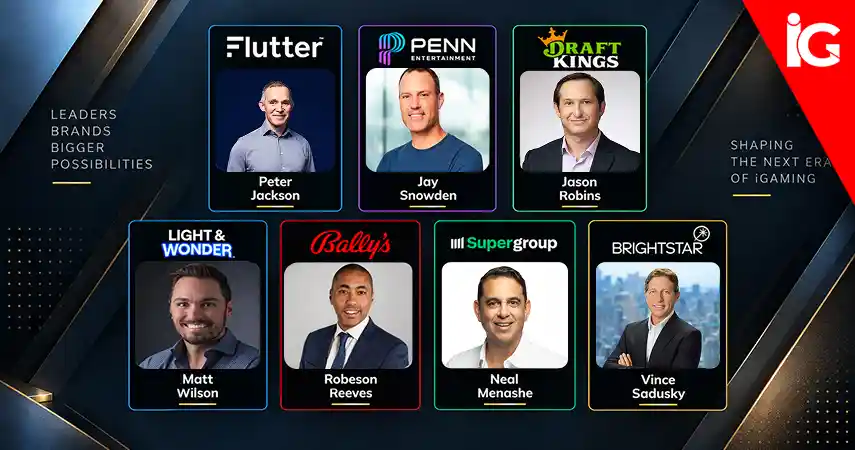
The iGaming Q2 2026 results are now in from across the sector, and reading nineteen of them together gives a much clearer picture than any single report. Between early August and late August 2026, the industry’s biggest operators, suppliers, media groups and lottery firms published their results for the three months ended 30 June 2026. This roundup covers all nineteen, with the key numbers and the main development from each, so operators, studio heads and platform teams can see the full quarter in one place.
Three things shaped the period. The FIFA World Cup, which kicked off in June, drove betting and casino activity worldwide. The UK’s gaming tax rose from 21% to 40% on 1 April 2026, adding cost for every business exposed to the UK market. And an adverse swing in US sports results, where favourites won more often than usual, held back the largest American operators. Together, those forces produced a wide range of outcomes across the sector.

To keep it clear, the companies are grouped into three types. First the betting, casino and gaming operators, the businesses that take bets and run gaming for players. Then the games, data, media and platform suppliers, the businesses that build the technology, content and marketing operators run on. And finally the lottery firms, which work to different economics from either. Within each group they are ranked highest revenue first.
Betting, casino and gaming operators
Flutter tops Q2 2026 at $4.3bn revenue but posts a $296m net loss
Flutter Entertainment, led by CEO Peter Jackson, was the largest company in the sector at $4,326 million in revenue, up 3% year-over-year. Despite that, it recorded a net loss of $296 million, compared with a $37 million profit a year earlier, and Group Adjusted EBITDA fell 45% to $508 million. US revenue dropped 6% to $1,683 million on the adverse sports-results swing, though FanDuel kept its number one position in both US sportsbook and US iGaming. Two other points matter for readers. Flutter took $95 million in historical tax provisions during the quarter, and it confirmed a leadership change, with Peter Jackson stepping down and Dan Taylor set to become CEO on 1 October 2026. The biggest business in the sector, and also the one with the most moving parts this quarter.
PENN Entertainment returns to profit on $1,857.4m as EBITDA rises $52.5m
PENN Entertainment, led by CEO Jay Snowden, reported total revenue of $1,857.4 million, up around 5%, and returned to profit with net income of $32.6 million, reversing a prior-year loss. Consolidated Adjusted EBITDA rose by $52.5 million year-over-year to $312.6 million. The most important number sits in its Interactive segment, home to ESPN Bet and iCasino, where the Adjusted EBITDA loss narrowed sharply to $9.5 million from $62.0 million a year earlier. Snowden pointed to record Retail revenue and continued iCasino growth. For PENN, this quarter was about profitability and a much-improved digital business rather than headline revenue growth.
DraftKings revenue drops 5% to $1,443m as EBITDA falls to $114.6m
DraftKings, led by CEO Jason Robins, posted $1,443 million in revenue, down 5% year-over-year, with a net loss of $67.6 million against a prior-year profit, and Adjusted EBITDA of $114.6 million versus $300.6 million. The company was direct about the cause. Customer-friendly sports outcomes reduced its win, and it reinvested heavily in promotions to acquire new customers across Sportsbook and its Predictions product. Underlying demand stayed strong, with Sports Consumer Volume up 15% to $13.1 billion and monthly unique payers up 9% to 3.6 million. Robins kept full-year guidance unchanged at $6.5 billion to $6.9 billion in revenue. Strong engagement, weaker short-term economics.

Bally’s revenue rises 20.5% to $792.2m despite the UK’s 40% tax
Bally’s Corporation, led by CEO Robeson Reeves, reported $792.2 million in revenue, up 20.5%, with its Bally’s Intralot B2C segment up 22.3% to $243.5 million on strong UK online growth. This was the first full quarter under the UK’s 40% gaming tax. Reeves’ team put the gross impact on B2C segment EBITDAR at roughly $39 million, and said it offset close to 65% of that through revenue growth and cost control. Bally’s also confirmed its June agreement to acquire evoke plc, a deal that would significantly expand its online reach.
Super Group hits record $684m and lifts guidance past $2.6bn
Super Group, led by CEO Neal Menashe, reported $684 million in revenue, up 18%, with Adjusted EBITDA up 30% to $204 million and margin at 30%. Menashe described it as record performance across the group. The company raised its full-year 2026 guidance to more than $2.6 billion in revenue and more than $710 million in Adjusted EBITDA, and highlighted Betway’s new shirt-front partnership with Manchester United. A casino-led, diversified business converting an event quarter into both revenue and profit.
Rush Street Interactive sets a record $393.8m, up 46%, on online casino
Rush Street Interactive, led by CEO Richard Schwartz, delivered the strongest growth in the group, a record $393.8 million in revenue, up 46%, with record net income of $29.3 million and record Adjusted EBITDA of $64.6 million, up 61%. Online casino accounted for 72% of revenue. Schwartz said the company “delivered another record quarter, setting all-time highs once again for revenue and Adjusted EBITDA,” crediting online casino share gains and the World Cup. RSI also raised its full-year guidance and pointed to its recent launch in the newly regulated Alberta market.
Accel Entertainment posts record $368m and 72% net income growth
Accel Entertainment, led by CEO Andy Rubenstein, reported record revenue of $368 million, up 10%, with net income up 72% to $13 million and Adjusted EBITDA up 11% to $59 million. Accel is a different kind of operator. It runs more than 29,000 gaming terminals across roughly 4,700 bars, restaurants, truck stops and convenience stores in ten US states, rather than an online sportsbook or casino. It ended the quarter with 6% more locations and pointed to Chicago’s opening video-gaming market as a near-term growth opportunity. Rubenstein is moving from CEO to Chairman. Because its revenue comes from local, land-based machines rather than sports betting, Accel largely sat out both the World Cup swing and the UK tax story, and simply kept compounding. Proof that not every gaming growth story runs through an app.
Betsson sets a €310.2m record even as operating profit falls 39%
Betsson, led by CEO Pontus Lindwall, reported its highest-ever quarterly revenue at €310.2 million (approximately $335 million), up 2%, with organic growth of 6%. Operating income, however, fell 39% to €42.2 million (approximately $46 million), which the company attributed to a higher share of locally regulated revenue and the higher gaming taxes that come with it. Lindwall noted that Latin America grew 32.3% to become Betsson’s largest region, accounting for more than a third of group revenue. Record revenue and lower profit in the same result, driven by where that revenue now comes from.
Svenska Spel posts SEK 1,963m as World Cup lifts June sportsbook 135%
Svenska Spel, led by CEO Anna Johnson, reported net gaming revenue of SEK 1,963 million (approximately $205 million), up 7%, with operating profit up 13% to SEK 617 million and an operating margin of 31%. The company called it its strongest second quarter since the Swedish market was re-regulated in 2019. The FIFA World Cup did much of the work. Its Sport & Casino division grew 11%, and in June alone, sportsbook net gaming revenue jumped 135% year-over-year with newly registered customers up more than 340%, helped by Sweden’s run in the tournament and a partnership with the Swedish Football Association. Online now accounts for 67% of revenue, up from 62%. As a state-owned operator, Svenska Spel shows the World Cup lift reached public monopolies and private firms alike.
Games, data, media and platform suppliers
Light & Wonder leads suppliers at $828m with net income up 26%
Light & Wonder, led by CEO Matt Wilson, was the largest supplier at $828 million in revenue, up 2%, with net income up 26% to $120 million and Consolidated Adjusted EBITDA up 9% to $383 million. Its iGaming business grew 14% to $92 million despite the UK duty increase, and wagers processed through its platform reached a quarterly record of $31.3 billion. Wilson pointed to broad-based growth across all three business segments. On revenue it is larger than several operators, but its business is supplying games and systems, not taking player bets.
Genius Sports revenue jumps 65% to $196m despite a $77m loss
Genius Sports, led by Founder and CEO Mark Locke, reported revenue up 65% year-over-year to $195.5 million, and raised its full-year 2026 guidance to between $1.005 billion and $1.025 billion in revenue and $285–295 million in Adjusted EBITDA (from $270–280 million). Quarterly Adjusted EBITDA rose 54% to $52.6 million. The one number that needs context is the net loss of $76.7 million, wider than a year earlier. That was driven mainly by one-off costs, including $28.9 million of non-recurring expenses tied to its Legend acquisition, which closed on 1 May 2026, plus higher interest from the financing. After the quarter, Genius struck data and integrity partnerships with prediction-market platforms Polymarket and Kalshi. Strong top-line growth and a raised outlook, with the loss reflecting deal costs rather than trading.
Better Collective revenue rises 9% to €89m as US margin hits 26%
Better Collective, led by Co-founder and Co-CEO Jesper Søgaard, reported revenue of €89 million (approximately $97 million), up 9%, with EBITDA before special items up 20% to €27 million at a 30% margin. The standout was North America, where the regional EBITDA margin jumped to 26% from just 5% a year earlier, driven by revenue-share income, talent-led media and prediction markets. The FIFA World Cup delivered the expected lift, with new depositing customers up 24% and deposit value at an all-time high. Operating cash flow before special items rose 59% to €30 million, and the company kept its full-year guidance. A sports-media and affiliate business turning event traffic and a maturing US model into real margin.
Kambi doubles adjusted profit on €1bn+ World Cup betting turnover
Kambi Group, led by CEO Werner Becher, reported revenue of €45.9 million (approximately $50 million), up 13.5%, with adjusted EBITA up 102% to €7.6 million and operating profit up to €5.8 million from €1.6 million a year earlier. The driver was the FIFA World Cup, where Kambi processed more than €1 billion in Turnkey Sportsbook turnover at an 18% operator trading margin across the tournament, and traded its first World Cup entirely through its AI system. Its Americas partner base carried close to 60% of network turnover, cushioning the less favourable European kick-off times. Kambi raised its full-year adjusted EBITA outlook to between €23 million and €27 million. Notably, Kambi powers two operators elsewhere in this roundup, Bally’s and Rush Street Interactive, so its strong tournament flows through their numbers too. A clean example of a supplier turning one event into real operating leverage.
Inspired posts $60.8m and a company-record 45% EBITDA margin
Inspired Entertainment, led by CEO Brooks Pierce, reported revenue of $60.8 million, up 6% on the previous quarter, with a company-record Adjusted EBITDA margin of 45% and Adjusted EBITDA of $27.1 million. Its Interactive segment grew 15% year-over-year despite the UK duty. Pierce framed the quarter as evidence of a higher-margin, more cash-generative business, and the company reaffirmed its full-year Adjusted EBITDA target of $112 million to $118 million.
Bragg revenue falls 12% to €22.9m and 2026 guidance is withdrawn
Bragg Gaming, led by CEO Matevž Mazij, reported revenue of €22.9 million (approximately $26 million), down 12%, while Adjusted EBITDA held broadly flat at €3.5 million (approximately $4 million) and margin expanded to 15% on cost savings. The main development is corporate. After completing the acquisition of Drayton International in July, the company withdrew its 2026 guidance, saying it does not yet have a reasonable basis to forecast the combined business. Mazij described the focus for the rest of the year as integrating Drayton on a lower cost base.
Catena Media revenue slips 1% to €9.5m as Sports drops 43%
Catena Media, led by CEO Manuel Stan, reported revenue from continuing operations of €9.5 million (approximately $10 million), down 1%, with Adjusted EBITDA down 11% to €1.2 million at a 13% margin. North America now makes up 97% of its revenue, and new depositing customers rose 23%. The story here is strategic rather than numerical. Facing what it called industry-wide headwinds in organic search, Catena is reshaping itself from a traditional affiliate into a marketplace and infrastructure platform connecting publishers and operators, with a commercial launch planned for the first half of 2027. Notably, and unlike peer Better Collective, Catena chose not to optimise its products for the soccer World Cup, and its Sports segment revenue fell 43% as a result. The company also disclosed a voluntary offer to buy back its hybrid capital security at 20% of nominal value. A business betting on a model change rather than a single event.
Gaming Corps sales jump 106% to SEK 21.1m but losses persist
Gaming Corps, led by CEO Juha Kauppinen, grew net sales 106% year-over-year to SEK 21.1 million (approximately $2.2 million), its strongest quarter to date on the top line, while remaining loss-making with a net loss of SEK 7.2 million (approximately $0.8 million). Kauppinen credited stronger performance from proprietary games and said the company plans to increase its release frequency to two to four titles a month from the third quarter. Fast growth from a small base, with profitability still the next step.
Lottery
Brightstar Lottery revenue dips 7% to $584m after €1.43bn Italy payment
Brightstar Lottery, led by CEO Vince Sadusky, reported $584 million in revenue, down 7% from $631 million a year earlier, with the decline driven by higher service revenue amortisation tied to its Italy Lotto licence and a UK contract transition. Profitability moved the other way. Income from continuing operations was $56 million, against a $60 million loss a year earlier, and Adjusted EBITDA rose 4% to $286 million at a 48.9% margin, helped by same-store sales growth and its OPtiMa cost programme, whose savings target the company upgraded to $100 million by 2028. The big balance-sheet event was the final Italy Lotto licence payment of €1.43 billion, or $1.67 billion, made in April 2026. Sadusky said that with that payment behind the company, revenue, profit and cash flow are positioned to improve. Brightstar reaffirmed its full-year 2026 outlook and reported more than $140 million returned to shareholders so far this year. A revenue dip driven by a known one-off rather than weaker trading.
Pollard Banknote revenue rises 8.5% to CAD $154.8m on a third iLottery win
Pollard Banknote, led by Co-CEOs John Pollard and Doug Pollard, reported revenue of CAD $154.8 million (approximately $112 million), up 8.5%, with Adjusted EBITDA up 6.5% to CAD $31.1 million and net income of CAD $8.7 million. Gross margin improved to 18.1% from 16.7%, helped by higher instant-ticket volumes, a new California Lottery contract, and record charitable eTab revenue in Minnesota. The strategic headline was digital. In June, the Colorado Lottery gave notice of intent to award Pollard its iLottery contract, the company’s third iLottery win since 2024, alongside progress on its Belgium Lottery platform. One caveat for readers: Pollard’s Michigan iLottery contract, run through a joint venture, ended in July after the quarter closed. A steady lottery supplier quietly building a digital pipeline.
What happens when the World Cup boost goes away
The strongest results this quarter leaned on a single event, and that is the risk worth naming. When the World Cup traffic fades, the businesses most tied to it will have to show the momentum holds. That includes casino-led operators such as Rush Street Interactive and Super Group, and suppliers such as Kambi, whose own outlook assumes a lower operator trading margin of around 11% for the rest of the year, well below the 18% it saw across the tournament. The larger operators expose the other side of the same problem. Flutter and DraftKings both prove that scale and strong customer engagement can still turn into falling profit when sports results run in players’ favour and promotional spend climbs. And Catena Media offers the counter-example on the same event: it deliberately sat out the World Cup to focus on rebuilding its model, and took a 43% Sports revenue drop in the quarter as the price of that choice. Accel Entertainment makes the same point from the opposite direction: with no sports-betting or online exposure, it delivered record revenue and 72% net income growth without any help from the tournament at all.
What to expect from these gaming companies in the second half of 2026
The second half looks set to reward diversification and cost discipline over size alone. Casino-led operators enter the third quarter with momentum and, in several cases, raised guidance. The US giants face a clearer test. Flutter is investing behind FanDuel and prediction markets while changing CEO, with Dan Taylor taking over in October, and DraftKings is scaling its Predictions product into the NFL season. Both need favourable sports results and disciplined promotional spend to convert strong engagement into profit. On the supplier side, Light & Wonder and Inspired go in with record or near-record margins, Genius Sports, Kambi and Better Collective have all raised outlooks or expanded into prediction markets, Catena’s model pivot is a multi-quarter project, and Bragg’s Drayton integration is the one to track. In lottery, Brightstar expects its numbers to inflect now the Italy Lotto payment is done, and Pollard is building a digital pipeline. And the consolidation Bally’s flagged in the UK is worth watching closely, as smaller operators squeezed by higher tax become potential acquisition targets over the coming quarters.
Source: Official Q2 2026 company reports