


Exclusive: Marko Erakovic on Why iGaming’s Next Commercial Advantage Won’t Be More Content

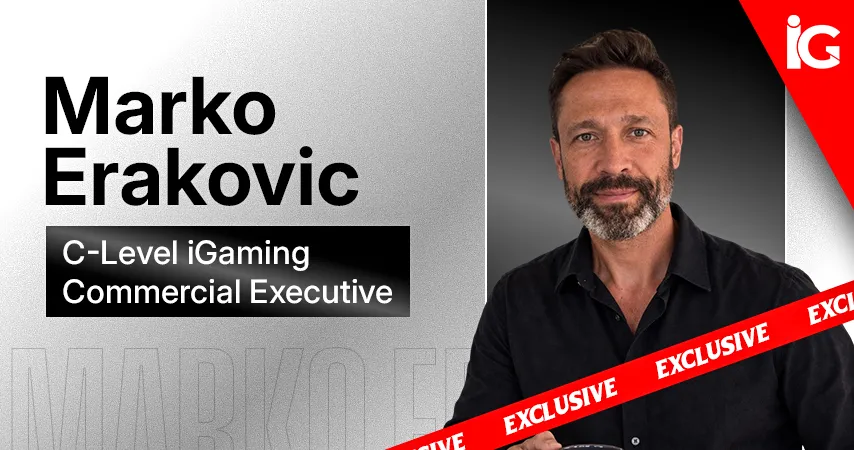
In this exclusive interview with iGaming News Today, C-Level iGaming Commercial Executive, Marko Erakovic reflects on the experiences that have shaped his approach to commercial leadership across different industries, markets and cultures. He explains why there is no universal commercial playbook and why experienced leaders still need to listen before deciding what needs to change.
Q1. You have worked across commercial and international business roles before stepping into the CCO position. What experiences along the way have had the biggest influence on how you approach commercial leadership today?
Marko Erakovic:
Probably the biggest influence has been working across very different industries, markets, and cultures. I’ve done business across Europe, Africa, and other international markets, and you quickly learn that there is no universal commercial playbook. Something that works extremely well in one country can completely fail in another. Customers think differently, people negotiate differently, and even the way trust is built can vary significantly.

Another important experience has been working with different types of businesses, from established companies to startups. I’ve worked with several startups in iGaming as well as in other industries. Experience is obviously valuable, but walking into a company and assuming that what worked before will automatically work again is a mistake.
These days, I spend more time listening and asking questions at the beginning. I want to understand the market, the customers, and what’s actually happening inside the business before deciding what needs to change. One of the biggest lessons I’ve learned is not to confuse having a lot of experience with already knowing the answer.
Q2. There is a huge amount of game content competing for attention today. Beyond simply having a strong-performing game, what makes content genuinely stand out with players and operators?
Marko Erakovic:
I think the industry doesn’t really have a shortage of content. If anything, we have a shortage of attention. There are thousands of games competing for limited lobby space, while providers continue releasing huge numbers of new titles every month.
Simply making a good game isn’t enough anymore. For me, content needs to give the player three things: a reason to try it, a reason to stay, and a reason to come back. Getting all three right is incredibly difficult.

Of course, mathematics and mechanics matter, but simplicity, pace, and understanding who you’re actually building the game for are equally important. When you try to make a game for everyone, you can end up creating something that doesn’t really mean much to anyone.
I think the next competitive advantage will come from connecting content more intelligently with distribution, data, and the operator. Understanding where a game works, who it works for, and how it should be positioned will become increasingly important.
Q3. When you speak with operators and other industry partners today, what are they really looking for from game suppliers and content distributors? Has that expectation changed compared with a few years ago?
Marko Erakovic:
The bar has moved significantly over the past three to five years. Having good content, stable integration, and reasonable commercial terms used to take you quite far. Today, that’s basically the minimum.
Most operators already have more content than they know what to do with. Nobody wakes up thinking they need another 500 games in their lobby. They need partners who make their businesses easier and help them make more money.
That means understanding their market, being honest about which content can actually work, getting it live quickly, helping with positioning and promotions, providing useful data, and continuing to support them after the integration is complete.
For aggregators, the old proposition of “one API and thousands of games” is becoming less powerful because everyone already has thousands of games. The real value is helping operators understand what performs, why it performs, identifying promising studios early, and supporting market entry and commercial opportunities.
For suppliers, I also think we need to stop confusing signed contracts with commercial success. Signing the deal and going live are only the beginning. If the partnership isn’t generating meaningful results, then we’ve created an integration, not a successful commercial relationship.
Q4. When deciding whether a potential partnership has long-term potential, what do you personally look for beyond the immediate commercial opportunity?
Marko Erakovic:
People often talk about understanding each other’s goals, creating mutual value, and agreeing on long-term plans. I genuinely believe in those things, but real partnerships are much messier because companies aren’t one person with one objective.
Commercial teams might see a huge opportunity, while the product team has completely different priorities. Finance wants better margins, legal wants less risk, and technology teams may already have a full roadmap for the next few months.
Part of being commercially mature is understanding that this is normal. My job isn’t just to agree on a deal. It’s to understand what actually matters to the other side and what could prevent both companies from delivering what they’ve agreed.
I also don’t think every good commercial relationship needs to be called a “strategic partnership.” Sometimes a straightforward commercial deal is simply a good deal – both sides have something the other needs, they agree on a fair price, both make money, and everyone is happy.
For me, a genuine strategic partnership begins when both companies are willing to invest beyond signing the contract – time, resources, data, product development, market support, or exclusivity – and then regularly check the numbers to see whether it’s actually working.
Q5. You’ve worked across international markets and seen how differently gaming businesses can operate from one region to another. When a company enters a new market, what are the biggest challenges it needs to face?
Marko Erakovic:
One of the biggest challenges is knowing when you’ve done enough homework and when it’s time to actually enter the market.
You need to understand regulation, taxation, competition, players, content, and whether the business case makes sense. But you can also spend forever researching a market. Eventually, you need to enter, meet operators, learn what works, and start building distribution.
Being early can be extremely valuable. Sometimes being 80% ready and early is better than arriving perfectly prepared when everyone else is already there. But you need to understand what sits inside the remaining 20%. If you don’t understand regulation, tax, or whether your business can actually make money in the market, that can hurt you badly.
Brazil is a good example. Companies that moved early were able to build relationships and learn while the market was still developing. But being first doesn’t make the market easy. Rules and political decisions can continue changing.
International companies also need to understand that their global strategy may not work exactly the same way locally. That’s why strong local people and partners are so important. They can quickly tell you which parts of your strategy make sense locally and which don’t.
For me, the approach is simple: understand what can kill the business, move early enough to measure, and learn the rest as you go.
Q6. Looking at the next few years, which developments do you think will have the biggest impact on how iGaming companies approach commercial growth and business development?
Marko Erakovic:
One of the biggest changes will be that having more of everything is becoming less impressive. We spent years building bigger portfolios, more games, more studios, and more integrations. Aggregators went from thousands of games to tens of thousands, but I’m not sure operators are sitting there thinking another few thousand games will solve their problems.
The conversation will increasingly move from how much content you have to what you can actually do with it.
For aggregators, connecting operators with hundreds of providers will remain valuable, but the real opportunity is understanding what works, where it works, which studios are worth watching, and helping operators make sense of the enormous amount of content available.
For game providers, the same applies. If you release 20 games and nobody remembers most of them a month later, volume alone isn’t necessarily a KPI worth celebrating. Studios need to ask who the game is for, which markets it suits, and why an operator would promote it.
AI will help with performance analysis and understanding what works across different markets, but regulation will probably have an even bigger impact. Suppliers will need to choose markets more carefully, while aggregators that genuinely understand regulated markets can become more valuable.
I also expect consolidation to play a major role as margins become tighter and many suppliers compete for the same operators. Smaller studios will need to become more distinctive.
Ultimately, I think the industry will care less about how much you have and more about whether what you have actually makes money.
Q7. AI, data, and automation are becoming part of almost every commercial conversation. Where do you see the most practical value from these technologies in sales, business development, and partner management, and where do you think human judgement will remain essential?
Marko Erakovic:
AI can take a lot of the repetitive work away from commercial teams-research, meeting preparation, CRM, performance checks, and follow-ups. That’s already extremely useful.
The more interesting opportunity comes when you combine AI with large amounts of data. For example, an aggregator might have hundreds of providers across dozens of operators and markets. No commercial team can identify every pattern across that network manually.
AI could identify a game that’s suddenly performing strongly in one market, similar content gaining traction elsewhere, or an operator where that content isn’t yet fully live. That turns data into an actual sales opportunity.
For game providers, AI can help answer different questions: what should we build, where does it work, what deserves another push, and whether new games are generating incremental revenue or simply moving players between own titles.
It can also make partner management smarter by identifying declining revenue, missed opportunities, or partnerships that aren’t delivering what was expected.
But I wouldn’t automate the relationship itself. Good business development still depends on trust, negotiation, timing, and understanding the person across the table. AI can tell you who to call and what you should probably discuss, but it can’t make that person want to take your call. That’s where the real sale begins.