



From Gaming Machines to Global Gaming Technology: Aristocrat’s Next Chapter

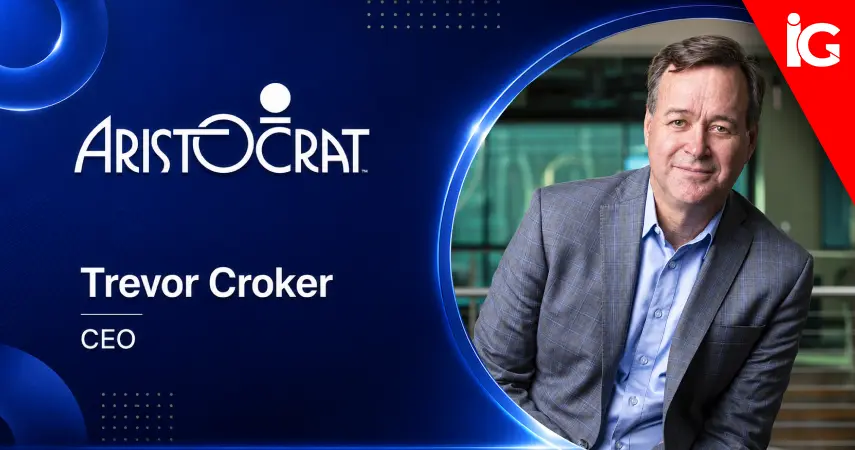
The story of one of gaming’s best-known suppliers, told through its own seven-decade record from land-based machines to mobile publishing and online real-money gaming.
Few names carry as much weight across the gaming industry as Aristocrat Leisure Limited. Yet the company’s full arc, from a single machine built in 1950s Sydney to a group spanning land-based gaming, online real money gaming and social casino, is rarely set out in one place. The way the business is run today, under a leadership team that has leaned hard into digital, sits on top of seven decades of groundwork. For a closer look at how current strategy builds on that foundation, see our breakdown of Trevor Croker’s FY25 playbook and Aristocrat’s digital growth strategy.

Why Aristocrat’s story matters now
Aristocrat is one of the companies operators and suppliers reference almost by reflex, which makes its history more than a curiosity. The business today reports across three segments: regulated land-based gaming (Aristocrat Gaming), regulated online real money gaming (Aristocrat Interactive) and social casino (Product Madness). Understanding how those pieces came together explains a good deal about how modern gaming content evolved from the machine floor outward.
What the Aristocrat journey actually involves
The company was founded in Sydney, Australia, in the 1950s with the creation of the Clubman machine. Through the 1960s and 70s it expanded into Europe and the US, and along the way created the first five-reel slot machine and the all-electronic game Wild West in 1979.
The 1980s brought the opening of Aristocrat London, the launch of its casino systems business and the release of its Microstar machines. In the 1990s the company released its MK VI gaming system and the Hyperlink system, and listed on the Australian Securities Exchange in 1996. The 2000s saw it secure an operating licence for Nevada, home to Las Vegas, and develop a presence in Macau.
From 2010 onward the business moved decisively into mobile and digital. Its Games Development Kit became an industry standard in 2012, it acquired Product Madness in 2013, and it entered Class II gaming through VGT in 2014. Between 2017 and 2019 it acquired mobile publishers Plarium Global and Big Fish Games.

The operator read: from machines to online
The most telling stretch is the most recent. Between 2020 and 2022, the group’s global gaming business relaunched as Aristocrat Gaming and its digital arm became Pixel United. Then, across 2023 and 2024, Aristocrat launched Anaxi as its online real money gaming business and acquired Roxor and NeoGames to form Aristocrat Interactive, a dedicated global online RMG operation.
For a company built on land-based machines, that is the move worth noting. It signals where a heavyweight sees durable growth: in regulated online real money gaming, not just on the casino floor. That shift is already showing up in the numbers the company reports to the market. Aristocrat delivered 19.1% H1 FY2026 EPSA growth under Trevor Croker, where the digital push starts to read through to results.
The caveat worth naming
A history like this can read as a straight line of expansion, but it isn’t only additions. In 2025 the company divested its Plarium Global business and retired the Pixel United brand a reminder that its portfolio is actively pruned as well as grown. Readers should also note this overview is drawn from Aristocrat’s own official materials; for financial performance and the latest segment detail, the company’s investor relations disclosures are the primary reference.

What lies ahead for Aristocrat
The direction of travel is fairly clear. Having built Aristocrat Interactive into a standalone online real money gaming business off the back of the Roxor and NeoGames acquisitions, the company now has three distinct engines to run: land-based gaming, online RMG and social casino. The obvious question for the years ahead is how much of the group’s weight shifts toward the online side, and whether Interactive can scale into a genuine counterweight to the established land-based business rather than a promising newer arm.
Its 2025 decision to exit Plarium and drop the Pixel United name suggests a company willing to reshape its portfolio rather than simply hold everything it has built which points to a future defined as much by what it chooses to keep as by what it adds. With around 7,400 people worldwide and a stated mission “to bring joy to life through the power of play,” Aristocrat heads into its next chapter as a business deliberately spread across how and where people play, betting that the balance keeps tilting toward digital.
Source: Aristocrat