



SEK 2.5B Net Gaming Revenue. 24% Operating Margin. Jörgen Forsberg & Lotta Nilsson Lead ATG Through a Stronger H1

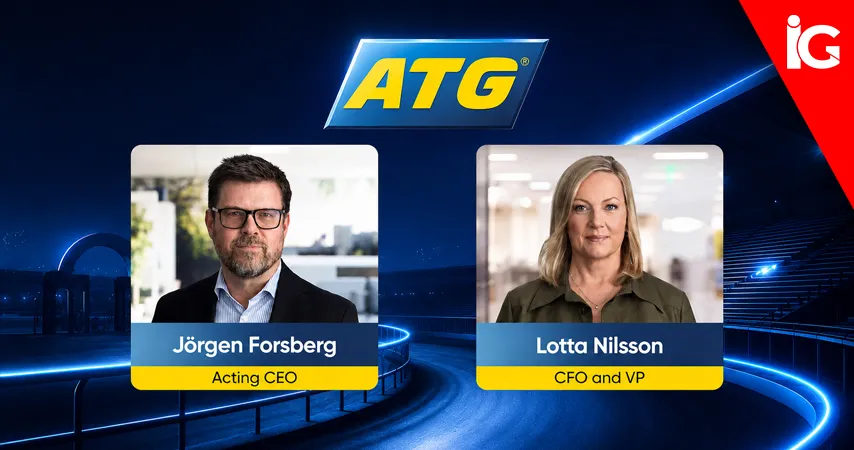
ATG, Sweden’s state-regulated horse-racing operator, has reported net gaming revenue of SEK 2,516m for the first half of 2026, down 2% on the same period last year. The ATG H1 2026 results, published on 19 August, show a business defending profitability as its core product softens. Operating profit rose 2% to SEK 687m and the operating margin held at 24%. The decline came almost entirely in the second quarter.
Why the ATG H1 2026 results matter for the Swedish gaming market
Revenue down, profit up. That pairing is the whole story in one line, and it points to cost control rather than customer demand carrying the half.

The second quarter is where the pressure showed. Group net gaming revenue fell 4% to SEK 1,302m in Q2, dragging the half-year figure below last year’s SEK 2,566m. The first quarter, by contrast, tracked broadly level with 2025. So this is a Q2 story, not a slow bleed across six months.
ATG is not a typical commercial operator. It is owned by Svensk Travsport and Svensk Galopp, and since 1974 it has funded Swedish horse racing to the tune of roughly SEK 60bn. When its revenue moves, the sport’s financing moves with it. That makes these numbers read differently than a listed casino group’s would.
What the ATG numbers actually involve
The detail matters more than the headline here.
Horse racing, still the single largest product behind group revenue, saw Swedish gross turnover fall 5% to SEK 5,610m over the half. Sport betting slipped too, down 7%. Casino went the other way, rising 15%. And the Danish subsidiary 25Syv, which trades under the Bet25 brand, grew net gaming revenue 19% to SEK 191m.

International horse-racing turnover also climbed 13% to SEK 1,838m, helped mainly by more play from Finland. Group operating profit of SEK 687m was lifted, the report notes, by lower other costs under tighter cost control. EBITDA came in at SEK 809m.
The operator read for a maturing gaming product
For anyone running a legacy-led gaming business, this is a useful case study in what maturity looks like on a P&L.
ATG grew profit on falling revenue. That is achievable once, maybe twice, through cost discipline – and ATG has a SEK 300m, three-year cost-reduction programme running to plan to prove the point. But cost control has a floor. Beyond it, the only durable answer is growth, and the growth in these results is coming from casino and Denmark, not the horse-racing core. Operators watching the Nordic market should treat that mix shift as the signal, not the 2% headline.
The caveat worth naming in ATG’s regulated gaming picture
Two things complicate the read, and the report is upfront about both.
First, tax. Sweden’s gaming tax rose from 18% to 22% on 1 July 2024, a four-point step-up that permanently raises the cost base and, according to the report, materially increases gaming-tax cost and reduces returns to ATG’s owners. Margin defence gets harder against that backdrop.
Second, customer sentiment. ATG’s Net Promoter Score fell to −9 in Q2, down from +9 a year earlier. The company links the drop mainly to customer reactions to a change in the Saturday product, where V75® was replaced by V85®. A product change intended to strengthen the long-term experience has, for now, cost goodwill. That tension is worth watching.
Separately, and flagged here for transparency, ATG disclosed that a subcontractor-related data incident exposed personal data to unauthorised parties. The company says the matter is under investigation and has been reported to the relevant authorities.
What comes next for ATG and the regulated gaming market?
The next six months carry a clear watch-list. Anna Romboli takes over as CEO in December, joining from Svenska Spel Tur, ending a year of interim leadership under acting CEO Jörgen Forsberg. The cost programme has two more years to run. And the question the numbers pose is simple: can casino and cross-border growth outpace the horse-racing decline fast enough to lift the top line, not just protect the margin? For a market where a monopoly-era operator is learning to compete on product mix, ATG’s next report on 23 October will show whether H1 was a wobble or a trend. Either way, the era when horse racing alone carried these results is visibly ending.
Source: AB Trav och Galopp