



Paysafe Q2 Revenue Hits $447.4M as North American iGaming Boosts Merchant Solutions

A modest top-line quarter, but the segment split shows where the profitable growth is really coming from.
Paysafe reported its second quarter 2026 results, and the headline reads quiet: revenue of $447.4m, up 4% on the same period last year. Look one layer down, though, and the quarter is more interesting than that number suggests. The part of the business that processes payments for iGaming operators did the heavy lifting, while the consumer wallet side cooled. That divergence, alongside a refinancing of a significant portion of the company’s debt, is the real story for anyone whose business runs on Paysafe’s rails. The result also fits a longer arc: the company has spent three decades reshaping itself from a single processor into a multi-rail platform, a path traced in our feature on how Paysafe became a global payments platform.
The company (NYSE: PSFE) posted a net loss of 58.9m,or(1.13) per diluted share, wider than the $50.1m loss a year earlier. Adjusted EBITDA slipped 2% to $102.8m. So the profit picture, on a group level, softened. But group-level figures bury the thing operators actually care about.

Where Paysafe’s iGaming growth showed up
The Merchant Solutions segment is where Paysafe processes payments for operators, including regulated betting and casino. It grew revenue 6% to $246.1m. More striking, its Adjusted EBITDA jumped 28% to $50.6m. Paysafe named the driver behind the revenue growth plainly: strong iGaming volumes in North America, supported by the company commercialising its data through licensing agreements.
Set that against Digital Wallets, the segment housing consumer brands like Skrill. Revenue there rose 3% to $206.6m, but Adjusted EBITDA fell 9% to $74.9m. Paysafe pointed to momentum in Latin America and its PaysafeWallet product in Europe, offset by markets it is no longer actively marketing to and slower quarters in sub-verticals including social casino and crypto trading. That crypto softness is worth holding against the company’s own push into the space earlier this year, when it launched a crypto deposit option for US iGaming and fantasy sports, covered in our report on Paysafe’s crypto payments rollout with MoonPay.
The read is straightforward. iGaming processing is the profitable engine in this quarter. The wallet side is still the bigger EBITDA contributor, but it’s the one under pressure.

What the Paysafe Q2 2026 results signal for operators
For a platform or payments lead, this is a supplier update worth noting. Your processing partner is seeing its strongest revenue growth in exactly the vertical you operate in, and it’s actively investing there. That tends to mean continued focus, product development, and capacity aimed at iGaming merchants rather than away from them.
Here’s the concrete benefit of understanding this now: when a payments partner’s numbers show iGaming pulling ahead, it shapes the conversations you can have about pricing, new-market support, and product roadmap. A partner growing in your vertical is a partner with reasons to keep saying yes.
The refinancing behind the Paysafe Q2 2026 results
Alongside earnings, Paysafe executed a refinancing of a significant portion of its capital structure on 12 August, with funds due to settle on 17 August. It put in place a new $650.9m term loan and a €478.4m term loan, both maturing in June 2030, plus a new $372.5m senior secured revolving credit facility maturing in August 2031. Total debt stood at $2.5bn, with net debt of $2.3bn, and total debt was down $106.3m since the end of 2025.
CFO John Crawford said the deal “extends our debt maturity profile, refinances a significant portion of our capital structure, and upsizes our revolver, while supporting our priorities to invest in the business and reduce leverage for the benefit of both lenders and shareholders.” In plain terms, the company pushed its big repayment dates several years out and gave itself more headroom.
The caveat operators should weigh
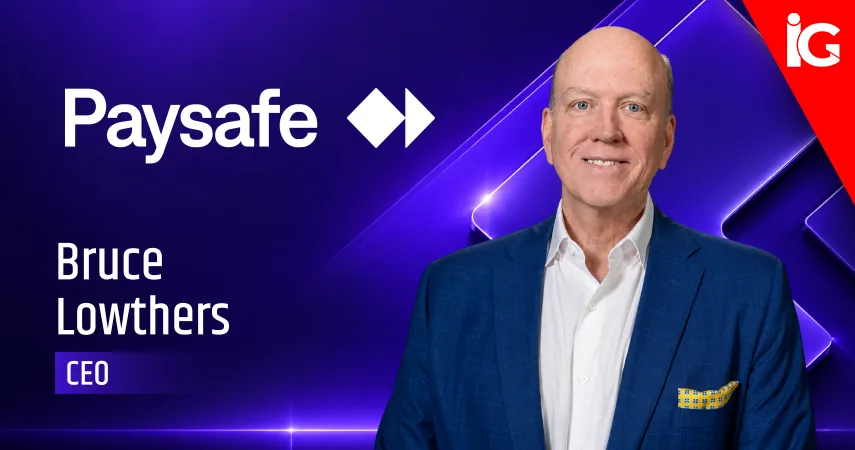
Intellectual honesty matters here. The wider net loss is real. Paysafe reported an increase in restructuring and other costs of $18.6m, primarily related to legal costs, and share-based compensation also rose. Separately, in his statement, CEO Bruce Lowthers referred to the company “resolving a legacy legal matter” during the quarter. None of that is described in the release as a threat to the business, but a loss that grows while EBITDA slips is worth watching rather than waving away. Lowthers framed the quarter as expected: “We delivered second quarter results in line with our expectations, with revenue growing 4% in the quarter and 7% in the first half.” Expectations met is not the same as momentum accelerating.

What to watch over the next two quarters
Paysafe updated its full-year 2026 guidance, now expecting revenue of $1,790m to $1,830m and Adjusted EPS of $1.90 to $2.03, with the EPS range adjusted for the refinancing and its effect on interest costs. The question the second half answers is whether North American iGaming volumes keep carrying Merchant Solutions, and whether the wallet segment steadies. If the iGaming engine holds, the refinancing looks well-timed. If it stalls, the widening loss becomes the headline instead of the footnote. Operators leaning on Paysafe should treat the next two quarters as the real test of which way this business is tilting.
Source: Paysafe