



The Portugal iGaming Market Isn’t Getting More Competitive. It’s Getting More Concentrated

Portugal’s online betting industry is no longer just a maturing regulated market. It is now becoming one of the more concentrated competitive environments in European iGaming.
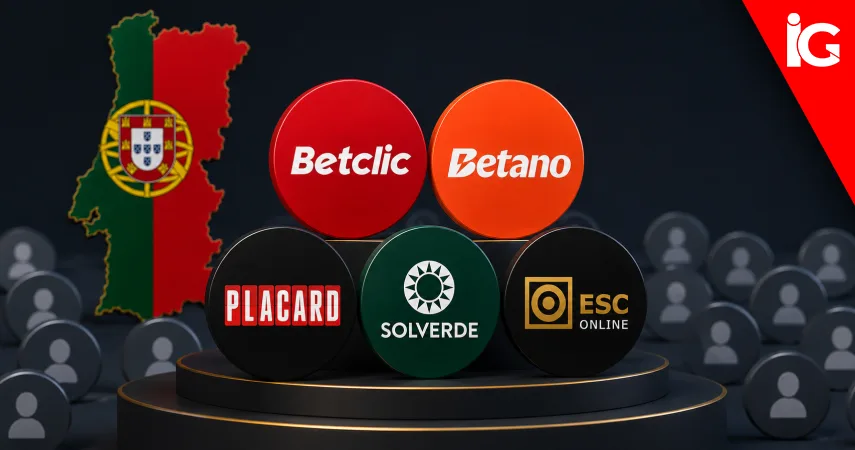
Fresh data from Blask shows Betclic, Betano and Placard leading the market on visibility, ahead of established operators like Solverde and ESC Online. But the real story is not only about who sits at the top, it’s about how tightly player attention is clustering around them.
That visibility is not built on Portugal alone. Betclic’s reach now stretches well beyond a single market, with the operator recently passing 11 million fans across Europe and Africa, the kind of scale that makes its domestic position harder to challenge.
What looked like an open expansion opportunity a few years ago is now turning into a fight for retention, brand familiarity, and long-term market share.
One thing needs stating clearly. The data tracks engagement and visibility, not revenue or official market share. It does not tell you who banked the most last quarter. What it does show is where player interest is pooling, and in a regulated market that carries real weight.

Betclic, Betano and Placard Hold the Lead as Competition Tightens
Betclic, Betano and Placard remain among the most visible brands across Portugal’s betting ecosystem, backed by years of presence, brand recognition, and established customer relationships.

Betano in particular has built one of the strongest football-linked betting brands across southern Europe and Latin America, a strategy that continues to drive its visibility. That football focus is only deepening, with the operator stepping up as a FIFA World Cup 2026 supporter, a move that puts its brand in front of millions just as competition for attention sharpens.
Established names including Solverde, ESC Online and Casino Portugal also hold meaningful positions, supported by years of operating in one of Europe’s earlier regulated markets.
Still, the bigger story is the concentration itself.
Portugal regulated online gambling earlier than several of its neighbours, and that head start has done what head starts tend to do. It built brand familiarity that newer entrants now have to pay a rising price to compete against.
That level of entrenchment is changing the market completely.
Launching in Portugal is no longer the difficult part. Standing out is.
The Market Is Becoming More Expensive
Portugal’s regulated betting sector continues attracting operators because of its stable framework and engaged player base.
Football culture, mobile-first behaviour, and a mature online payment environment continue supporting steady market activity.
But growth is becoming more expensive.
Operators are now spending harder on sponsorships, affiliate marketing, bonuses, and promotional offers just to compete for attention that already sits with a handful of recognised brands.
At the same time, retention is becoming as important as acquisition.
Many operators are leaning into localised casino content, loyalty systems, mobile optimisation, and broader entertainment ecosystems designed to keep players active for longer.
That pressure reaches suppliers too.
Gaming providers are moving to secure partnerships with the leading operators, since distribution and visibility in a concentrated market become strategic advantages in their own right.

Execution Will Decide the Long-Term Winners
The next phase of Portugal’s betting market will likely reward execution and retention more than expansion.
Marketing spend alone may not protect a position once a market concentrates this way.
Operators will need stronger retention systems, sharper localisation, and more efficient acquisition models to defend market share against entrenched leaders.
Challengers can still find room, but they will find it through a sharper product or an underserved niche, not by outspending established brands on acquisition.
This is the same path Spain and Italy already walked, where early regulation matured into competition fought on retention rather than reach.
Portugal still represents a stable opportunity in European iGaming.
But the industry conversation is starting to shift.
The question is no longer: “Who can enter Portugal?” It is becoming: “Who can hold their position once the easy growth runs out?”
Source: Blask