



RM87.4M Revenue. +20% Sales Growth. One Bigger Reality – RGB International Is Quietly Evolving

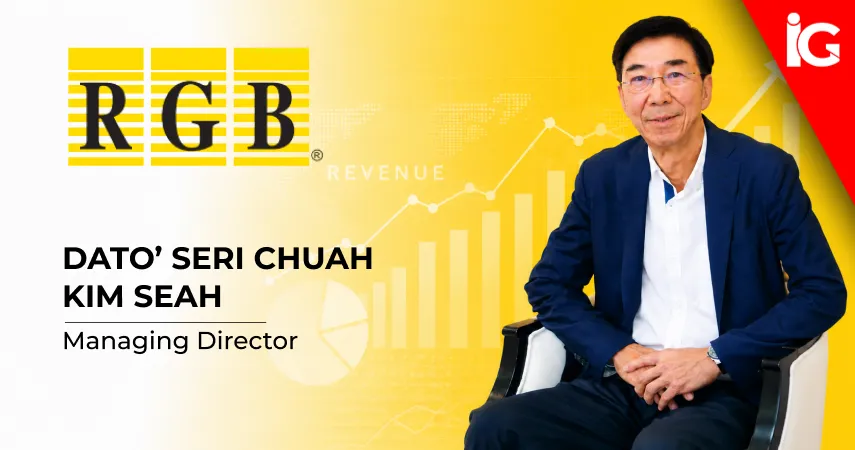
Revenue growth means nothing if the margins underneath are quietly deteriorating.
RGB International opened 2026 with its strongest top-line quarter in recent memory. But the numbers sitting below the revenue line told a more complicated story, one that operators, investors, and platform heads tracking the Southeast Asian gaming supply market cannot afford to read too quickly.

Gaming Equipment Sales Drive Revenue Growth Across Southeast Asia
The Malaysia-listed gaming machine distributor and concessionaire posted Q1 2026 revenue of RM87.4m, up 19% year-on-year from RM73.6m. The growth engine was anchored by Sales and Marketing, the division responsible for gaming equipment distribution across the region, which generated RM70.3m. Segment profit came in at RM8.6m, showing resilient division performance amid changing product cycles. Honestly, that’s a solid result. Gaming machine demand across the region has held up. Distributors who built the right ground-level relationships over the years are still seeing the orders come in, more or less steadily.
Operators across the Philippines, Vietnam, and parts of Cambodia are still investing in floor refreshes and new product cycles. For distributors with strong regional relationships, that translates into solid short-term revenue momentum. The problem is that revenue momentum and earnings quality are two different things entirely.
TSM Operations and Cambodia Disruption Drag Down Gaming Industry Profitability
The Technical Support and Management division, which ties RGB’s earnings to actual venue performance through concession and management arrangements, went in the opposite direction. TSM revenue fell 28.6% year-on-year to RM16.4m as structural operational halts continued to pressure the division.
The primary cause is not difficult to trace.Poipet has been the problem for a while now. Cambodia’s border gaming zone went dark in June 2025 and it’s still not back. That’s three full quarters of drag, maybe four, and there’s no clear timeline on resolution. Each passing quarter it just sits there on the segment numbers, getting harder to explain away. That disruption is now running into its fourth quarter with no resolution in sight, and the financial damage is compounding. Several major TSM outlets also recorded weaker performance independent of the Poipet closures, suggesting the division’s challenges are not purely geographic.
For anyone operating or investing in the Southeast Asian gaming supply sector, this is the number that demands attention. When a venue struggles, the management fees and concession income tied to it struggle just as fast. Equipment sales have a buffer. Service contracts running off physical floor performance simply don’t. When it weakens, it weakens fast.
Foreign Exchange Volatility Adds Pressure to iGaming Supplier Margins
Currency exposure made a difficult quarter harder. RGB reported unrealised foreign exchange losses on both trade and non-trade balances during Q1, pushing unallocated expenses higher and partially wiping out the realised FX gains the group recorded in the same period.
For gaming suppliers operating across multiple Southeast Asian jurisdictions, this is a recurring operational reality. The reality for most regional gaming suppliers is that money moves in several directions at once. Products priced in one currency, suppliers paid in another, concession income denominated in a third. That’s not unusual. It just means FX swings hit harder than most quarterly reports make obvious. When those currencies move unfavourably and accounting treatment forces unrealised losses onto the income statement, the earnings impact can be material even when the underlying operating business is performing adequately. It is a risk that deserves more attention from regional gaming operators evaluating the financial resilience of their supply partners.
Gross profit fell 12% to RM20.2m and operating profit dropped 15% to RM9.8m. The combined effect of weaker TSM income, margin compression, and FX headwinds explains why net profit contracted 23% to RM9.3m despite the group shifting meaningfully more product.
iGaming Cash Flow Strengthens Even as Gaming Sector Earnings Contract
One aspect of the quarter that genuinely surprised was operating cash generation.Cash flow, to be fair, was the one bright spot worth taking seriously. RGB pulled in RM21.3m from operations during the quarter. A year earlier the same period produced an outflow of RM11.3m. That’s a big swing. Most of it came from working capital, receivables tightening up, inventories coming down, contract assets moving in the right direction. Not glamorous. But when profits are already under pressure, that kind of cash discipline is genuinely useful. It buys time and options that a weak earnings line alone wouldn’t give you.
That is a meaningful positive. It suggests the business has improved its cash conversion discipline even as headline profitability has weakened. For a gaming supplier navigating operational disruption and currency headwinds simultaneously, strong cash generation provides a degree of resilience that the earnings line alone does not show.
The company also declared a first interim dividend of RM0.002 per share for FY2026, with an entitlement date of 30 June 2026 and payment scheduled for 16 July 2026. The decision to maintain a dividend commitment during a quarter of earnings contraction signals board confidence in the underlying cash position.

What RGB’s Q1 Results Signal for the Regional Gaming Supply Industry
The deeper insight from this quarter is not specific to RGB. It is a signal about how gaming supply business models across Southeast Asia are holding up under conditions of regulatory disruption and market volatility.
Equipment distribution can stay strong even when venues are struggling. Concession and service-based income cannot. That structural split is now clearly visible in RGB’s numbers, and it will increasingly define which regional gaming suppliers carry genuine earnings visibility and which carry concealed earnings risk.
For operators evaluating supply partnerships, investors assessing gaming sector exposure, and founders building into the Southeast Asian market, the message from Q1 2026 is consistent: revenue growth without margin improvement is not a recovery. It is a warning about what comes next.The quarter that looks good on the top line often tells you the least. And for anyone paying close attention to how Southeast Asian gaming supply businesses are actually holding together right now, Q1 2026 is about as clear a read as you’re likely to get.
Source: RGB International