


Years After Legalisation, Offshore Operators Still Rank Among Top US Betting Brands

Years of legalisation reshaped the American market. They didn’t clear offshore operators off the board.
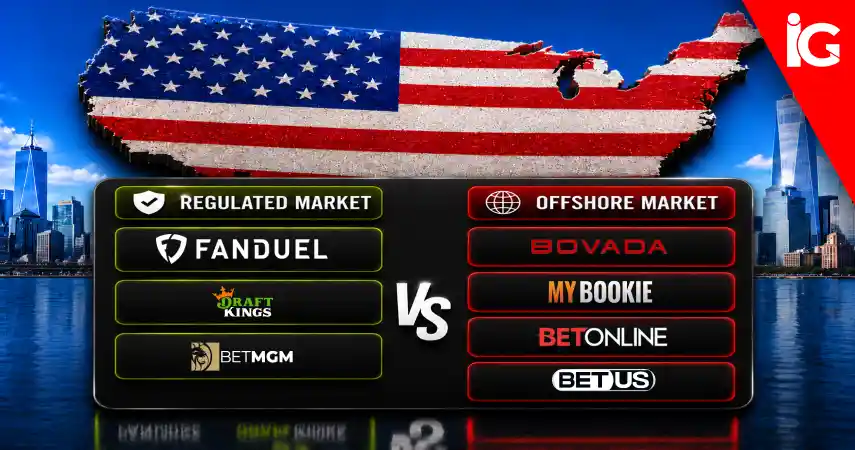
One of the most visible names in US betting holds no licence in most of the country. That single fact captures where the American market actually sits today. Brand tracking from Blask, covering hundreds of US betting brands, shows offshore operators like Bovada and BetOnline still commanding strong visibility among bettors, even as FanDuel and DraftKings lead the regulated segment. Both names keep investing hard in the brand and marketing muscle that put them there, which is exactly why their grip on the regulated top end looks so secure. The figures reflect attention rather than revenue, but in a market this competitive, attention is its own kind of currency.

The Brands Legalisation Was Supposed to Sideline
The theory behind regulated expansion was straightforward. Open legal markets state by state, let licensed operators spend on acquisition and product, and players would migrate toward regulated brands over time. Much of that has played out. Regulated operators have built genuine national recognition.
But the migration was never total. Offshore brands like Bovada and BetOnline have spent years building familiarity with American bettors, long before most states legalised anything. That head start hasn’t fully eroded. Blask’s brand tracking shows these operators still pulling real visibility, sitting closer to the licensed leaders than years of regulatory progress would suggest.
It’s a quiet result. And a telling one.
What the Regulated Leaders Actually Built
The regulated picture is clearer. FanDuel and DraftKings lead, and they lead for reasons that are hard to replicate quickly. DraftKings in particular was built from the ground up by founders who turned a daily fantasy product into a national betting brand, the kind of long game that explains why the top of the market is so hard to break into. Both spent years building national brands backed by heavy marketing, deep product development and methodical state-by-state expansion.

That scale compounds. Bigger acquisition budgets bring more customers. More customers fund more product. Better product improves retention, which justifies the next round of spend. It’s a cycle the largest operators can sustain and smaller ones struggle to match. The result is a regulated market where a small group of names absorbs most of the attention.
What This Data Is and What It Isn’t
Here’s where precision matters. These figures don’t represent revenue, gross gaming revenue, active accounts or official market share. They track visibility and engagement: where players are searching, reading and spending their attention across the betting market.
That distinction is easy to skip past, but it changes how the numbers should be read. A brand can hold high visibility without leading on revenue. Attention and money aren’t the same thing.
What attention does is precede money. In a crowded market, visibility shapes which brand a player tries first, which one they recall, which one earns a second session. It’s a leading signal, not a final scoreboard. For an operator weighing where to put the next acquisition dollar, that’s the more useful number to watch, it tells you where demand is forming, not just where it already landed.
The Catch Worth Naming
There’s an honest complication here. Several of the offshore brands showing strong visibility, Bovada among them, operate without US licences in most states. Their presence in the data reflects real player interest, but it isn’t an endorsement of a legal or recommended route to bet. For licensed operators, that’s almost the point. They’re not just competing with each other. They’re competing with established offshore familiarity that regulation alone hasn’t dislodged.
That’s a harder problem than market access. You can apply for a licence. You can’t easily apply for the years of brand recognition a competitor already holds.

Where the Next Fight Gets Won
As the US market matures, the competitive question is shifting. Market access was the early battleground, and most major operators have largely won it, they already hold broad geographic coverage and sizeable customer bases.
The next phase looks different. It’s about attention, retention and the long-term relationship with a player who has more choice than ever. The continued visibility of offshore brands, sitting alongside the biggest regulated names, is the clearest sign of that shift. If years of legalisation and heavy spend haven’t fully redirected player attention, then the work ahead isn’t getting into markets.
It’s earning a place in players’ heads once everyone’s already there. For the US betting sector, that may turn out to be the defining contest of the next decade.
Source: Blask