



Bragg Shareholders Vote Out Their Own CEO as Board Reshuffle Accelerates

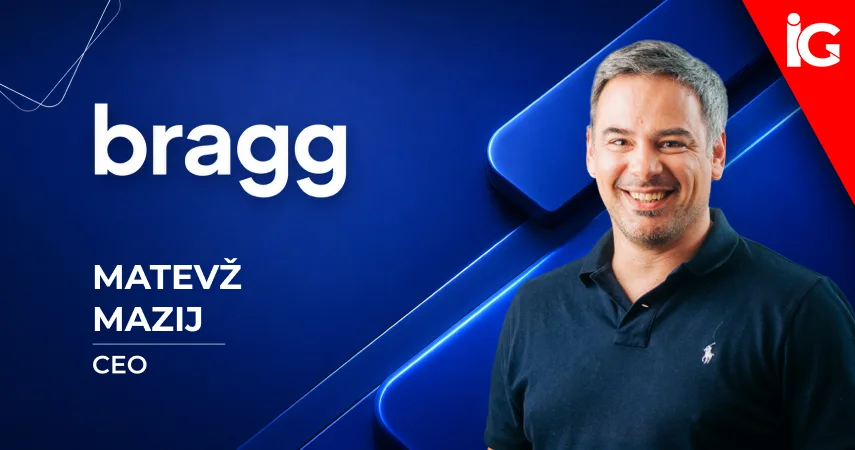
A vote that should have been a formality removed the chief executive from the board, days after a new chairman was lined up.
Shareholders rejected their own chief executive at an annual meeting where every other director walked through comfortably, and the margin leaves no room to read it as routine. Matevž Mazij, Bragg Gaming Group’s CEO, took just 44.33% in favour against 55.67% opposed at the 18 June meeting. Under the company’s own governance rules the result forced him off the board, and the trade press is already reporting him as gone. Every other nominee cleared 82%. The timing matters, because this lands while Bragg has been quietly rebuilding its board around an incoming chairman and a fresh round of insider backing.
That contrast is the story.
Bragg confirmed the results on 19 June, covering its NASDAQ and TSX listings under the ticker BRAG. Holly Gagnon, Mark Clayton, Thomas Winter, Donald Robertson and Aaron Baryoseph were all re-elected. Clayton and Winter were waved through with effectively no opposition, both above 99%. Gagnon, Robertson and Baryoseph landed comfortably in the 82% to 87% range. Mazij sat alone at the bottom, the only nominee shareholders declined to support.
Under Bragg’s majority voting policy and the provisions of the Canada Business Corporations Act, a sitting director who fails to win a majority must tender a resignation from the board. Mazij has done so. He continues to serve until the board acts on it, a successor is named, or 90 days pass, whichever comes first. In practice, boards almost always accept. The mechanism exists precisely to act on a shareholder signal this clear.

Why the margin matters
A 55.67% vote against a sitting director is not a near miss. It is a deliberate result, and the spread between Mazij and the rest of the board removes any room to read it as procedural noise. When a slate moves together, a single outlier is a message about that person, not the company’s direction.

The context sharpens it. Mazij is one of the most recognisable names in Bragg’s story, tied to the Oryx content business the company built much of its current product identity around. For shareholders to single out the chief executive, while backing everyone seated alongside him, points to a specific concern rather than a general one.
The auditor vote confirms as much. Bragg reappointed MNP LLP with 99.71% support. Shareholders were not punishing management broadly. They had no quarrel with the financial oversight or the rest of the leadership group. They had a quarrel with one seat, and they used the only tool a shareholder meeting offers to express it.
A board already in motion
This did not happen in a vacuum. Bragg has spent recent months reshaping who sits at the top. A private placement earlier in June drew personal cheques from the CFO, the COO and a sitting director, and lined up investor Matt Davey to take close to 10% of the company and the non-executive chairman’s seat once the Drayton International acquisition completes. The expected close was around 19 June, the very day the AGM results dropped. That appetite for change was visible earlier too, with Bragg’s Q1 2026 results pointing to an AI and market-expansion push.
Read together, the picture is of a board being rebuilt from several directions at once. A new chairman incoming. Insiders putting their own money in. And now shareholders removing the chief executive from the board. Whether those moves are coordinated or simply concurrent, they point the same way: the people steering Bragg are changing.
What it means for operators and partners
Board composition at a content and platform supplier is not abstract for the operators who depend on it. Bragg supplies casino games through its in-house studios, runs an aggregation hub that pulls in third-party titles, and licenses a player account management platform across more than 30 regulated markets. Operators integrating any of that are betting on continuity. They want to know the people steering studio relationships and product roadmaps will still be there in a year.
A leadership shake-up does not break those relationships. But it is the kind of detail a content director or commercial lead files away when weighing how settled a supplier looks. An operator deciding how much of its content shelf to commit to Bragg’s hub reads governance stability as a proxy for delivery stability. This invites a closer look, even if nothing changes operationally today.
The open question
What the filing does not address is why. It follows the policy to the letter and stops there. It does not explain what drove more than half of voting shareholders to withhold support from the CEO while endorsing the rest. That silence is normal for a regulatory disclosure, but it leaves the most interesting question unanswered, especially against a board that was already being rebuilt around new money and a new chair.

What to watch
The immediate signal is how the board formalises Mazij’s exit and whether his removal from the board extends to his executive role, which the AGM result does not by itself decide. Beyond that, watch how the incoming chairman and the Drayton deal reshape the top of the company. The question is whether this is an isolated governance event or one data point in a larger story about who controls Bragg as it scales across the U.S., LatAm, and European markets.
For now, the numbers speak plainly. Five directors the shareholders wanted. One, the chief executive, they did not. The board’s next moves will decide what that means.
Source: Bragg Gaming Group