



Bragg Gaming Reports €25.7M Q1 2026 Revenue As AI And Global Expansion Accelerate

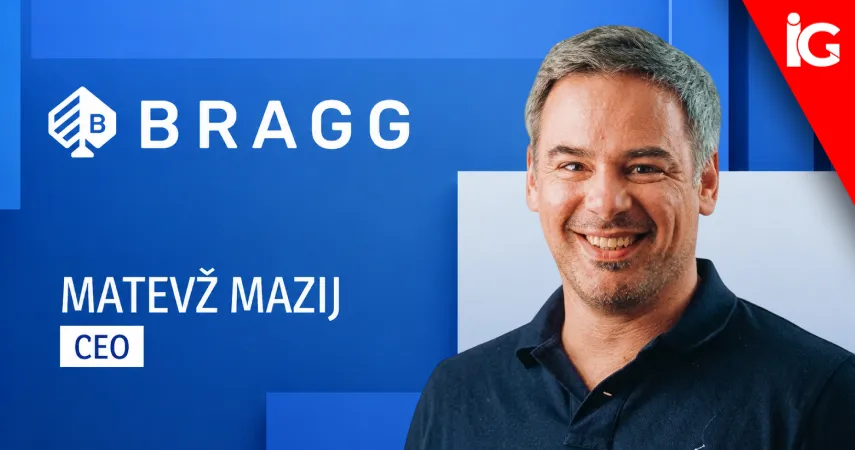
Bragg Gaming Group has reported first-quarter 2026 revenue of €25.7 million, as the Nasdaq-listed iGaming technology supplier accelerates operational restructuring, expands regulated market partnerships and pushes deeper into AI-led infrastructure development.
While total revenue increased only modestly by 0.6% year-on-year, the broader strategic direction of the business became far more significant than the headline growth figures themselves.
The company is now simultaneously pursuing:
• AI-driven operational transformation
• global PAM and sportsbook expansion
• deeper regulated market positioning
• cost restructuring initiatives
• and a potentially transformative acquisition through Drayton International

Brazil And European Markets Continue Supporting Revenue Growth
Several regulated markets delivered stronger underlying momentum during the quarter.
Brazil revenue increased 33.3% year-on-year as Bragg continued onboarding additional operators and expanding its local market presence.
The Netherlands also recorded 3.5% growth, supported partly by a temporary uplift tied to its Player Account Management (PAM) agreement with Entain.

Meanwhile, recurring U.S. revenue grew 7.1% due to the expanding performance of Bragg’s proprietary content portfolio, although overall U.S. revenue declined 12.1% because of one-off Caesars-related revenue recorded during Q1 2025.
Adjusted EBITDA reached €4.0 million, representing a margin of 15.7%, while net loss improved significantly to €1.2 million compared to €2.6 million a year earlier.
The latest quarter continues the momentum Bragg established in its FY2025 performance, where the company reported €106.1 million in annual revenue driven largely by expansion across the U.S. and Brazil markets.
AI Infrastructure Becomes Central To Bragg’s Strategy
One of the quarter’s most important developments involved Bragg’s growing focus on artificial intelligence infrastructure.
The company confirmed it has initiated development of the “Bragg AI Brain,” a data-driven AI engine designed to improve operational efficiency, support product intelligence and reduce long-term operating costs across the business.
The initiative reflects a much wider trend now emerging across the global iGaming sector.
Suppliers are increasingly investing in AI-driven systems capable of improving:
• player engagement
• operational automation
• product recommendation engines
• retention modelling
• risk management
• and margin optimisation
For Bragg, the AI-first approach is directly tied to its broader profitability strategy as the company works toward sustained long-term net profitability.
Strategic Restructuring Targets Profitability
Bragg also completed a major restructuring initiative during the quarter, including approximately 12% workforce reductions globally.
The company expects the restructuring to generate approximately €4.5 million in annualised savings moving forward.
Although the restructuring generated €0.7 million in termination-related costs during Q1, management believes the changes will improve operational leverage and EBITDA performance over the longer term.
The wider iGaming supplier market is increasingly seeing similar restructuring trends as companies focus more aggressively on:
• margin protection
• scalable infrastructure
• automation
• and operational efficiency
Drayton Acquisition Could Reshape Bragg’s Position
The company’s most strategically significant move may ultimately be its planned acquisition of Drayton International.
Bragg confirmed it has entered into a binding agreement to acquire the diversified gaming technology and content platform, with gaming entrepreneur Matthew Davey expected to join the company as Non-Executive Chairman following completion.
The transaction could substantially strengthen Bragg’s:
• technology stack
• content capabilities
• platform infrastructure
• and international distribution reach
Chief Executive Officer Matevž Mazij described the deal as potentially transformative for the company’s future positioning.
“We continued to execute well across our business in the first quarter,” Mazij said.
“But in many ways, I believe we are only just approaching the starting line as we work to complete our potentially transformative transaction with Drayton.”
PAM Expansion And Finland Positioning Continue
Alongside the financial results, Bragg continued expanding its PAM and turnkey infrastructure footprint across regulated European markets.
The company extended its PAM agreement with Croatia-based Senator Group while also signing a new agreement with SuomiVeto ahead of Finland’s upcoming regulated market launch scheduled for July 2027.
Bragg has also continued strengthening its sportsbook and platform infrastructure strategy through partnerships like its latest Belgium rollout with 711 and Kambi, highlighting the company’s broader push toward modular betting ecosystems ahead of the 2026 FIFA World Cup cycle.
Bragg also strengthened its partnership with Super Technologies and supported Superbet’s launch into the regulated Greek market.
These partnerships reinforce how platform suppliers are increasingly competing through full-service infrastructure ecosystems rather than standalone content distribution alone.

Industry Implications
Bragg’s Q1 results reflect a broader shift happening across the iGaming technology sector.
Growth is no longer being driven purely by game releases or supplier distribution deals.
Instead, long-term competitiveness is increasingly being shaped by:
• AI infrastructure
• scalable PAM systems
• operational efficiency
• regulated market positioning
• and platform consolidation
For Bragg, Q1 2026 may ultimately be remembered less for modest revenue growth and more for the structural transformation now underway across the business.
Source: Bragg