



From 17 Jukeboxes to a €2.8 Billion Gaming Empire: The MERKUR Group Story

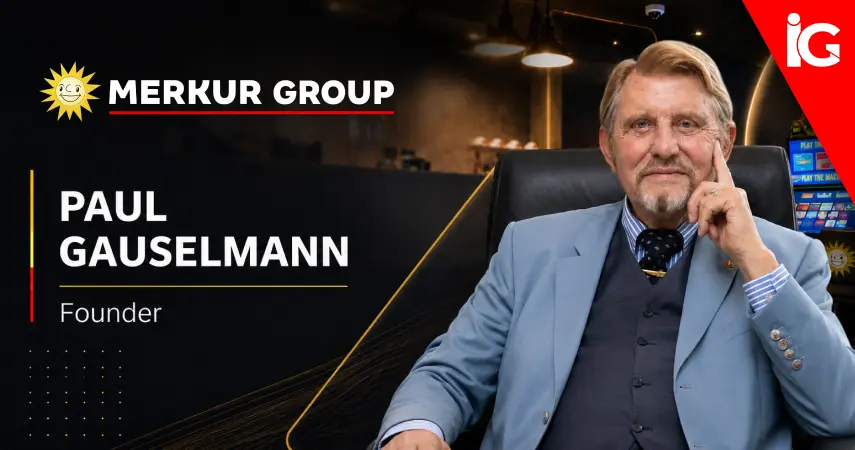
How Paul Gauselmann built one of Europe’s most diversified gaming businesses across nearly seven decades
In 1957, a telecommunications inspector in Germany started a side business installing jukeboxes. He had 17 machines. No investors. No roadmap. What he had was an instinct for what people wanted and the patience to build something that would last.
That man was Paul Gauselmann. And what he built became the MERKUR Group.

Paul Gauselmann and the Origins of MERKUR Group
The MERKUR story does not begin in a boardroom. It begins with 17 jukeboxes and a man who was already thinking about what came next.
At 22, Gauselmann developed a remote selection unit for German jukeboxes that introduced functionality previously available only on imported American models. It was a small innovation. But it signalled something bigger: an instinct for engineering, consumer behaviour, and competitive differentiation that would define the decades ahead.
By 1964, the corporate foundation of the group was in place. A decade later, in 1974, Gauselmann opened the first MERKUR amusement arcade. It was not just a new venue. It set a benchmark for interior quality and service that reshaped expectations across the European entertainment market.

MERKUR Casino and Gaming Operations Across Europe
What makes MERKUR unusual is not its size. It is its structure.
Most igaming businesses grow by doubling down on what works. MERKUR grew by building the entire chain. Today, the group operates more than 750 entertainment venues across Europe, over 15 land-based casinos in Germany, and specialist casino operations on cruise ships. The scale is significant. The integration is what sets it apart.
Each venue feeds intelligence back into the product. Each product is built by a division that also supplies the B2B market. The internal loop is tight, and it has been compounding for decades.
MERKUR iGaming and Sports Betting: Cashpoint and XTiP
The group’s digital expansion was not reactive. It was structural.
MERKUR iGaming delivers regulated online casino platforms across international jurisdictions. MERKUR Sportsbetting operates through established brands including Cashpoint and XTiP, covering both retail and online channels. These are not bolt-on acquisitions. They are divisions built from the group’s existing manufacturing and operational expertise, extended into digital and betting markets where regulation permitted.
For operators watching how land-based businesses migrate online without losing margin or brand integrity, MERKUR’s approach is one of the cleaner case studies available.
Gauselmann Group Revenue and Financial Scale in 2026
The numbers behind the MERKUR Group are not small.
The group reported fully consolidated annual revenue of €2.8 billion. Its global workforce stands at nearly 15,000 employees across manufacturing, venue operations, digital gaming, sports betting, and cash-handling technology divisions including GeWeTe and HESS Cash Systems. The patent portfolio exceeds 300 registered innovations. Paul Gauselmann holds a position in German industry that few outside the country fully appreciate, having earned recognition as the country’s foremost figure in amusement and gaming technology.
This is not a company that scaled fast. It scaled right.
What MERKUR’s Growth Model Means for iGaming Operators
There is a lesson embedded in the MERKUR blueprint that most operators will recognise but few have executed at this level.
Diversification across the gaming value chain, when done with genuine vertical integration rather than scattered acquisitions, creates a type of resilience that single-segment businesses simply do not have. When regulation tightens in one market, another division absorbs the pressure. When consumer behaviour shifts, the group’s data infrastructure catches it early.
Operators building platform strategies today, particularly those weighing the balance between land-based operations and digital expansion, would do well to study how MERKUR managed that transition over two decades rather than two funding rounds.

MERKUR Group Future Outlook: What Comes Next
The gaming industry in 2026 is not the industry Paul Gauselmann entered in 1957. Regulation is more complex. Consumer expectations are higher. The digital and physical channels are increasingly merged rather than separate.
MERKUR’s position heading into the next phase is structurally strong. Its iGaming division is already operating in regulated international markets. Its sports betting brands carry established retail networks that provide customer acquisition advantages most pure-play digital operators have to buy their way into. And its manufacturing arm continues to supply the B2B market with game content developed from real operational data.
The more interesting question is not whether MERKUR will grow. It is how the group uses its cross-vertical position to compete as AI-driven personalisation, alternative payment infrastructure, and evolving European regulatory frameworks reshape what a gaming business needs to look like.
For a company that turned 17 jukeboxes into a €2.8 billion operation across nearly 70 years, the next decade is unlikely to slow it down.
Source: MERKUR Group Corporate Archives