



Snoop Dogg. Lil Baby. Sexyy Red. One Alea Partnership. Kerma Games Is Betting on Relevance Over Reach.

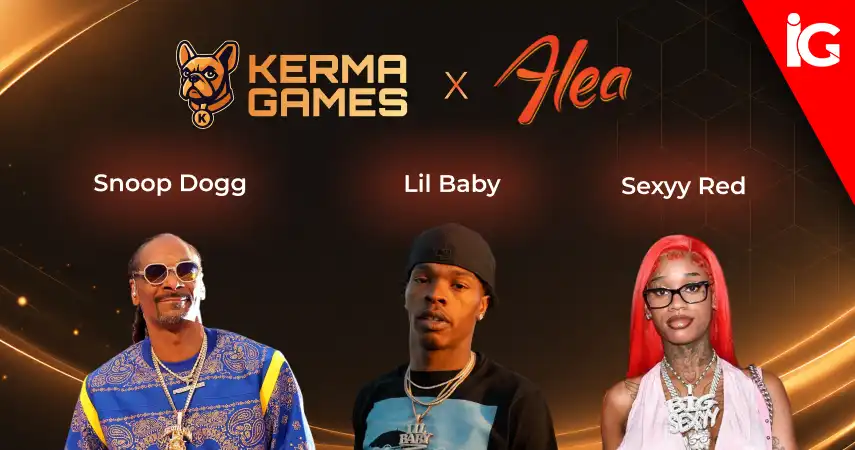
Distribution, not just content, is deciding which game studios survive the next phase of iGaming. Kerma Games has just made its position clear. The supplier has integrated its full portfolio of slots, live casino and crash titles with Alea, giving every operator connected to the aggregation platform immediate access to its games through a single technical pipeline.

Kerma Games Joins the Alea Aggregation Platform
The agreement gives Kerma a faster route to market than direct operator integrations could ever offer. Instead of negotiating and building one connection at a time, the studio now plugs into an established network of operators in one move. Operators already live on Alea gain a new supplier without touching their existing setup. A new supplier appears in the back office, ready to deploy. That simplicity is exactly why aggregation has become the default growth route for mid-sized studios competing against suppliers with far larger commercial teams.
Celebrity Branded Slots Give Kerma a Distinct Market Position
What separates Kerma from the hundreds of studios fighting for lobby space is its bet on celebrity intellectual property. The supplier has released titles built around Snoop Dogg, Lil Baby and Sexyy Red, names that carry recognition far beyond the typical casino audience. Branded content remains a small slice of the market. But it solves a problem operators talk about constantly: game discoverability. When most lobbies look the same, a familiar face on a thumbnail does work that a generic fruit slot simply cannot.
What the Alea Integration Means for Online Casino Operators
For platform managers and content directors, this is a procurement decision made easier. Portfolio diversity now sits near the top of game acquisition strategies, and adding a differentiated supplier through an existing aggregator removes the usual friction. No new integration project. No added technical debt. Faster time-to-market for releases. Kerma has also committed to shipping four new titles every month across slots, live casino and crash formats, which gives operators something rarer than a good game: a predictable content pipeline they can build promotional calendars around.
Aggregation Is Becoming the Growth Engine for Game Suppliers
The wider signal here matters more than the deal itself. Competition between aggregators and content suppliers is intensifying, and distribution scale is emerging as the deciding factor in which studios gain long-term market visibility. Direct integrations still have their place for flagship operator relationships. For everything else, third-party distribution wins on speed and cost. Watch how many mid-sized studios copy this route in 2026. Aggregation gets them in front of hundreds of operators for a fraction of what direct deals demand in time and headcount.

Future Outlook for Kerma Games and Branded Casino Content
The next six to twelve months will test two things. First, whether Kerma can actually sustain a four-title monthly release schedule without quality slipping, because operators will notice quickly if it does. Second, whether celebrity-led content converts recognition into retention. Engagement on launch day is easy. Keeping players inside a branded title after the novelty fades is the harder commercial question, and the answer will shape how aggressively other suppliers invest in entertainment IP. If Kerma’s numbers hold, branded content moves from niche experiment to mainstream portfolio strategy. If they do not, the market gets a free case study on the limits of branded content, paid for entirely by Kerma. Either way, the studios watching this deal most closely are not Kerma’s partners. They are its competitors.

Source: Kerma Games