



Exclusive: Fabio A. Bufalini on AI, Regulation and Building Global Gaming Brands in Italy

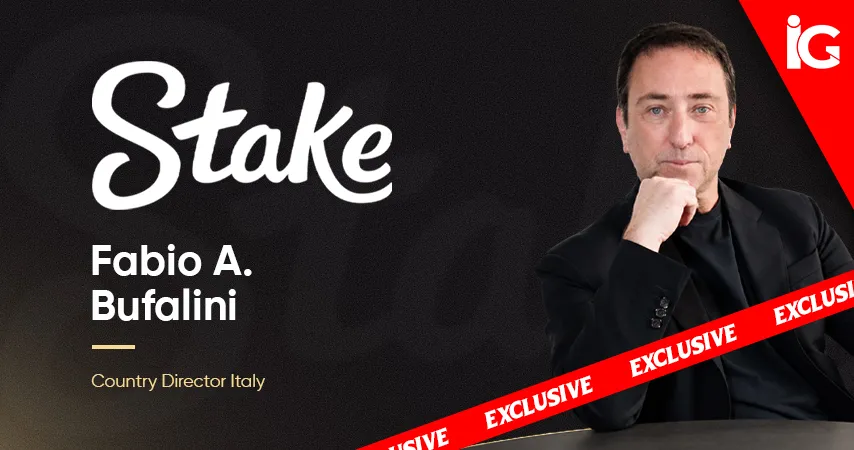
Launching an international gaming brand in a regulated market requires much more than global recognition. It demands a deep understanding of local regulations, consumer behaviour, responsible gaming requirements, and the ability to adapt global strategies to regional realities. As regulated markets continue to evolve, operators must balance commercial growth with compliance while delivering competitive products that resonate with local players.
In this exclusive interview with iGaming News Today, Fabio A. Bufalini, Country Director Italy at Stake, shares insights from his experience working with leading global brands including PokerStars, PartyGaming, Betsson, and Stake. He discusses Italy’s evolving regulatory framework, the importance of building the right team, AI’s growing role in gaming operations, responsible gaming, and the trends shaping one of Europe’s most competitive iGaming markets.

Q1: You’ve worked with global brands such as PokerStars, PartyGaming, Betsson, and now Stake. Looking back, what has been the biggest lesson you’ve learned about bringing global brands into regulated markets?
Fabio:
Every journey is different, but one lesson has remained consistent throughout my career. A global brand may already have an established international presence, but operating successfully in a regulated market requires a completely different mindset.
A company may have a strong international reputation, but when it enters a market like Italy, it often has to build its presence from scratch. Success depends on understanding the local market, adapting to its regulations, and accepting that what works globally may not automatically work locally.
One of my main responsibilities has always been helping international teams understand the local business environment, consumer behaviour, and regulatory expectations. For me, the biggest lesson is that success starts with changing the mindset. Global strategies need to be adapted to local realities, and that shift is often the most challenging-but also the most important-part of the process.
Q2: Italy is one of Europe’s most competitive regulated gaming markets. What makes it unique compared to other regulated jurisdictions?
Fabio:
Italy is currently the fifth-largest gaming market in the world and the second largest in Europe, after the UK. It is a mature market that has experienced consistent growth over the past two decades, and the online gaming sector is expected to generate around €6 billion this year.

One of the biggest recent changes has been the licensing reform. Previously, there were more than 400 licensed domains operating in the market. Under the new framework, only 52 licences were awarded across 46 companies, creating a much more consolidated and structured market.
The barrier to entry has also changed dramatically. The licence fee increased from €200,000 to €7 million, reflecting the regulator’s objective of attracting larger, financially stronger, and more reliable operators.
Another unique characteristic is Italy’s advertising restrictions. Since the introduction of the Dignity Decree in 2018, gambling advertising has been heavily restricted. While the intention was to strengthen player protection, it has also created challenges and ongoing discussions about whether adjustments are needed.
The latest reforms have also introduced much stricter KYC requirements and stronger player verification processes, making responsible gaming and player protection even more central to the regulatory framework.
Although Italy is a mature market, it continues to grow by around 15% annually and still offers significant opportunities for companies prepared to invest for the long term.
Q3: Throughout your career you’ve helped launch several brands from the ground up. What do you believe is the single most important factor when building a new gaming brand?
Fabio:
For me, the answer is simple: the team.
Launching a brand is very similar to building a startup, even when you have a large multinational company behind you. Success depends on having the right people who share the same vision, passion, and commitment.
Not everyone is suited to working in a startup environment where everything is being built from scratch. You need people who embrace challenges, work towards the same goals, and genuinely believe in what they’re creating.
If you build the right team from the beginning, everything else becomes much easier. In my experience, people are the biggest competitive advantage when launching a new brand.
Q4: Operators often focus heavily on player acquisition. How should companies balance acquiring new players while keeping existing customers engaged?
Fabio:
Everything starts with the product.
Before investing heavily in acquisition, you need to make sure the product is ready to compete. Otherwise, you’ll spend significant marketing budgets attracting players who leave after their first experience.
Once the product is strong enough, acquisition becomes much more effective. For a global brand like Stake entering Italy, building brand awareness is just as important because, despite its international recognition, the brand was still relatively new to Italian players.
At the same time, retention is equally critical. CRM, loyalty programmes, VIP initiatives, and personalised player experiences all contribute to keeping customers engaged over the long term.
Successful operators understand that acquisition and retention are not separate strategies-they must work together. Sustainable growth only comes when companies invest equally in attracting new players and creating experiences that encourage them to stay.
Q5: AI is transforming almost every industry. How do you see AI changing the gaming industry over the next few years?
Fabio:
AI is already transforming the industry today. I don’t see it as something that will happen in the future-it is already changing the way we work.
At Stake, we have started integrating AI into many of our daily activities, from reporting and analytics to supporting operational processes. It has become an important productivity tool across different departments.
However, AI should be viewed as a support system rather than a replacement for people. Businesses still need experienced professionals who can interpret information, make strategic decisions, and manage AI responsibly.
This is one of the biggest technological revolutions we’ve seen, and its impact extends far beyond iGaming. Companies that learn how to use AI effectively will undoubtedly gain significant advantages.
Q6: As regulation continues to evolve, how do you balance commercial growth with responsible gaming and player protection?
Fabio:
Responsible gaming has become one of the central pillars of the Italian regulatory framework.
Under the new licensing system, operators must meet much higher standards, including investments in technology, cybersecurity, and responsible gaming initiatives. These are no longer optional-they are mandatory requirements.
For operators, sustainable growth can only happen alongside player protection. Building trust with players is just as important as acquiring them. That means implementing strong verification procedures, investing in responsible gaming tools, and ensuring every activity complies with regulatory expectations.
The industry’s responsibility is to demonstrate that regulated operators provide a safe, transparent, and controlled environment that encourages players to choose licensed platforms rather than unregulated alternatives.
Growth and responsibility should never be seen as competing priorities-they must develop together.
Q7: If you were starting your career in iGaming today, knowing everything you know now, what advice would you give yourself?
Fabio:
If I had to choose one piece of advice, it would simply be to stay passionate.
Building something from the ground up is demanding. It requires hard work, commitment, and resilience. But when you’re surrounded by people who share the same passion and vision, even the most challenging moments become rewarding.
Our team in Italy is still relatively small, but everyone works towards the same objective. That shared passion creates energy, motivation, and a strong sense of purpose.
For anyone starting a career in iGaming, technical skills are important, but passion is what keeps you moving forward. When you genuinely believe in what you’re building, you don’t focus on how difficult the journey is-you focus on achieving the goal together.
About Fabio A. Bufalini
Tech C-Level Executive, analytical skills combined with hands-on attitude. Significant entrepreneurial drive and able to achieve goals in high-performance environments.
With 20 years of Marketing and Growth experience in the digital environment.
As a senior executive I have spent my career developing market-entry strategies and then building Teams to aggressively execute on those strategies.
I have been responsible for international online Brands start-ups into the Italian market including PokerStars, PartyGaming, Betsson (StarCasino.it) and Everest Gaming, reporting at Board Level, covering budget and P&L responsibilities. I am now launching and managing Stake into the Italian Regulated Market.

About Stake
Stake is one of the world’s leading online betting and gaming brands, offering sportsbook and casino entertainment to millions of users across international and regulated markets. Known for its technology-driven platform, extensive sports betting coverage, innovative casino offering, and high-profile global partnerships, Stake continues to expand its presence through locally tailored operations, responsible gaming initiatives, and a strong focus on delivering premium player experiences. In Italy, Stake operates under the country’s regulated licensing framework, supporting long-term, compliant growth in one of Europe’s largest and most competitive iGaming markets.