



AGA Estimates $29.5bn in Legal NFL Wagering for the 2026 Season, Level With Last Year’s Handle

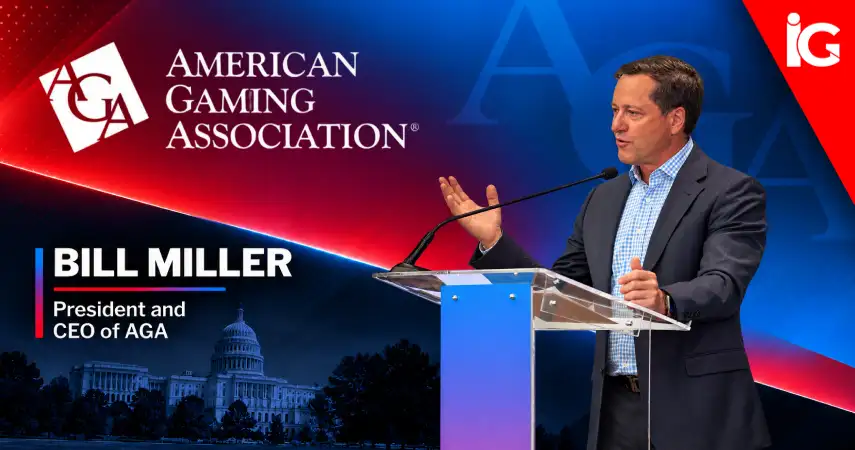
The American Gaming Association published its AGA NFL betting estimate for the 2026 season on 4 September 2026, projecting $29.5 billion in legal wagers through US regulated commercial sportsbooks. Last season’s handle was $29.4 billion. In the AGA’s own words, the projection indicates no growth. For a market that has grown since the Supreme Court struck down the federal sports betting ban in 2018, that is the news. The AGA’s explanation for it, prediction markets, is the argument.
$29.5 billion in legal NFL wagering, and no growth on last season
The NFL is the anchor of the US betting calendar, and the AGA’s pre-season number is the figure operators, regulators and investors measure the year against. This one lands at $29.5bn, which on the AGA’s figures is a rise of $100 million on a $29.4bn base. Round it and it is zero.

AGA President and CEO Bill Miller framed the shift directly. “Since the Supreme Court struck down the federal sports betting ban in 2018, legalized sports betting had seen tremendous growth,” he said. “But this year is different. Since the widespread launch of backdoor sports betting on so-called “prediction markets,” the growth of legal handle has stalled.”
Prediction markets in all 50 states: the AGA’s case against Kalshi and Polymarket
The release sets out the AGA’s position in four numbers, all of them AGA estimates.
Sports betting is legal in 40 US jurisdictions and prohibited in 11 states. The AGA says prediction markets are offering sports wagers across all 50 states and Washington DC, operating outside the regulatory frameworks in the legal jurisdictions and bypassing the prohibitions in the others.
It states that sports bets make up about 80% of Kalshi’s volume, and estimates $5.1 billion of that comes from users aged 18 to 20, an age below the legal betting threshold in 35 of the 40 legal jurisdictions.

On the fiscal side, the AGA says the regulated industry supports 1.8 million jobs and generates roughly $18 billion a year in sports betting tax revenue. By contrast, it estimates prediction markets including Kalshi and Polymarket have siphoned more than $1.3 billion in potential state gaming tax revenue since 2025.
Bill Miller on sports wagers marketed as investment
Miller’s second statement is the sharpest line in the release. “These “prediction market” platforms are dangerously misleading consumers by marketing sports wagers as an investment, rather than what it is: entertainment,” he said. “Kalshi and other “prediction markets” say they don’t need to follow state- and tribal- regulated sports betting laws or pay state gaming taxes. Their defiance means consumers, including teenagers and freshmen, placing bets without the protections, oversight, and accountability that the legal market provides.”
The AGA closes by encouraging fans to understand the difference between licensed sportsbooks, prediction markets and other illegal operators, and to wager only with legal, state and tribal regulated operators.
What the flat sports betting handle means for regulated sportsbooks
The operator read is straightforward. The AGA has moved from describing prediction markets as a regulatory question to describing them as a tax leakage and consumer protection problem, and it has attached dollar figures to both. That is the framing state legislators and attorneys general respond to, and the timing, days before kickoff, is not accidental.
For sportsbooks, a flat handle year is also a margin and marketing year. If the top line is not growing, the pressure moves to hold, retention and cost of acquisition, and the AGA’s release gives operators a public argument for why their growth has slowed that does not involve their own product.
Market maturity, AGA estimates and how the NFL handle projection is built
Two things in the release deserve a careful read.
First, the AGA gives two causes for the slowdown, not one. Alongside prediction markets, it states that the legal market continues to mature. The headline attributes the stall to prediction markets; the body admits maturity is also at work. How much of the flat line belongs to each is not something the release can show, and it does not claim to.
Second, the Kalshi and tax figures are AGA estimates linked to the AGA’s own trackers, not reported data from the platforms. The $29.5bn projection itself is built, per the AGA’s methodology note, on national handle growth to date in 2026 applied to last year’s estimated NFL season total, plus football specific reporting from select states. It covers preseason games, futures booked as early as March, the playoffs and Super Bowl LXI in February 2027. It is a forecast, and the real number arrives in about five months.
The release carries no response from Kalshi or Polymarket.
Future outlook for the 2026 NFL season and prediction market regulation
The number that matters now is actual reported handle through the playoffs. If it tracks flat against last season, the AGA’s case hardens and the fight over sports event contracts moves further into state capitals. If it grows, the maturity explanation looks stronger and the prediction market argument weaker.
Either way, the AGA has set the terms of the debate for the 2026 season: not whether prediction markets are legal, but what they cost.
Source: American Gaming Association