



IBJR Executive President Carlos Lima Takes Charge As Brazil’s Gaming Market Enters A Critical Regulatory Phase

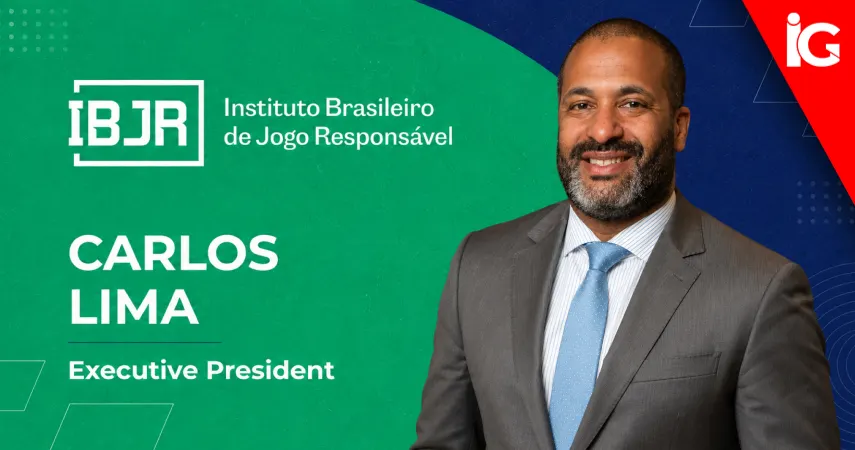
When an industry body appoints a new chief, the instinct is to read the CV and move on. Carlos Lima’s appointment as Executive President of IBJR rewards more attention than that.
Lima has not spent his career in gaming. His background is in government relations, public policy development, and regulatory compliance across industries where the commercial stakes of getting the state relationship wrong are severe. PUC Rio and FGV on the academic side. Years spent on the complex, unglamorous work of building institutional dialogue between business and government on questions that actually matter. He arrives at IBJR not as a gaming insider but as someone trained specifically for the kind of political and regulatory engagement the institute now needs most.

The Regulatory Work That Does Not Make Headlines
Brazil legalised fixed-odds betting and online gaming. That was the milestone. But licensing frameworks being live and regulatory frameworks being settled are two different things, and Brazil is firmly in the space between them.
The rules governing how operators advertise, how they handle responsible gambling obligations, what compliance failures cost, and how licensing criteria evolve are all in various states of active development. None of that is finished. Some of it is genuinely contested. And the organisations that hold credible, technically grounded dialogue with Brazil’s Federal Government, the National Congress, and the relevant regulatory bodies during that process will have a disproportionate influence on what the final environment looks like.
That is the job Lima is walking into. His mandate covers the full institutional landscape: federal government, legislature, sector regulators, civil society. The breadth of it is notable. This is not a narrow lobbying brief. It is a sustained, multi-front engagement strategy at a moment when Brazil’s political establishment is still forming its settled view of what regulated gaming should look like in practice.
Why Coming From Outside the Industry Is an Asset Here
There is a version of this appointment that reads as a gap. Lima does not know the product. He has not run a sportsbook or managed a licensing application. Fair points, both.

But Brazilian legislators and regulators are not primarily concerned with product knowledge. They are concerned with social impact, fiscal reliability, and whether the regulated industry can be trusted to self-govern responsibly. An institute led by someone whose credibility was built inside gaming risks being dismissed as a commercial lobby dressed in responsible gaming language. An institute led by someone who has spent their career on public-sector engagement and institutional trust is harder to characterise that way.
Several markets have seen gaming regulation stall or reverse when the industry appeared too close to its own advocates. Lima’s profile is partly a structural answer to that risk. Whether it works depends on execution. But the logic is sound.
Gelfi Steps Back, Not Away
Andre Gelfi, who co-founded IBJR and was one of the central figures in the political campaign that produced Brazil’s gaming legislation, moves to the board as a director. He will continue contributing to the institutional agenda alongside the board’s other members.
The structure matters for a specific reason. Gelfi’s relationships with senior figures in Brazil’s political and regulatory world were built over years of direct engagement on a single consequential project. Those relationships are not transferable by announcement. Lima will spend months, possibly longer, establishing the access and credibility that Gelfi built during the legalisation push.
Having Gelfi at board level means that institutional capital does not disappear while Lima builds his own. For an organisation in the middle of a sustained regulatory campaign, that continuity is practically useful.

What Operators Should Be Watching
For any operator holding a Brazilian licence or assessing the market, this appointment is a prompt to look at your own government affairs posture in the country. The regulatory environment is not set. It is forming, and it is forming through exactly the kind of institutional dialogue Lima has been hired to lead.
The operators who treat Brazilian regulation as a solved problem right now are probably misjudging the timeline. The frameworks that will govern the next five years of commercial operation in the market are still being written. Who influences that writing, and how, is not peripheral intelligence. It is central to any serious market strategy.
Lima’s appointment is one data point. But it is a data point that points in a clear direction: IBJR is preparing for a longer, harder regulatory engagement than the legalisation headlines suggested. The operators who recognise that early will be better positioned to shape what comes out of it.
Source: IBJR