



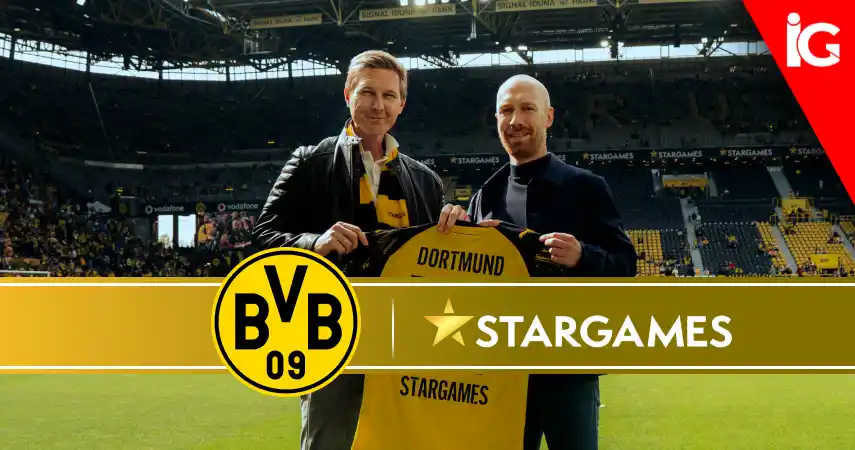
Building Loyalty Beyond Ads: Borussia Dortmund and StarGames Extend Deal Until 2029

Gambling sponsorships in football are not declining despite tighter regulations. In fact, they are becoming more valuable, more strategic, and more difficult to replace.
Recent partnerships, such as the extension between Borussia Dortmund and StarGames, highlight a broader shift in how operators approach marketing in regulated markets.

Advertising Restrictions Are Changing Acquisition Strategies
Across Europe, gambling advertising rules are becoming stricter. Markets like Germany are limiting how operators can run performance marketing campaigns, especially in digital channels.
Performance marketing is losing efficiency
Operators are finding it harder to rely on paid ads for customer acquisition. Compliance restrictions, platform limitations, and rising costs are reducing the effectiveness of short-term campaigns.
As a result, companies are shifting toward more stable and compliant marketing channels.
Football Sponsorships Offer Long-Term Visibility
Football clubs provide one of the few remaining large-scale, compliant exposure channels for gambling brands.
Stadium and broadcast exposure still dominates
Sponsorship deals typically include pitch-side LED boards, stadium branding, and broadcast integrations. These placements ensure consistent visibility during live matches, where viewer attention is highest.
Unlike digital ads, these exposures are less affected by regulatory restrictions and ad-blocking behaviour.
Integration within match content improves recall
Modern sponsorships go beyond logos. Features such as branded match statistics and in-game integrations place the sponsor directly within the viewing experience.
This increases brand recall and creates a stronger association with the sport.
Why Operators Are Prioritising Brand Over Conversions
The industry is moving away from short-term acquisition toward long-term brand building.
From quick wins to sustained visibility
Instead of focusing only on immediate conversions, operators are investing in partnerships that deliver consistent exposure over time.
This approach helps maintain relevance in markets where direct advertising is restricted.
Regulation Is Driving Strategic Marketing Shifts
Germany is a clear example of how regulation is reshaping marketing strategies in the gambling sector.
Compliance-first marketing becomes essential
Operators must now ensure that all marketing activity aligns with regulatory requirements. Sponsorships with major football clubs provide a safer and more compliant alternative to aggressive digital campaigns.
These partnerships allow brands to remain visible without risking regulatory penalties.
What This Means for the Future of Gambling Marketing
The extension of long-term deals suggests a clear direction for the industry.
Key trends shaping the market
- Football sponsorships are becoming more valuable due to restricted alternatives
- Brand visibility is replacing short-term acquisition strategies
- Broadcast integrations are improving engagement and recall
- Regulation is pushing operators toward compliant marketing channels

Final Thoughts
The gambling industry is adapting to a more regulated environment. As traditional advertising channels become less effective, partnerships with major football clubs are emerging as a key strategy.
In 2026 and beyond, operators that focus on long-term visibility and brand positioning are likely to outperform those relying on short-term acquisition tactics.
Source: Borussia Dortmund