



How Teddy Sagi Built Playtech Into One of iGaming’s Biggest Empires

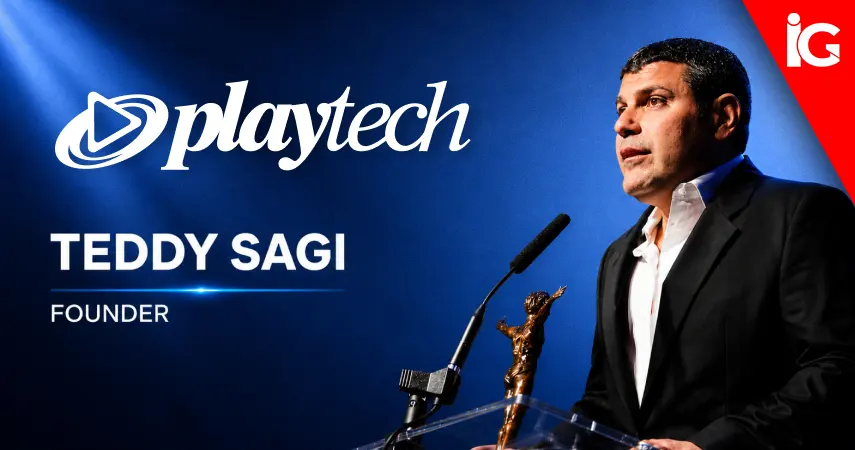
The most durable company in online gambling barely touches a player. That was always the plan.
Most gambling businesses start by chasing deposits. Playtech started by selling the machinery that processes them. Founded by Teddy Sagi in Tartu, Estonia in 1999, the company spent the next two decades supplying technology to operators rather than competing with them, a decision that turned a small software startup into a B2B technology business spanning more than 40 regulated markets. The bet was simple and slightly contrarian. Own the infrastructure, not the customer. You can see the same logic playing out today in deals like Playtech’s iPoker network powering FanDuel’s new poker product across four North American markets, where the operator carries the brand and Playtech supplies the engine underneath.

The Beginning
When Playtech launched in 1999, online gambling was barely a category. A handful of operators were testing whether anyone would deposit real money into a browser window, and the tooling to run those businesses was thin. Sagi’s read on the moment was that the operators arriving next would all need the same thing, and almost none of them would want to build it themselves.
So Playtech built casino software and sold it. Early, narrow, unglamorous. But it was the kind of product that gets stickier the deeper an operator integrates it, and that stickiness became the foundation for everything that followed.
Going Public Changed the Pace
The turning point came in 2006, when Playtech listed on the London Stock Exchange. The IPO did two things. It gave the company a war chest, and it gave it a currency for acquisitions.
Both mattered more than the headline figure. Capital let Playtech invest in technology faster than a privately funded supplier could. The listing also signalled something to the market. This was no longer a niche software vendor but a company intent on consolidating a fragmented supply layer. Over the following years, Playtech moved well beyond casino software into poker, bingo, sportsbook, live casino and full platform technology. Each addition made the company harder to design out of an operator’s stack.
Building a Business You Cannot Easily Leave
Here is the part worth studying. Playtech did not win by having one brilliant product. It won by becoming difficult to remove.
A single-product supplier is always exposed. Operators can swap one game studio for another over a weekend. But a supplier providing the casino engine, the live dealer feeds, the player account platform and the reporting layer is woven into the operator’s daily operation. Switching means rebuilding the business. That friction is the moat, and Playtech spent two decades widening it through a mix of organic development and acquisition. By 2025 the strategy had hardened into something official, with the company’s annual report confirming a full repositioning into a pure-play B2B technology business after selling its consumer-facing Italian arm and concentrating entirely on infrastructure.
The company now describes itself as a technology business operating across more than 40 regulated jurisdictions. That regulated-market focus is not incidental. As licensing tightened across Europe and beyond, operators needed suppliers who could prove compliance market by market. A vendor already certified in dozens of jurisdictions becomes the safe choice, almost by default.
What an Operator Actually Takes From This
For a platform head or founder reading this in 2026, the lesson is not “admire Playtech.” It is a positioning question with budget attached.
If you are building a consumer brand, your entire model rests on acquisition cost staying lower than player lifetime value, and that gap narrows every year as competition intensifies and marketing gets more expensive. If you are building infrastructure, your model rests on integration depth and switching cost, which compound in your favour over time. These are genuinely different businesses with different risk profiles, and confusing the two is how operators end up overspending on growth they cannot retain.
The practical decision this affects is where you invest scarce engineering and capital. Toward features players notice, or toward the depth that makes you indispensable to the operators you serve.
The Complication
None of this makes the supplier path easy or safe. Playtech’s history has not been frictionless. A B2B model concentrated in regulated markets is exposed to regulatory shifts, to the commercial health of the operators it depends on, and to the slow grind of integration cycles that can take quarters to close. When a major client struggles, the supplier feels it. And consolidation cuts both ways. The same dynamics that let Playtech acquire its way to scale now apply to anyone looking to acquire Playtech-style assets. Infrastructure is durable, but it is not immune.

What Comes Next
The supplier layer Playtech helped define is now the part of iGaming most likely to consolidate further. As regulated markets mature and compliance costs rise, smaller suppliers get squeezed and the operators serving them look for fewer, deeper technology partners. That pressure favours the established platforms and reshapes who owns the infrastructure underneath the industry.
Sagi made his bet in 1999, when the answer was anything but obvious. More than 25 years later, the question he answered first is the one the next wave of builders is still circling. Do you want players to choose you, or operators to be unable to leave you?
Source: Playtech