



Signed Shirts and Five-Euro Bets: Why the Ksa’s TOTO Ruling Changes How Operators Should Think About Club Partnerships

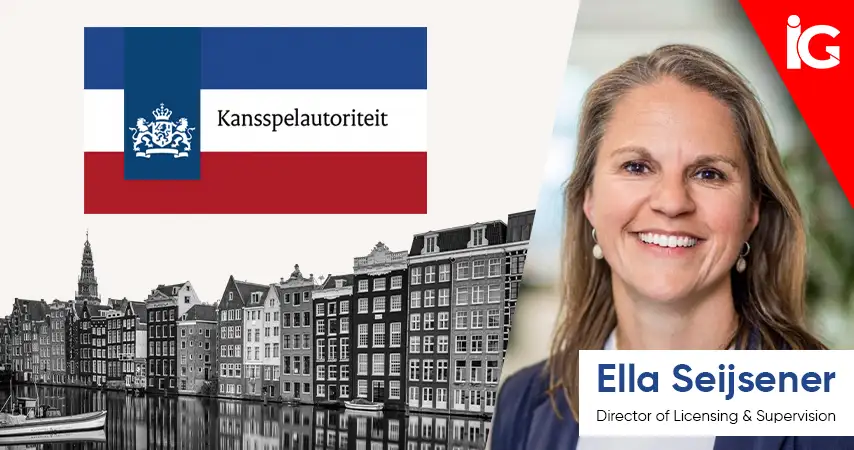
You do not need a footballer in your ad to fall foul of the Netherlands’ role model ban. That is the finding that should be sitting in every compliance inbox in Europe right now.
Professional club partnerships have been one of the gambling industry’s preferred workarounds for years. Operators sponsor teams. They run activations through club channels. They attach incentives to match-day moments. The footballer never formally endorses the product. The operator stays technically clean. Or so the thinking went.
The Dutch Gaming Authority just closed that gap. On 12 June 2026, the Ksa formally addressed TOTO Online for a campaign that offered bettors the chance to win a shirt signed by players at eight professional football clubs if they placed a five-euro bet. No player appeared in any TOTO advertisement. No individual athlete was named as an ambassador. The Ksa ruled it a violation of the role model ban regardless. The Ksa has form when it comes to holding Dutch operators to account, having previously ordered Unibet operator Optdeck to strengthen its AML monitoring in a separate enforcement action.
The reasoning is the part operators need to sit with. It was not the presence of a footballer that triggered the breach. It was the fact that the signed shirts were only desirable because of the players. The campaign’s commercial appeal was inseparable from professional athlete influence, and that was enough.

A Rule That Just Got Bigger
The Netherlands’ role model ban prohibits gambling operators from using professional athletes, former athletes, influencers, and celebrities in promotional activity. It was introduced to protect vulnerable groups, specifically young people and those with existing gambling problems, from the pull of aspirational figures in advertising.
What the TOTO decision does is extend the practical reach of that rule beyond what many compliance teams had mapped. The ban has always covered individual athletes and professional sports teams. But the TOTO case draws a harder line around indirect association. Merchandise. Signed items. Club-channel content where player involvement is the implicit draw. The Ksa’s position is that if the promotion works because of a professional athlete’s involvement, it is caught by the ban, even if that involvement never appears in a formal advertisement.

This is not a technicality. It is a substantive shift in how compliance risk should be assessed across any sports-adjacent campaign in the Dutch market, and likely in jurisdictions watching how the Netherlands enforces these rules.
Why the World Cup Makes This Urgent
The Ksa did not publish this decision quietly. It issued it publicly, on 12 June 2026, weeks before the World Cup begins. That timing is a statement.
Regulators across Europe have spent years documenting the same pattern: betting volumes rise sharply during major tournaments, younger bettors engage at higher rates than usual, and the harm profile of the period is consistently worse than standard trading weeks. The Dutch regulator has responded with a dual approach. On the consumer side, it launched a campaign called “Don’t Get Lost Playing,” directed specifically at young adults. On the operator side, it is telling the industry publicly that it will be monitoring advertising compliance with greater intensity throughout the tournament.
Ella Seijsener, the Ksa’s Director of Licensing and Supervision, made the regulatory mindset plain. “Around major sporting events, the temptation to gamble on sports matches increases. We see that more money is being wagered and that young adults in particular underestimate the dangers. That is why we are maintaining extra oversight of compliance with advertising regulations, especially during this period.”
TOTO was addressed, not fined. That distinction matters today. It is unlikely to matter indefinitely if the pattern continues.
What Operators With Club Partnerships Need to Do Now
The commercial reality for operators in regulated European markets is that club partnerships are expensive, strategically important, and now more legally complicated than they were last week.
The TOTO ruling gives compliance and legal teams a clear new reference point. Any campaign where the incentive, the creative, or the channel reach draws its value from professional athlete involvement needs to be assessed against this standard, not just the baseline rules. Signed merchandise. Squad-linked prize draws. Content distributed through club accounts where player association is the audience pull. All of it carries documented exposure now.
For operators with World Cup campaign materials already approved and scheduled, the question is whether those materials were reviewed against what the rules actually mean or just against what they say. There is a gap between those two things, and the Ksa has just made it visible.This follows a broader pattern of the Dutch regulator tightening its grip across multiple compliance fronts, with Dutch regulators intensifying AML enforcement across online gambling in recent months.
The broader European picture adds further pressure. Several jurisdictions are tightening or reviewing their own role model restrictions. The Dutch enforcement standard, particularly the clarification on indirect association, will be cited in those conversations. What the Ksa rules today often previews what other regulators formalise in the 18 months that follow.

The Wider Signal
The TOTO case is one decision. But it arrives inside a clear direction of travel. European gambling regulators are becoming less tolerant of advertising structures designed to achieve the same outcome as a banned approach while remaining technically outside it. That type of regulatory arbitrage is getting harder to sustain.
Operators who are designing campaigns around what they can technically justify rather than what the rules are trying to achieve are taking on more risk than they may be pricing in. Compliance is not just a legal question. It is a commercial one. Licence risk, reputational exposure, and the cost of rapid campaign withdrawal during a major tournament are all real numbers.
The Ksa gave the industry a warning. The World Cup is the test of whether the industry takes it seriously. And for operators still treating club partnerships as a safe middle ground, the more pressing question is this: if the campaign’s appeal depends on the player, does it matter how many steps sit between them and your logo?
Source: Dutch Gaming Authority