


MERKUR and Hannover 96 Unite to Strengthen the Brand’s Presence Across Lower Saxony

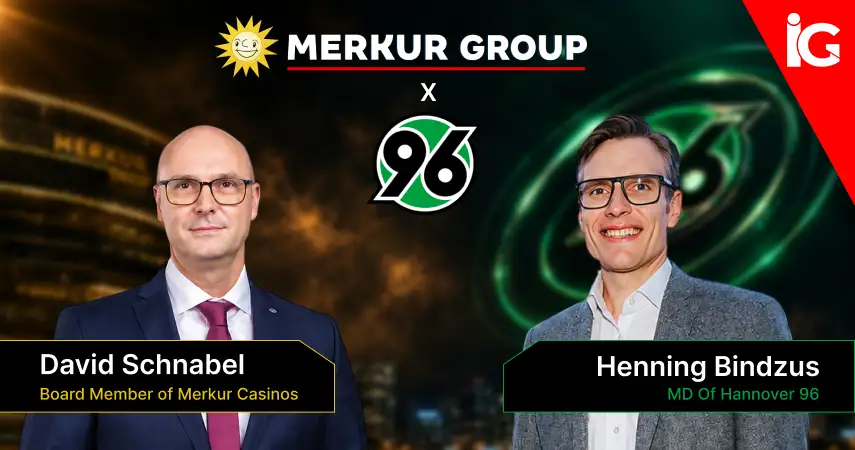
A modest sponsorship on the surface – but the real story is how Merkur is turning a casino acquisition into regional football visibility.
Merkur Group has been named a new exclusive partner of Hannover 96 for the 2026/27 season, with both sides agreeing an initial two-year term. From the new campaign, the brand’s smiling Merkur sun logo will appear on the LED boards and cam carpets at the Heinz von Heiden Arena, as well as across Hannover 96’s digital channels. It’s a straightforward-looking sponsorship – but the timing and geography make it more interesting than a standard logo placement.

Why the deal matters now
Sponsorship deals between gaming operators and football clubs are common enough that a new one rarely moves the needle on its own. What gives this one weight is its context. Merkur acquired ten Lower Saxony state casinos (Spielbanken) on July 1, 2025, and the group already runs numerous arcades and sports betting shops across the region Hannover 96 draws from. The club sponsorship isn’t a standalone marketing buy – it’s another layer on an operator steadily building density in one part of Germany.
What the partnership actually involves
The agreement is an initial two-year exclusive partnership covering the 2026/27 season onwards. On a matchday basis, that means Merkur branding on the arena’s LED boards and cam carpets and a presence on the club’s digital output. Both sides have also signalled intent to go beyond static branding.
“The Merkur Group has consistently expanded its presence in Lower Saxony in recent years and sees Hannover 96 as the ideal platform to reach people in the region,” said Christian Woike, Senior Director of the Hannover 96 unit at marketing agency Sportfive, in comments translated from German. “Together, we want to bring the Merkur brand to life, offer fans added value, and fill the partnership with life through creative activations and special encounters.”
The operator read
Here’s the part operators care about. This is a regional-density strategy, not a national brand splash. Merkur is layering mass-audience football visibility directly on top of physical estate – casinos, arcades and betting shops – in the same catchment area. That’s a more efficient use of a sponsorship budget than spreading brand spend thinly across the country, because it reinforces awareness precisely where the group already has revenue-generating sites.

David Schnabel, Board Member of Merkur Casinos at Merkur.com AG, framed the club’s appeal and the deal’s purpose in separate remarks, translated from German. On the reach: “Hannover 96 has a reach that extends far beyond the borders of Lower Saxony.” And on the rationale: “This cooperation is an important step for us in further expanding our commitment in Lower Saxony.”
The scale behind the strategy is not small. Merkur reported over €2.1 billion in consolidated turnover for 2025, with more than 15,000 employees worldwide, and operates across land-based casinos, arcades, cruise-ship casinos, online gaming and sports betting via Merkur Bets. For Hannover 96, Managing Director Henning Bindzus framed the appeal in terms of stability, describing Merkur as an established and reliable company with long experience of partnerships in professional football.
The caveat worth naming
Gambling sponsorship in football remains a sensitive subject in Germany, where the advertising of gaming products in and around sport sits under close regulatory and public scrutiny. Nothing in this announcement suggests any breach – both parties are established, licensed operators, and the deal is a routine commercial partnership. But the wider debate about how visible gambling brands should be in stadiums and around fans is a live one, and deals like this land inside that conversation whether or not either party intends them to.
Merkur uses much of its own announcement to pre-empt that scrutiny. The group points to a central Responsible Gaming department, scientifically grounded youth – and player-protection measures, information and assistance services for players, and staff training on problem-gambling behaviour – stating that it exceeds legal requirements in many areas and treats responsible gaming as part of its corporate culture. Worth reading as a signal of where operators expect the pressure to come from.

Future outlook
The immediate value here is visibility rather than volume, and the promised “creative activations” will determine whether the deal amounts to more than boards and logos. The more telling question is directional: if Merkur continues to pair land-based acquisitions with local club sponsorships, this becomes a repeatable template for regional expansion rather than a one-off. On an initial two-year term, both sides have given themselves a defined window to prove the model works before committing further.
Source: Hannover 96