



Exclusive: Steven Valentine on Why Gaming Technology Must Deliver More Than Reliability

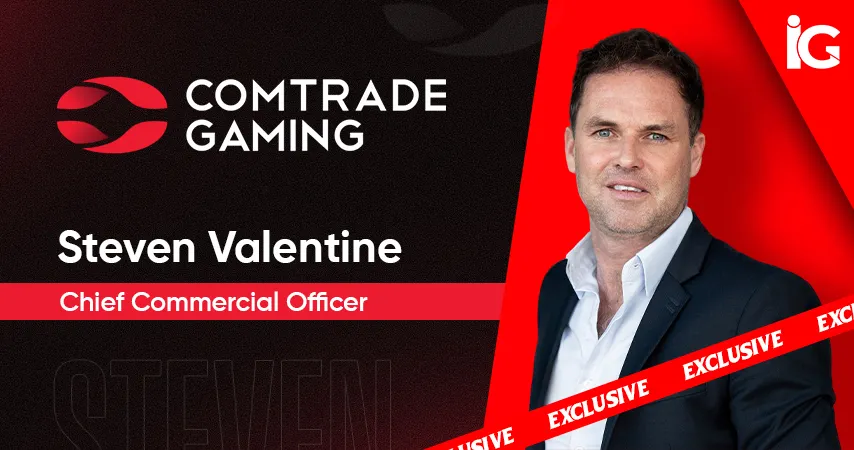
In this exclusive interview with iGaming News Today, Steven Valentine, Chief Commercial Officer at Comtrade Gaming discusses what makes a gaming platform genuinely valuable, why technology should enable rather than restrict an operator’s business strategy, and how platform limitations can create significant long-term costs.
He also explores the difference between player acquisition and sustainable growth, explaining why retention and recurring revenue are more meaningful indicators of commercial success than new-customer numbers alone. Steven shares his perspective on AI’s potential to improve efficiency, while warning that businesses still need people with strong domain knowledge to apply the technology properly.

Q1. You have spent more than 20 years in the gaming industry, including many years at Comtrade Gaming. What initially drew you to the industry and what has kept you excited about it for so long?
Steven Valentine:
I entered the gaming industry almost by chance. I had previously worked in the telecommunications industry when a former colleague moved into online gambling, which was still in its early stages. He recommended that I join him, and that opportunity brought me into gaming.
After more than 20 years, the industry has changed significantly. It has become much more professional, which is positive in many respects, although some of the excitement of the early days has naturally disappeared. What continues to keep me engaged is the business side of the industry and, particularly, the technology advancements that continue to shape gaming.
Q2. What are operators looking for from technology partners today that they weren’t necessarily looking for a few years ago?
Steven Valentine:
Many of the fundamentals remain the same. Operators still want a reliable technology partner, but increasingly they are looking for greater value for money.
Regulated gambling taxes continue to increase, competition is becoming stronger and operator margins are being squeezed. As a result, operators are looking for more value from their vendors. For game providers, that can mean lower revenue-share rates, while platform providers need to demonstrate what additional services and value they can provide for the money operators are paying.

Ultimately, the question has always been the same: how can a technology partner help the operator grow and execute its business strategy?
Q3. From an operator’s perspective, what makes a gaming platform genuinely valuable to the business?
Steven Valentine:
A platform needs to allow an operator to execute the business strategy it actually wants to pursue rather than forcing the operator to work around the platform’s limitations.
Operators need to ask whether the platform allows them to enter new markets quickly, achieve their retention and other KPIs, and bring new features and functionality to market at the speed they require.
Platforms are such an integral part of a gaming business that operators can sometimes be reluctant to change them, even when they know the technology is limiting their growth. But there is a significant business cost to those limitations. Ultimately, operators need to consider whether their platform is actually doing what they need it to do.
Q4. From your experience in sales and business development, what is one thing companies often get wrong when trying to grow commercially in gaming?
Steven Valentine:
One of the biggest mistakes is confusing acquisition with real growth. Player acquisition only becomes genuine growth when it turns into retention.
Operators can spend significant amounts on advertising and affiliates and generate strong new-customer numbers, but the more important question is how many of those players return after a month and whether the business is actually increasing its recurring revenue.
Another common mistake is choosing technology based primarily on price. Operators can have ambitious growth plans but then select the cheapest possible platform or supplier. While that might make sense for a very small startup, repeatedly choosing suppliers simply because they are the cheapest can seriously damage a business over time. There is ultimately a business cost to using the wrong technology.
Q5. AI is becoming part of almost every conversation in gaming. From a B2B perspective, where can AI create genuine value over the next few years, and where might the industry be getting carried away with the hype?
Steven Valentine:
In a nutshell, AI brings efficiency. Tasks that previously required 10 people may potentially be completed by one person, allowing companies to do much more with fewer resources.
For vendors, this is particularly important because operators are increasingly expecting suppliers to deliver more value while paying less, as their own margins are being squeezed. AI can make that more sustainable by improving efficiency.
However, AI itself can be expensive, and companies need to implement it properly. You need competent people who understand where AI should be used and how to use it efficiently. You don’t want different employees making the same requests in separate AI systems and creating unnecessary costs.
AI will play a major role for both vendors and operators, but it isn’t the complete answer. AI still lacks domain knowledge, so businesses will continue to need skilled business analysts, project managers and people who understand the gaming industry and what the business is trying to achieve.
Q6. When Comtrade Gaming or another technology provider considers entering a new jurisdiction, what are the key things you want to understand before making that move?
Steven Valentine:
The first consideration is how difficult and costly it will be to configure the platform for the requirements of that jurisdiction. At Comtrade Gaming, we can configure our platform relatively easily for new markets, while some platforms require significant architectural changes to meet local requirements.
Companies also need to consider the ongoing operational cost of maintaining compliance with regulatory requirements, as well as whether the market itself is stable and has a long-term future.
The size of the opportunity is also important. The US market is a good example. Many companies invested heavily during the initial opportunity, but the market ultimately became concentrated around a small number of operators, many of which use proprietary technology. For a platform technology supplier, that makes the opportunity less attractive.
So companies need to assess the long-term value of a market rather than simply following the initial gold rush.
Q7. Looking towards 2027 and beyond, what do you think will change B2B gaming technology the most?
Steven Valentine:
I think consolidation will be one of the biggest changes. Over the past decade, many companies entered the gaming market believing it was an easy business to start and eventually exit profitably. But gaming company valuations and multiples have declined, and businesses are increasingly being valued on the profits they actually generate.
Many companies in the vendor space are struggling to make a profit, and investors will eventually decide that their capital can be better deployed elsewhere. At the same time, margins are being squeezed across the B2B sector.
As a result, I expect a kind of survival of the fittest, with companies exiting the market or being consolidated. For well-built companies that can remain profitable and competitive, having fewer players in the market could ultimately create new opportunities.
About Comtrade Gaming
Comtrade Gaming is an independent software provider delivering open gaming platforms and professional services to both the online and land-based gaming sectors. The company develops technology for operators, vendors and regulators, with a focus on simplifying gaming operations, supporting player experiences and preserving the individuality of each client through customisable solutions.Its portfolio includes:
- iCore, an enterprise online gaming platform
- sCore, gaming systems management technology
- gCore, remote game server and gaming content solutions
- Casino CRM and bonusing tools
- Responsible gaming solutions
- Game development, testing and distribution services
- Operational support and professional gaming services