



Exclusive: Can AI Make Gaming More Personal? Kaizen Gaming’s Vangelis Dedoulis Explains

Online gaming is entering a new era where personalization, loyalty, AI, and responsible gaming are becoming increasingly interconnected. As player expectations evolve rapidly, product teams must build experiences that feel relevant, trustworthy, and valuable while also supporting sustainable business growth across regulated markets.
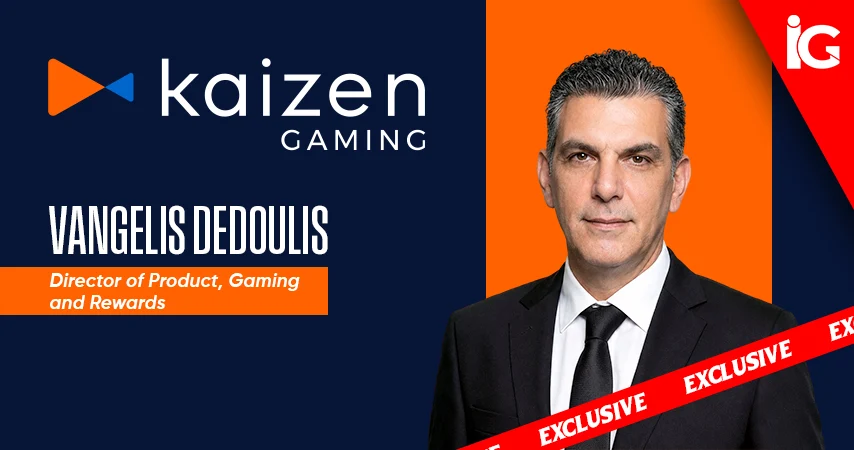
In this exclusive interview with iGaming News Today, Vangelis Dedoulis, product leader at Kaizen Gaming, shares how his experience across engineering, operations, commercial, and product leadership has shaped his approach to product development. He also discusses loyalty programs, AI, responsible gaming, innovation, leadership, and the trends that will define the next generation of online gaming products.

Q1. You’ve worked across engineering, operations, commercial, and product leadership throughout your career. How have those different experiences influenced the way you approach product development today?
Vangelis:
Each role has given me a different perspective on what makes a successful product.
Engineering taught me how products are built, operations showed me how execution impacts the player experience, and commercials helped me understand what drives value for the business. Product decisions shouldn’t be made in isolation. They need to balance customer satisfaction with commercial outcomes.
For me, successful product development is about bringing those perspectives together to create experiences that benefit both players and the business.
Q2. Player expectations continue to evolve rapidly. From your perspective, what separates a good gaming experience from one that players genuinely remember and return to?
Vangelis:
Player expectations are changing faster than ever, sometimes within months rather than years.

Today, players expect experiences that feel personal rather than generic. Whether it’s game recommendations or content, products should reflect individual preferences instead of treating every player the same.
At the same time, speed and reliability have become basic expectations. Beyond that, products should respect players’ time and attention by delivering experiences built on personalization, thoughtful design, and trust.
The player should feel the product understands them, without ever feeling pressured. That balance is genuinely hard to get right, and it’s where the best product teams spend most of their energy.
Q3. Rewards and loyalty programs have become a major part of player retention. What separates a loyalty program that players genuinely value from one that simply exists on paper?
Vangelis:
A good loyalty program is much more than a system where players collect points.
It should recognise and adapt to individual preferences in real time, and create experiences that players genuinely look forward to. Personalization is key because every player values something different.
From an operator’s perspective, loyalty also needs a strong, scalable infrastructure that works across different regulated markets while delivering both player value and commercial results.
Q4. AI is becoming increasingly important across gaming. Where do you see the biggest opportunities for AI in product development, personalization, and player engagement over the next few years?
Vangelis:
The honest answer is that nobody knows exactly where AI will take us, but it’s already transforming how we build products.
AI is dramatically improving development speed, helping teams process large volumes of data, generate insights, and make better decisions. For me, one of its biggest opportunities is personalization. We’ve moved beyond traditional segmentation, and AI should enable experiences, offers, and communications tailored to every individual player.
I also see AI shifting operators from being reactive to becoming anticipatory, recognizing playing patterns in real time and responding before events happen. The teams that succeed will be the ones that pair AI’s pattern-recognition with clear human decision points, using AI to surface and draft, while people retain judgement over what actually ships.
Q5. As personalization becomes more advanced, how can operators continue to innovate while ensuring responsible gaming and player protection remain a priority?
Vangelis:
Personalization and responsible gaming aren’t competing priorities, they’re different sides of the same coin.
The same data and technology used to personalize experiences can also help identify early signs of harmful behaviour and support timely interventions. Those insights should enhance player enjoyment rather than encourage excessive engagement.
Responsible gaming shouldn’t be an afterthought. It needs to be embedded into product design from the very beginning because long-term success depends on building trust with players.
Q6. You’ve led teams across engineering, product, operations, and commercial functions. What qualities define a successful product leader in today’s gaming industry?
Vangelis:
Curiosity and discipline are equally important.
Product leaders need to stay curious, challenge assumptions, and be willing to change direction when evidence proves them wrong. They also need to understand different functions across the business and speak the language of engineers, commercial teams, CRM, and other stakeholders.
Above all, great leaders create clarity for their teams, encourage collaboration, and focus on building reusable solutions instead of reinventing everything from scratch.
Q7. Kaizen Gaming has built a strong reputation across regulated markets. How important is continuous product innovation in maintaining that momentum as player expectations continue to change?
Vangelis:
Continuous innovation is fundamental because this industry moves incredibly fast.
Operating across multiple regulated markets means products constantly need to adapt to different regulations, customer preferences, and competitive environments. Innovation isn’t just about launching something new-it’s about continuously improving products while building centralized capabilities that support scalability.
At the same time, innovation must always be paired with trust, compliance, and responsible gaming because sustainable growth depends on all three.
Q8. Looking towards 2027 and beyond, what do you think will define the next generation of online gaming products and rewards?
Vangelis:
I believe the boundaries between products, rewards, and personalization will continue to disappear, creating a much more connected player experience.
AI will play an even greater role in decision-making, personalization, and product development, while trust will remain a key factor in long-term player relationships.
Ultimately, the companies that succeed will be those with strong technology foundations and centralized infrastructure that allow them to innovate, scale quickly, and continuously improve the customer experience.
About Kaizen Gaming
Kaizen Gaming is one of the biggest gaming technology companies, operating leading online gaming and sports betting brands across multiple regulated markets. The company focuses on delivering innovative digital experiences through advanced technology, data-driven personalization, responsible gaming practices, and scalable product infrastructure. With a strong emphasis on customer experience, continuous innovation, and operational excellence, Kaizen Gaming continues to expand its international presence while building connected gaming ecosystems for players worldwide.