


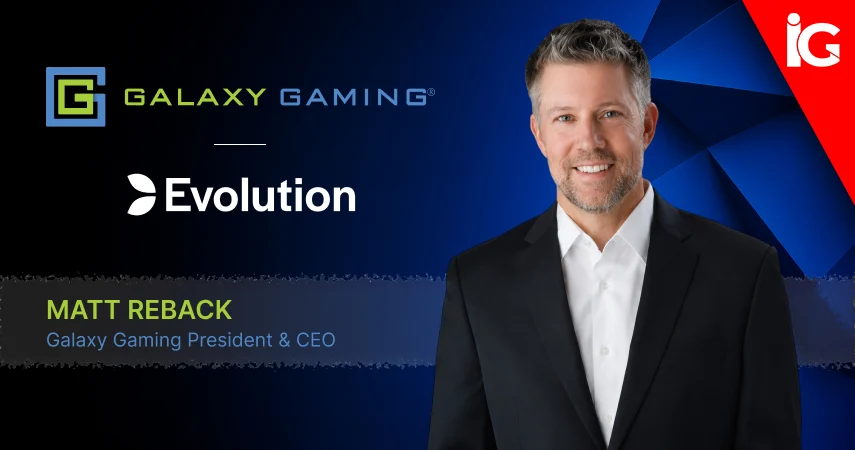
Evolution Terminates Galaxy Gaming Merger, Galaxy to Receive US$5.23M Termination Fee

Two years of process ended with a wire transfer instead of a completed acquisition.
Galaxy Gaming confirmed on 21 July that Evolution Malta Holding Limited has terminated the merger agreement first signed in July 2024, closing the door on a transaction that would have handed Evolution one of the most valuable proprietary table game libraries in the sector. Under the terms of the agreement, Evolution is required to pay Galaxy a termination fee of $5,234,678 within two business days. The termination lands only weeks after Galaxy strengthened its senior technology bench with a former Light and Wonder executive appointed as CTO, a hire that reads rather differently now the company is staying independent.

What was agreed and what happened
The deal was structured through Galaga Merger Sub, a Nevada corporation and wholly owned Evolution subsidiary, and had been amended at least once during its extended lifespan. Galaxy trades on the OTC market under GLXZ and develops games, bonusing systems and technology for physical and online casinos worldwide. Through Galaxy Gaming Digital it is the largest licensor of proprietary table games to the online sector.
President and CEO Matt Reback framed the outcome as disappointing but not destabilising, pointing to independent growth for stakeholders and confirming that the long-standing commercial relationship with Evolution continues. That last detail is the one worth pausing on. Evolution remains a distribution partner even after walking away as an acquirer, which tells you the failure was structural rather than commercial.
Why two years is the real story
Galaxy holds 131 licences worldwide, including licences in 28 US states. In regulated gaming those licences do not simply transfer with the business. Each regulator must independently assess the acquiring party for suitability, which effectively hands dozens of separate authorities a veto over a single transaction.
That process is slow under normal conditions. It becomes considerably slower when the acquirer is itself under scrutiny. Evolution has spent much of the past two years managing regulatory and reputational pressure across multiple jurisdictions, and any acquirer in that position inherits an approval burden in every market the target operates in. None of this reflects a business in difficulty. Evolution posted Q2 2026 revenue of €517.8m with EBITDA of €341m, which makes the point plainly enough that this was never a funding constraint. A licence portfolio that makes a company attractive to buy is the same portfolio that can make the purchase unworkable.

What it means for operators and founders
The practical lesson is that deal certainty in this industry is no longer primarily a function of price, financing or strategic fit. It is a function of whether regulators are comfortable with who is doing the buying.
For anyone building a business with an eventual exit in mind, that reframes the diligence question. Founders have historically focused on making the asset clean. The Evolution outcome suggests the more useful exercise is assessing which categories of buyer can realistically clear approval in your markets, because a licence footprint that spans 28 states narrows the credible acquirer list considerably. Breadth of licensing raises valuation on paper and reduces the pool of buyers who can actually close.
For operators, there is a supply-side read as well. Consolidation in table games content slows when the largest players cannot execute acquisitions, which keeps independent suppliers independent for longer and preserves competitive pricing in a category that was heading towards concentration.

The position both parties are left in
Galaxy walks away with cash on the balance sheet, its catalogue intact, its independence restored and its distribution relationship with Evolution preserved. That is a strong outcome from a failed process.
The harder question sits with Evolution. When regulators are the gatekeeper on every transaction, what does an M&A strategy actually look like, and how much is a growth plan worth if it cannot be executed by acquisition?
Source: Galaxy Gaming