


MGA Impersonation Warning Names Three Fake Sites Posing as Licensed Operators

Malta’s regulator has taken the rare step of printing the URLs, signalling that brand cloning is now a consumer-protection priority.
The Malta Gaming Authority has issued a public MGA impersonation warning naming three live websites that pose as MGA-licensed operators and mislead players into believing they are regulated. Rather than handle the matter quietly, the regulator printed the domains in full. That decision, more than the fraud itself, is the real story for anyone operating under a Malta licence. It also lands at a moment when Malta’s licensing base is shifting, with B2B licences now overtaking B2C in the Authority’s latest annual report, a sign the jurisdiction has more brands than ever to protect.

What the MGA impersonation warning actually says
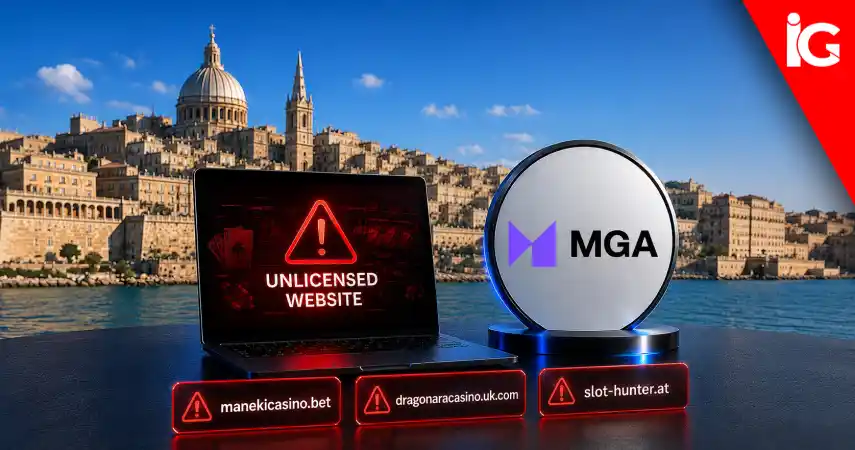
The Authority said it had observed a pattern of websites impersonating MGA-licensed operators and creating the false impression that they are authorised under the Gaming Act. It then named three active sites: manekicasino.bet, dragonaracasino.uk.com and slot-hunter.at.
The language is direct. The MGA declared it has no connection with the listed URLs, or with any other platform impersonating the Authority or its licensees. Any reference to the MGA, or to a licence said to be issued by it, on those domains is false and misleading. Players were reminded not to use any operator’s services until they have confirmed, through the MGA’s official Licensee Register, that the entity is genuinely authorised.
Why the method matters more than the names
Impersonation is not new. What is new is a regulator broadcasting the offending addresses in a public notice.
Most enforcement of this kind happens out of sight. Cease-and-desist letters. Registrar takedowns. Quiet legal pressure. Naming three live URLs is a deliberate escalation, and it tells the market that the trust attached to an MGA licence is now something the Authority will defend in public. It also fits a broader pattern. Consumer protection and platform integrity already sit high on the MGA’s supervisory priorities for 2026, and this notice reads like that agenda in action.

That trust is the asset under attack. A cloned site does not just steal from the player who deposits on it. It borrows the credibility of a legitimate brand and the regulator standing behind it.
The operator implication
Here is what a platform head should take from this. If a fraudster clones your brand, copies your creative, and stamps a fake MGA badge on it, the defrauded player rarely blames the cloner. They blame the name they thought they recognised.
That reframes brand protection as a commercial function, not an IT afterthought. Domain monitoring, trademark enforcement, takedown workflows, and clear player-facing verification guidance stop being optional the moment a regulator publicly ties impersonation to your sector. The budget conversation this triggers is straightforward: fund proactive monitoring now, or fund reputation repair later.
The open question
There is a tension worth naming. Publishing live URLs warns players, but it also hands those sites visibility and, potentially, traffic from the curious. The MGA has judged that transparency outweighs that risk. Whether other regulators reach the same conclusion will shape how this tactic spreads.

Future outlook
Expect brand impersonation to climb the regulatory agenda across multiple jurisdictions over the next six to twelve months. As cloning tools get cheaper and more convincing, public naming and stronger verification infrastructure, clearer registers, better search-engine cooperation, and faster takedown pathways, are the logical next moves. Operators who build impersonation response into their compliance function now will be ahead of the regulation that follows.
The three names on Malta’s list will be forgotten within a quarter. The precedent of a regulator naming them out loud will not.
Source: Malta Gaming Authority