



One Brand. Two Gaming Giants. How BetMGM Became a U.S. Betting Powerhouse

Most operators trying to crack the U.S. market are solving the same problem. Customer acquisition costs are punishing. Brand recognition takes years to build. And state-by-state regulatory requirements add layers of operational complexity that stretch even well-capitalised businesses. BetMGM was built to sidestep all three.
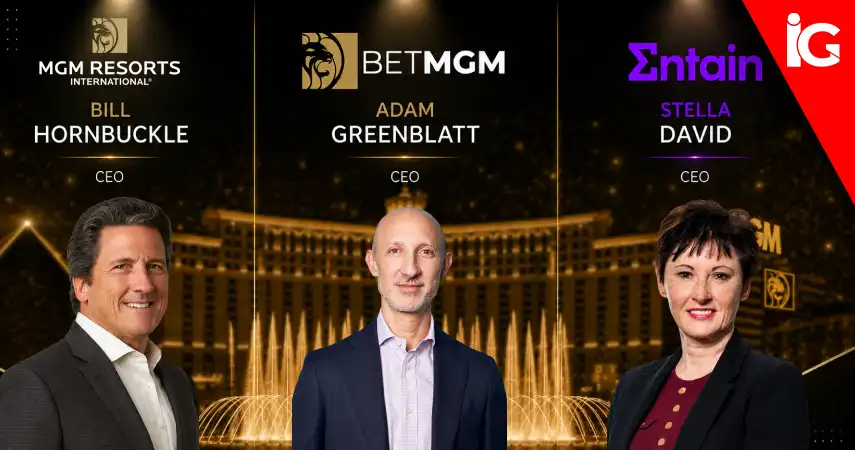
It is not a startup that scaled up. It is a 50/50 joint venture between two of the most experienced gaming businesses on the planet, and the structure it was built on explains almost everything about why it has grown the way it has.

The Customer Acquisition Problem That BetMGM Was Designed to Solve
The economics of acquiring online gambling customers in the United States are brutal. Digital-only operators spend aggressively on paid acquisition, promotions, and brand-building in every new state they enter, often before a single dollar of sustainable revenue is generated. In some markets, the cost to acquire a depositing player runs into the hundreds of dollars.
BetMGM enters that equation with a structural advantage that no amount of marketing budget can easily replicate. MGM Resorts International operates 31 hotel and gaming destinations globally, maintains one of the largest casino loyalty programmes in North America, and carries decades of consumer trust across millions of existing players. That foundation fundamentally changes the economics of digital player acquisition.
When a customer who already stays at Bellagio or plays at MGM Grand Detroit downloads BetMGM, they are not a cold lead. They already have a relationship. That distinction matters enormously at scale.
What MGM Resorts Actually Contributes Beyond the Brand Name
The brand value is visible. What is less discussed is the loyalty architecture sitting behind it.

BetMGM Rewards operates as a genuine two-way ecosystem. Players accumulate points at MGM’s physical casino destinations and redeem them through BetMGM’s digital platform. It works in reverse as well. That cross-channel loop creates switching costs that pure-play digital competitors cannot manufacture without a land-based footprint. For operators analysing retention strategy, this is the mechanism worth studying.
Borgata in Atlantic City has been particularly significant. As one of the leading casino destinations in New Jersey, which generated $2.91 billion in iGaming revenue in 2025, Borgata gives BetMGM genuine retail credibility in one of the most mature regulated online gaming jurisdictions in the country. In Michigan, where BetMGM holds approximately 28% iGaming market share through April 2026, the MGM Grand Detroit retail partnership has played a direct role in that dominance.
Land-based presence is not a legacy asset in the U.S. market. It is a competitive weapon.
Entain’s Role: The Technology Infrastructure Most People Do Not See
While MGM owns the customer relationships, Entain plc builds and runs the platform.
Entain is one of the largest betting and gaming companies in the world by revenue, operating Ladbrokes, Coral, bwin, and partypoker across dozens of regulated international markets. That portfolio represents decades of accumulated operational expertise in real-time sportsbook trading, risk management, payments infrastructure, responsible gambling systems, and multi-jurisdiction compliance.
The technical demands of running a competitive sportsbook in America are significant and frequently underestimated. Live in-play betting, same-game parlays, rapid odds movements across dozens of concurrent events, and state-by-state regulatory variation all create an operational environment that takes years to master. Entain arrived with that infrastructure already built and battle-tested across some of the world’s most competitive betting markets.
For founders and operators evaluating what enterprise-grade sportsbook technology actually looks like in practice, BetMGM’s platform layer is a useful reference point. It was not assembled quickly. It was inherited from a company that had been refining it for decades.
The Numbers Behind the Joint Venture
The commercial results of this structure are now well-documented.
BetMGM ended 2025 holding a 21% iGaming market share and an 8% online sports betting share across its active U.S. markets. Full-year iGaming revenue reached $1.8 billion, up 24% year on year. In Q2 2025 alone, BetMGM posted $692 million in net revenue, a 36% increase from the same period in 2024, with the iGaming segment contributing $449 million of that figure. Bovada World Casino Directory
Those are not the numbers of a business finding its footing. They are the numbers of a business that has found its model and is now executing against it.
The Structural Tension That the Industry Rarely Discusses
The joint venture model has been delivered. But it carries a complexity that a wholly owned operator does not face.
Strategic decisions require alignment between two large organisations with separate shareholders, different priorities, and their own commercial timelines. That tension surfaced publicly in 2021 when MGM Resorts made an acquisition approach toward Entain itself, valuing it at approximately $11 billion. Entain’s board rejected the offer.
That episode was significant for reasons beyond the rejected price. It revealed that the two partners in BetMGM are also, to some degree, in a long-term negotiation about who ultimately controls the business they have built together. For investors and operators watching the U.S. market, that unresolved dynamic is worth tracking. The structural question of whether a joint venture remains the optimal vehicle as the market matures has not gone away.

What BetMGM’s Architecture Tells the Rest of the Market
The broader lesson from BetMGM’s model is one the industry is still absorbing. Pure-play digital operators are increasingly seeking land-based partnerships, loyalty integrations, and retail anchors precisely because the economics of digital-only acquisition have become unsustainable at scale.
BetMGM built that model into its foundation from the beginning. With 21% iGaming market share nationally and market leadership in Michigan, that foundation has proven its commercial logic.
Whether the joint venture structure that built this position is also the structure that sustains it through the next phase of U.S. market expansion is the question neither MGM nor Entain has fully answered yet.
Source: Official Company Reports